In the world of online business, the importance of the domain name cannot be overstated. It serves as the digital front door to a brand or organisation and plays a crucial role in establishing credibility and trust with consumers. For Irish businesses, the debate between using a .ie domain versus a .com domain is especially pertinent. As more Irish companies establish their online presence, understanding consumer preferences regarding domain extensions is essential for effective branding and marketing strategies.
Understanding Domain Extensions
A domain name consists of two main parts: the name itself and the extension, also known as the top-level domain (TLD). The extension is what comes after the last dot in the web address. A .com domain is a generic domain extension that is widely recognized and used globally, while .ie is the country code top-level domain (ccTLD) specific to Ireland.
The Significance of .ie Domains
The .ie domain is particularly significant for a couple of reasons. Firstly, it establishes a clear geographical identity. For Irish consumers, a .ie domain signifies that a business is registered in Ireland and, by extension, that it is more likely to cater to local needs and services. This can significantly enhance consumer trust, especially in sectors like e-commerce, where payment security and customer service are crucial.
Secondly, the .ie domain requires businesses to meet certain criteria for registration. Organizations must provide proof of a connection to Ireland, which can range from having an Irish address to utilizing Irish trade. This adds an additional layer of credibility and can be attractive for consumers who are increasingly concerned about the legitimacy of online businesses.
Irish Consumer Preferences
Trust and Credibility
Numerous studies have indicated that domain extensions can influence consumer trust. A .ie domain is often perceived as more trustworthy by Irish consumers compared to a .com domain. When shopping online, consumers are cautious about where they provide sensitive information, and a local domain provides reassurance that the business is compliant with Irish laws and regulations.
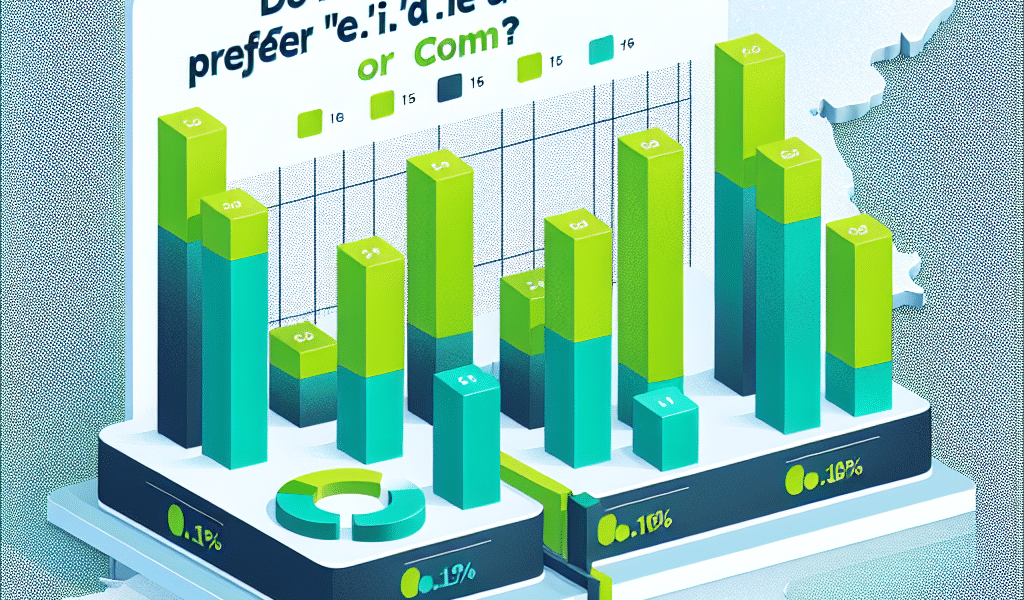
In surveys conducted among Irish consumers, many expressed a preference for .ie domains when dealing with local businesses. For instance, consumers noted that they feel more assured in terms of data protection and customer service when they see a .ie extension. Given the backdrop of increasing online scams, this perception is vital.
Local Relevance
Irish consumers often seek a localized shopping experience. They appreciate businesses that understand their culture, values, and local nuances. A .ie domain can serve as a signal that a business is in tune with local customs and practices. This is particularly relevant in sectors such as food and beverage, fashion, and services, where local trends can significantly influence purchasing decisions.
Additionally, the advent of localisation in search engine optimisation (SEO) has made it essential for businesses to cater to local search intent. Consumers are increasingly using geo-specific terms in their searches, and a .ie domain can help businesses rank better for local searches, making it easier for potential customers to discover them.
Marketing Strategies
From a marketing perspective, businesses that operate under a .ie domain can create targeted campaigns that resonate with Irish consumers. This includes using local language nuances, regional dialects, and culturally relevant promotions. For example, during national holidays or events such as St. Patrick’s Day, a campaign aligned with local sentiments can foster stronger engagement and conversion rates.
Social media platforms and online community forums are also vital in gathering consumer feedback. Localized engagement can facilitate brand loyalty, making it easier for businesses to attract repeat customers. Through targeted advertisements that highlight local offerings, businesses can make the most of their .ie domains.
The Global Appeal of .com Domains
While there are numerous advantages to having a .ie domain, the allure of .com domains remains strong. The .com extension is universally recognized and associated with global brands. Companies that aim to attract international consumers or those seeking to establish a global presence might consider opting for .com domains.
Global Reach
For Irish businesses operating in sectors where international customers are common, a .com domain may serve as a better option for broader market reach. The .com extension implies an openness to a global audience and can help mitigate any perceptions of a company being overly localized.
Furthermore, businesses that operate under a .com domain can tap into international marketing strategies without being confined to the local market. For example, if an Irish fashion brand aims to attract customers from the U.S. or Europe, a .com domain may align better with those geographical markets.
SEO Considerations
Search engines like Google do consider domain authority when ranking sites. Domains with higher authority often garner preference in search results. While .ie domains can rank well for local searches, a .com domain might be seen as having a broader authority in certain contexts. This complicates the decision for businesses weighing their options.
Perception of Size and Stability
Often, larger companies and well-established brands use .com domains, giving them a perception of size, stability, and trustworthiness. Some consumers may subconsciously associate the .com extension with enterprise-level businesses, opting for them due to a perception of superiority over .ie domains, particularly for companies not rooted in traditional local markets.
The Cost Factor
Domain registration costs can vary, with .com domains often being more affordable and widely available. For startups or small businesses conscious of their budgets, a .com domain can be an appealing choice. However, prices for .ie domains can fluctuate based on registration criteria and services, which might deter some businesses from adopting this extension.
The Brand Extension Scenario
For businesses already operating with a .com domain, the question arises: Should they also invest in a .ie domain? Some businesses opt for a dual approach, registering both domains and redirecting one to the other. This can effectively hedge against competition and safeguard brand identity among different geographical markets.
Consumer Behavior: A Case Study
To better understand the implications of domain preferences, consider a case study focusing on an Irish e-commerce platform that began with a .com domain. Over time, the business began experiencing stagnation in the local market. After conducting market research, they found that customers were gravitating towards competitors with .ie domains.
The business decided to acquire a .ie domain and made a concerted effort to localize their marketing and offerings. Within months, they noted a substantial increase in traffic from local consumers, alongside improved conversion rates. This case reinforces the notion that while the .com domain may serve a beneficial purpose, local consumers tend to respond more favorably to a .ie domain.
Future Trends and Predictions
As globalization continues to influence consumer behavior, the interplay between local and global domains will likely evolve. With the rise of e-commerce and changing shopping habits, brands will need to monitor consumer sentiment, especially as it relates to trust, authenticity, and personalization.
With legislative changes such as GDPR in Europe, which emphasizes data protection and privacy, the appeal of .ie domains may gain further traction among Irish consumers concerned about these issues. The metrics around digital trust, consumer preference, and marketing effectiveness will continue to shape the conversation around domain choices in Ireland.
Additionally, as more consumers engage with brands through mobile devices and social platforms, the visibility and accessibility of domain names may play a more significant role than ever before. Businesses will need to adapt their digital strategies, making informed decisions about their domain choices to thrive in an increasingly competitive landscape.