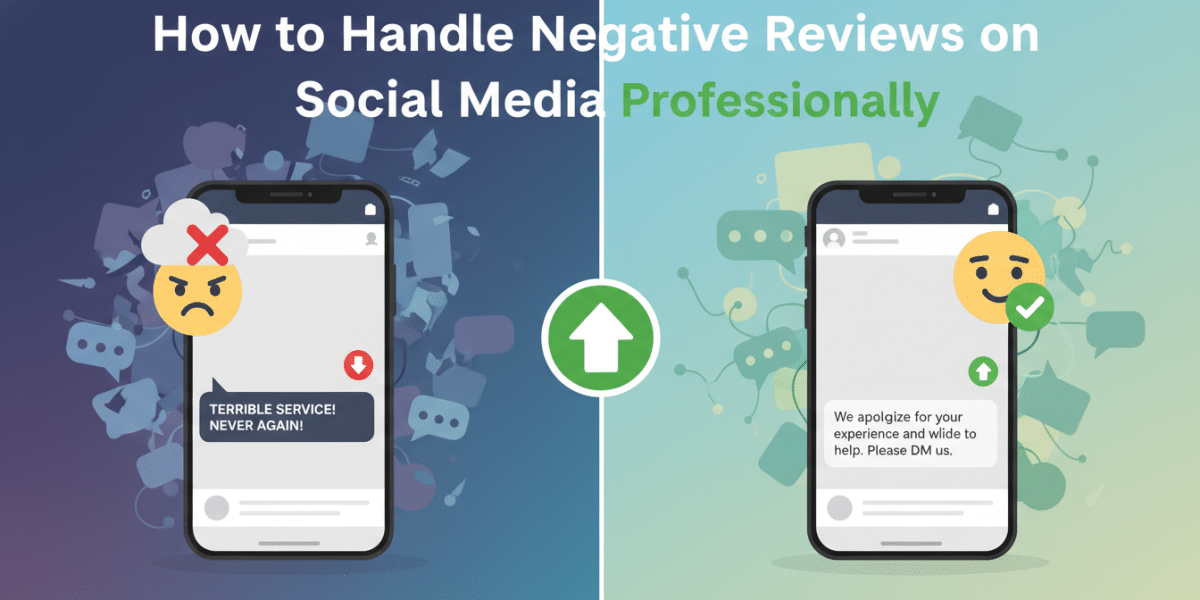
In today’s hyper-connected world, your business is always on display. Every product, every service, every customer interaction is a potential talking point, and often, that talk happens directly on social media. While glowing testimonials are a welcome sight, the reality is that negative reviews are an inevitable part of doing business. It’s not a matter of if you’ll receive one, but when. The true differentiator for any brand lies not in avoiding criticism, but in how to handle negative reviews on social media professionally.
Ignoring them is akin to sweeping dirt under a rug – it might disappear from immediate view, but the mess is still there, and it’s likely growing. A poorly managed negative review can spiral, damaging your reputation, eroding trust, and deterring potential customers. Conversely, a negative review handled with grace, empathy, and efficiency can be transformed into an opportunity. It can showcase your brand’s commitment to customer satisfaction, highlight your problem-solving abilities, and even build stronger loyalty. This article will guide you through the essential strategies and practical steps to navigate the choppy waters of online criticism with professionalism and poise, turning potential crises into unexpected triumphs.
Why Professionalism Matters: The Stakes of Social Media Reviews
Before diving into the “how,” it’s crucial to understand the “why.” Why invest so much effort into handling negative reviews on social media professionally? The answer lies in the unique nature and immense reach of social platforms.
The Amplification Effect of Social Media
Unlike a private complaint via email or phone, a social media review is public. It’s visible not just to the complaining customer, but to their entire network, and potentially to anyone searching for your brand. A single disgruntled tweet or a critical Facebook comment can be shared, liked, and commented upon by hundreds, even thousands, exponentially increasing its reach in minutes. This amplification means that every response you make, or fail to make, is also public and subject to scrutiny. Your professionalism (or lack thereof) is on full display.
Brand Reputation and Trust
Your brand’s reputation is one of its most valuable assets. Negative reviews, left unaddressed or mishandled, can quickly erode the trust you’ve worked so hard to build. Potential customers often scour reviews before making a purchase decision. A pattern of unaddressed complaints can signal indifference or incompetence, prompting them to take their business elsewhere. Conversely, a public display of genuine concern and a commitment to resolution can reinforce trust, demonstrating that you stand by your products or services and genuinely care about your customers.
Turning Critics into Champions
It might sound counterintuitive, but a professionally handled negative review can actually strengthen customer loyalty. When a customer feels heard, respected, and that their issue has been genuinely addressed, their perception of your brand can shift dramatically. They might not only become repeat customers but also vocal advocates, sharing their positive resolution experience. This transformation from critic to champion is a powerful testament to the value of professional engagement.
Your First Line of Defense: The Internal Preparation
Effective crisis management on social media starts long before a negative review even appears. It requires proactive planning and internal readiness.
Establish a Monitoring System
You can’t respond to what you don’t know exists. Implement robust social media monitoring. This could involve:
- Setting up Google Alerts for your brand name, product names, and key personnel.
- Utilizing social listening tools (e.g., Hootsuite, Sprout Social, Brandwatch) that track mentions across various platforms, including comments, posts, and even review sites.
- Regularly checking direct messages and comments on your own social media profiles.
The goal is to catch negative feedback as quickly as possible, allowing for a timely response.
Develop a Response Protocol (Who, When, How)
Don’t wait for a crisis to define your strategy. Create a clear, step-by-step protocol for handling negative reviews on social media professionally. This should include:
- Who is responsible? Designate specific team members or departments responsible for monitoring and responding. Ensure they have the authority or a clear escalation path.
- What is the timeframe? Aim for a response within hours, if not minutes, especially during business hours. Acknowledging a review quickly, even if a full resolution takes longer, shows you’re paying attention.
- What are the guidelines for tone and language? Maintain a consistent brand voice – empathetic, helpful, and professional. Avoid jargon or overly corporate language.
- When should conversations be taken offline? Establish criteria for when a public interaction needs to move to a private channel (e.g., if personal information is needed, if the issue is complex, or if the conversation risks escalating publicly).
Train Your Team
Ensure everyone involved in customer-facing roles, especially those on social media, understands the protocol and is equipped with the skills and empathy needed to respond effectively. Role-playing scenarios, sharing best practices, and providing ongoing training can make a significant difference in how your team handles negative reviews on social media professionally.
The Art of the Professional Response: A Step-by-Step Guide
Once a negative review surfaces, your response is critical. Follow these steps to ensure you’re handling negative reviews on social media professionally every time.
Step 1: Acknowledge and Empathize Immediately
Your first response should be swift, appreciative, and empathetic. Thank them for their feedback (even if it’s negative) and acknowledge their feelings.
- Example: “We’re truly sorry to hear about your frustrating experience, [Customer Name]. We appreciate you bringing this to our attention.”
- Why it works: It shows you’re listening and that you value their perspective, even when it’s critical. It immediately de-escalates tension.
Step 2: Apologize (When Appropriate) Without Blame
If your company is at fault, offer a sincere apology. Even if the fault isn’t entirely yours, you can apologize for their negative experience or perception. Avoid making excuses or blaming others.
- Example (Fault is yours): “We sincerely apologize for the delay in your order. That’s definitely not the standard we aim for.”
- Example (Fault is ambiguous): “We’re very sorry that your visit didn’t meet your expectations. We understand how disappointing that can be.”
- Why it works: A genuine apology disarms anger and demonstrates accountability.
Step 3: Offer a Solution or Path to Resolution
Show your commitment to making things right. If possible, offer a direct solution. If not, clearly outline the next steps for resolution.
- Example (Simple issue): “We’d like to make this right. Please DM us your order number, and we’ll arrange a full refund/replacement immediately.”
- Example (Complex issue): “We want to investigate this further to understand what went wrong. Could you please provide more details by sending us a private message?”
- Why it works: It demonstrates proactivity and a desire to solve the problem, rather than just acknowledging it.
Step 4: Take the Conversation Offline
For anything beyond a simple public apology, it’s almost always best to move the conversation to a private channel. This protects customer privacy, allows for a more detailed discussion, and prevents public back-and-forth arguments.
- Example: “To discuss this in more detail and find the best resolution, please send us a direct message with your contact information, or call our customer support line at [Phone Number].”
- Why it works: It shows discretion and a willingness to engage deeply without making sensitive details public. It also controls the narrative, preventing public escalation.
Step 5: Follow Up and Learn
Once the issue is resolved privately, consider a brief public follow-up if appropriate (e.g., “We believe we’ve now resolved [Customer Name]’s issue privately. We appreciate their patience as we worked through this.”). More importantly, take the feedback internally. Analyze what went wrong, identify patterns, and implement changes to prevent similar issues in the future.
- Why it works: This closes the loop publicly and reinforces your commitment to customer satisfaction and continuous improvement. Internally, it turns a negative into a valuable learning opportunity.
What NOT to Do: Common Pitfalls to Avoid
Just as important as knowing what to do is understanding what to avoid when handling negative reviews on social media professionally.
Don’t Get Defensive or Argumentative
It’s natural to feel protective of your brand, but engaging in a public argument or becoming defensive will only make your brand look petty and unprofessional. The customer may not always be right, but how you respond to them publicly is always a reflection of your brand.
Don’t Delete (Unless Truly Spam/Offensive)
Unless a comment is spam, hate speech, or genuinely offensive/abusive, resist the urge to delete it. Deleting legitimate criticism can backfire spectacularly, making your brand appear untrustworthy, manipulative, and afraid of transparency. Customers will often repost, escalating the issue further on other platforms.
Don’t Procrastinate
Time is of the essence. A delayed response can exacerbate the customer’s frustration and allow the negative sentiment to fester and spread. Aim to acknowledge within hours.
Don’t Offer Generic, Robotic Responses
Canned responses are often easily spotted and can make customers feel even more dismissed. While having templates for initial acknowledgments is fine, personalize your responses as much as possible, using the customer’s name and referencing their specific issue. Show genuine human empathy.
Beyond the Individual Review: Proactive Strategies
While reacting professionally is crucial, a truly robust strategy for handling negative reviews on social media professionally also involves proactive measures.
Encourage Positive Reviews
The best defense against a handful of negative reviews is an abundance of positive ones. Actively encourage satisfied customers to leave reviews on platforms like Google, Yelp, Facebook, or your specific industry review sites. You can do this through:
- Email campaigns after a purchase or service.
- Calls to action on your website or social media.
- In-store signage or receipts.
A higher volume of positive feedback can help dilute the impact of occasional negative comments.
Learn from Feedback
Every negative review, regardless of how frustrating it might be, contains a kernel of truth or a valuable lesson. Use these insights to identify recurring issues, improve your products or services, refine your customer experience, or clarify your communication. Transform criticism into a catalyst for growth.
Build a Strong Brand Foundation
Ultimately, the best way to minimize negative reviews is to consistently deliver excellent products, services, and customer experiences. A strong brand built on quality, transparency, and genuine customer care will naturally attract positive feedback and be more resilient when criticism inevitably arises.
Conclusion
Negative reviews on social media are not the end of the world for your business; they are, in fact, an inevitable part of the modern commercial landscape. The way you choose to handle negative reviews on social media professionally can be a defining moment for your brand. By adopting a proactive mindset, establishing clear internal protocols, responding with empathy and a commitment to resolution, and continuously learning from feedback, you can transform these challenges into powerful opportunities.
Remember, every negative comment is a chance to showcase your brand’s integrity, customer-centric approach, and problem-solving prowess. Embrace these interactions, respond wisely, and watch as you not only mitigate damage but also build a stronger, more trusted, and resilient brand for the future. Your professionalism in the face of criticism will speak volumes and ultimately define your success.
Related Posts
 How to manage customer reviews for local SEO in Dublin?
 Googles john mueller on how to handle negative SEO attacks
 How can we outrank negative content about our company on google
 Mastering
SEO and social media a guide to online reputation management for dublin
businesses
Mastering
SEO and social media a guide to online reputation management for dublin
businesses Effective Influencer Marketing
 Globe Boss Social Media Marketing Dublin
 Globe Boss: Social Media Management Dublin
 How to Build a Social Media Strategy That Actually Works