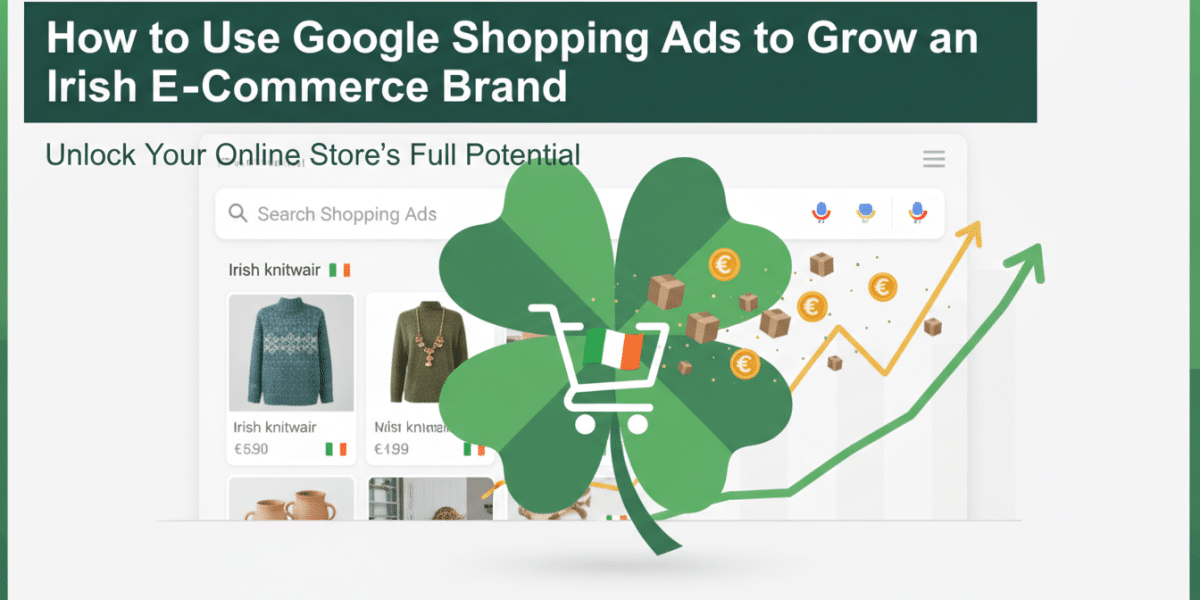
In the dynamic world of online retail, standing out from the crowd is more challenging than ever, especially for an Irish e-commerce brand vying for attention both at home and abroad. While many advertising avenues exist, one platform consistently delivers remarkable results for product-based businesses: Google Shopping Ads. Far from being just another marketing channel, Shopping Ads offer a unique, visually driven approach that can put your products directly in front of high-intent buyers, transforming browsers into loyal customers. If you’re looking to significantly grow your online sales and establish a stronger presence in the digital marketplace, understanding and leveraging Google Shopping Ads is not just an option – it’s a strategic imperative. This guide will walk you through everything you need to know to harness this powerful tool and propel your Irish e-commerce brand to new heights.
Why Google Shopping Ads Are a Game-Changer for Irish E-Commerce Brands
Traditional search ads rely on text, but Google Shopping Ads offer a much richer, more engaging experience. They’re more than just advertisements; they’re direct showcases of your products, complete with images, prices, and your brand name, appearing prominently at the very top of Google search results.
Visual Appeal and Instant Impact
Imagine a customer searching for “Irish wool blankets” or “handmade ceramic mugs Dublin.” Instead of just seeing a list of text links, they’re greeted with a carousel of visually appealing products, each with a clear image, price, and seller. This immediate visual information allows users to quickly compare options and click on what genuinely catches their eye. For an Irish e-commerce brand selling distinctive, visually rich products, this is an invaluable advantage. It helps you grab attention instantly and convey the quality and aesthetic of your offerings before the user even lands on your website.
Reaching High-Intent Buyers
People searching on Google for specific products are often further down the purchase funnel. They know what they want and are actively looking to buy. Google Shopping Ads target these users precisely. When your ad appears, it’s not a shot in the dark; it’s a direct response to a customer’s expressed need. This leads to higher click-through rates (CTRs) and, more importantly, higher conversion rates compared to many other advertising formats. You’re effectively putting your products in front of customers who are ready, willing, and able to make a purchase.
The Competitive Edge in a Local Market
For Irish e-commerce brands, Google Shopping Ads offer a fantastic opportunity to compete with larger international retailers. By strategically targeting customers within Ireland (and beyond, if that’s your market), you can ensure your unique products are seen by the right audience. You can highlight your local identity, offer specific shipping options for Ireland, and build trust within the community. When a customer sees an Irish brand‘s product directly beside international competitors, it can often tip the scales in your favour, especially if your pricing is competitive and your value proposition is clear.
Getting Started: The Foundations for Your Irish E-Commerce Google Shopping Ads Strategy
Before you can start showcasing your beautiful products, there are a few crucial groundwork steps to lay. Think of these as the sturdy foundations for your thriving online store’s advertising efforts.
Setting Up Your Google Merchant Centre Account
This is the central hub for all your product information. Google Merchant Centre (GMC) is where you’ll upload your product feed and tell Google all about what you sell. You’ll need to verify your website and provide business details specific to your Irish e-commerce brand. Ensure all your business information, including your address, contact details, and return policies, are accurate and easily accessible on your website, as Google will check this. Select “Ireland” as your target country for sales.
Crafting the Perfect Product Feed
Your product feed is the heart of your Shopping Ads. It’s a spreadsheet or data file containing detailed information about every product you want to advertise. The quality and completeness of this feed are paramount.
- Required Attributes: Each product needs a unique ID, title, description, link to the product page, image link, price, availability, brand, GTIN (Global Trade Item Number, like an EAN or UPC), and condition (new, used, refurbished).
- Optimal Titles: Don’t just copy your website title. Craft engaging titles that include key information customers search for, like brand, product name, key features, and colour/size. For example, instead of just “Wool Blanket,” try “Luxury 100% Merino Wool Throw Blanket, Heather Grey, Handmade in Ireland.”
- High-Quality Images: Your images are your shop window. Use clear, high-resolution photos that accurately represent your product. Consider multiple angles.
- Accurate Pricing and Availability: This must match your website exactly. Discrepancies can lead to ad disapprovals.
- Product Categories: Use Google’s product categories to help Google understand what you’re selling and show it to relevant searches.
Many e-commerce platforms like Shopify, WooCommerce, and Magento have apps or plugins that can automatically generate and sync your product feed with Google Merchant Centre, making this process much smoother.
Linking Merchant Centre to Google Ads
Once your product feed is approved in Merchant Centre, you need to link it to your Google Ads account. This allows your product data to flow directly into your advertising campaigns. It’s a straightforward process found within the settings of both platforms. Make sure you have the same email address associated with both accounts for ease of linking.
Website Optimisation for Conversions
Even the best Google Shopping Ad won’t succeed if your website isn’t ready to convert visitors. Ensure your product pages are fast-loading, mobile-friendly, and provide all the information a customer needs: clear images, detailed descriptions, customer reviews, shipping costs and times (especially relevant for Irish deliveries), and a prominent “Add to Cart” button. A smooth checkout process is non-negotiable. For Irish buyers, clearly stating delivery times within Ireland, or offering local pickup if you have a physical presence, can be a great trust builder.
Building Your First Google Shopping Ads Campaign
With the groundwork laid, it’s time to build your first campaign and start attracting those eager buyers.
Campaign Structure: Smart vs. Standard Shopping Campaigns
Google offers two main types of Shopping campaigns:
- Standard Shopping Campaigns: These give you granular control over bids, negative keywords, and product groups. They are ideal for experienced advertisers who want to fine-tune every aspect of their campaign. You manually set bids for different product groups, allowing you to allocate budget strategically based on performance.
- Smart Shopping Campaigns: These leverage Google’s machine learning to automate bidding and ad placement across various networks (Search, Display, YouTube, Gmail). You provide a budget and a target return on ad spend (ROAS), and Google does the rest. They are simpler to set up and often perform well, especially for businesses with a good amount of conversion data. For many Irish e-commerce brands starting out, Smart Shopping can be an excellent way to get going quickly.
Bidding Strategies for Irish E-commerce
Your bidding strategy dictates how much you’re willing to pay for clicks.
- Maximise Conversions: Google automatically sets bids to get you the most conversions within your budget.
- Target ROAS (Return On Ad Spend): You tell Google the average return you want for every euro spent (e.g., €4 back for every €1 spent means a 400% ROAS target). This is a powerful strategy once you have some conversion data.
- Manual CPC (Cost Per Click): You set your own maximum bid per click. This offers the most control but requires more active management.
Start with a conversion-focused strategy if you have conversion tracking set up, or a manual CPC if you’re very new and want to observe performance closely.
Geo-Targeting: Focusing on Ireland and Beyond
One of the most effective ways to optimise your spend is through precise geo-targeting. Initially, focus your campaigns on “Ireland” to capture the domestic market. If you offer international shipping, you can expand to other countries or regions, but consider creating separate campaigns for different geographical areas to manage bids and budgets more effectively. This ensures your ads are only shown to potential customers who can actually purchase from you.
Budgeting Wisely: Start Small, Scale Smart
Don’t break the bank on your first campaign. Start with a modest daily budget and closely monitor its performance. Once you see positive returns, you can gradually increase your budget. It’s better to start small, learn what works, and then scale up, rather than spending a large sum upfront without clear insights. For an Irish e-commerce brand, even a small budget, when targeted effectively, can yield impressive results.
Optimising Your Google Shopping Ads for Maximum Impact in Ireland
Launching your campaign is just the beginning. Continuous optimisation is key to sustained success and getting the best return on your advertising investment.
Product Feed Refinement: The Unsung Hero
Your product feed is a living document. Regularly review and refine it:
- Titles: Continuously test different title formats. What keywords are customers searching for? Integrate them naturally. For example, adding “Irish Craft” or “Made in Ireland” to relevant product titles can significantly improve relevance for local searches.
- Descriptions: Ensure they’re detailed and compelling, highlighting unique selling points and materials.
- Images: Update images regularly, especially for seasonal products or new collections.
- Custom Labels: Use custom labels (e.g., “seasonal,” “best-sellers,” “low-margin,” “clearance”) to segment your products into groups that aren’t available through standard Google attributes. This allows you to set different bids or exclude certain products from campaigns. For example, you could have a custom label for “St. Patrick’s Day Collection” to bid higher during that period.
Negative Keywords: Stopping Wasted Spend
Negative keywords tell Google when not to show your ads. This is crucial for preventing wasted ad spend. For example, if you sell new products, add “used,” “second hand,” or “free” as negative keywords. If you sell luxury goods, you might want to exclude terms like “cheap.” Regularly review your search terms report in Google Ads to identify irrelevant searches that your products are appearing for and add them to your negative keyword list. This keeps your ads focused and efficient.
Performance Monitoring and Analysis
Regularly check your Google Ads account dashboard and link it with Google Analytics. Pay attention to:
- Impressions: How often your ads are seen.
- Clicks: How many times people click your ads.
- Click-Through Rate (CTR): The percentage of impressions that result in a click. A higher CTR usually indicates relevant ads.
- Cost Per Click (CPC): How much you’re paying for each click.
- Conversions: The number of sales or leads generated.
- Conversion Rate: The percentage of clicks that turn into conversions.
- Return On Ad Spend (ROAS): Your revenue generated for every euro spent on ads.
These metrics will help you understand what’s working and what needs adjustment.
Leveraging Promotions and Special Offers
Google Shopping Ads allow you to highlight promotions directly within your ads. Use Merchant Centre promotions to display “20% off,” “Free Shipping,” or “Buy One Get One Free” directly beneath your product image. This can be a huge differentiator, especially during peak shopping seasons like Christmas, Black Friday, or even local Irish bank holiday weekends.
Product Reviews and Ratings: Building Trust
Product ratings and reviews can appear directly in your Shopping Ads, significantly boosting their credibility and appeal. Encourage your customers to leave reviews on your website (or through third-party review platforms integrated with Google). High star ratings act as social proof, making potential buyers much more likely to click on your ad.
Advanced Strategies for Growing Your Irish E-Commerce Brand with Shopping Ads
Once you’ve mastered the basics, consider these advanced tactics to further optimise your campaigns and outmanoeuvre the competition.
Remarketing Lists for Shopping Ads (RLSA)
RLSA allows you to tailor your Shopping campaigns to people who have previously visited your website. For example, you can bid higher for visitors who viewed a product but didn’t purchase, or even show them different products based on their browsing history. This is incredibly effective because these users are already familiar with your brand and have shown interest. Imagine showcasing a specific Irish Aran jumper to someone who looked at it last week but didn’t buy – a gentle, targeted nudge can often lead to a conversion.
Utilising Custom Labels for Granular Control
Beyond the basics, custom labels in your product feed are gold. You can create up to five custom labels per product to segment your inventory in unique ways. For instance:
custom_label_0: “Margin_High,” “Margin_Medium,” “Margin_Low”custom_label_1: “Season_Winter,” “Season_Summer,” “Season_AllYear”custom_label_2: “Brand_Irish,” “Brand_International”custom_label_3: “Promo_FreeShip,” “Promo_Discount”custom_label_4: “New_Arrival,” “Clearance”
This allows you to create specific campaigns or ad groups targeting products with “High Margin” in your “Winter” collection by an “Irish” brand, giving you incredible control over your bidding and budgeting.
Local Inventory Ads (If Applicable)
If your Irish e-commerce brand also has a physical storefront (or multiple stores), Local Inventory Ads can be a game-changer. These ads show nearby shoppers what products you have in stock at your local store. When someone searches for a product, they might see your online ad, but also an ad highlighting that the item is available for immediate pickup at your Dublin city centre shop. This bridges the gap between online browsing and offline purchasing, a powerful hybrid strategy.
Testing and Iteration: A Continuous Process
The digital landscape is constantly evolving. What works today might not work tomorrow. Continuously test different strategies:
- A/B test different product titles and descriptions.
- Experiment with different bidding strategies and ROAS targets.
- Test different campaign structures (e.g., breaking out best-sellers into their own campaign).
- Monitor competitor activity and adapt your strategy.
Embrace a mindset of continuous improvement and iteration.
Common Pitfalls to Avoid for Irish Online Retailers
Even with the best intentions, some common mistakes can derail your Google Shopping Ads efforts.
Ignoring Data Quality
The biggest mistake is a poor-quality product feed. Incorrect pricing, outdated availability, blurry images, or missing GTINs will lead to disapprovals and wasted ad spend. Treat your product feed as the most critical element of your Shopping Ads strategy.
Set-and-Forget Mentality
Google Shopping Ads are not a “set it and forget it” solution. They require regular monitoring, optimisation, and refinement. Neglecting your campaigns means missed opportunities and inefficient spending.
Underestimating Competition
Even in niche markets, competition exists. Keep an eye on what your competitors are doing, how they price their products, and what promotions they offer. Your unique selling proposition as an Irish brand is powerful, but you still need to be competitive.
Poor Website Experience
All the traffic in the world won’t matter if your website is slow, confusing, or has a difficult checkout process. Invest in a robust, user-friendly e-commerce platform and continually optimise your site for conversions. For Irish customers, this includes clear and transparent shipping information, especially concerning delivery times within Ireland.
Conclusion
Google Shopping Ads represent an incredibly potent tool for any Irish e-commerce brand aiming for significant growth. By putting your products directly in front of high-intent buyers with compelling visuals and competitive pricing, you can dramatically increase your visibility, drive relevant traffic, and ultimately, boost your sales. From meticulously crafting your product feed and strategically structuring your campaigns to continuously optimising performance and leveraging advanced tactics like remarketing, every step contributes to a more effective advertising strategy. Avoid common pitfalls, embrace a mindset of continuous learning, and watch as Google Shopping Ads transform your online presence, helping your unique Irish products reach customers not just across Ireland, but around the globe. The journey to scaling your e-commerce brand starts here – by mastering the power of Google Shopping.
Related Posts
 Agentic Commerce Hype Versus Reality: Irish E-Commerce Brand Guide
 The Biggest Google Ads Mistakes Irish Businesses Make
 How to Set Up a Google Ads Campaign from Scratch in Ireland
 How much should an Irish startup budget for Google Ads per month?
 YouTube Shopping Features: Opportunities For Irish E-Retailers
 How to Lower Your Google Ads Cost-Per-Acquisition in Ireland
 LinkedIn Ads vs Facebook Ads for Irish B2B Companies
 Why Community Management Is the New Brand Loyalty for Irish Firms