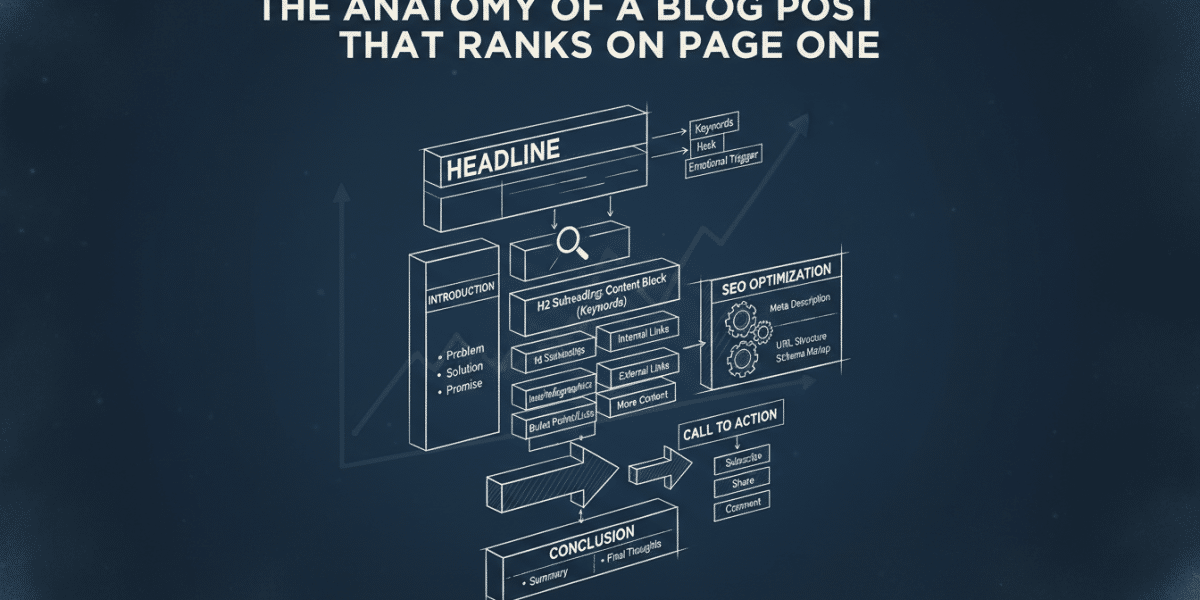
The Anatomy of a Blog Post That Ranks on Page One: Deconstructing the Elements of Success
Imagine spending hours crafting the perfect blog post, pouring your knowledge and passion into every word, only for it to disappear into the vast digital ocean. It’s a frustrating scenario many content creators face. The dream? To see your hard work not just published, but shining brightly on the first page of Google search results, drawing in eager readers and establishing your authority.
But what exactly separates those high-performing articles from the rest? Is there a secret formula? While SEO is constantly evolving, there’s a fundamental structure, a core “anatomy,” that consistently leads to a blog post that ranks on page one. It’s not just about sprinkling keywords; it’s about a holistic approach that marries strategic planning with exceptional content and technical finesse.
This isn’t a magical hack; it’s a roadmap. In this article, we’re going to pull back the curtain and dissect the essential components that contribute to a blog post’s success in the SERPs (Search Engine Results Pages). We’ll explore everything from the initial research to the final polish and beyond, giving you the tools to create content that not only resonates with your audience but also earns its rightful place at the top.
The Foundation: Knowing Your Battlefield
Before you even write a single word, the groundwork you lay is crucial. Think of it as mapping out your terrain before embarking on a journey. Without a clear understanding of your goal, your audience, and the competitive landscape, even the most beautifully written prose might miss its mark.
Deep Dive into Keyword Research and Search Intent
The heart of any successful ranking strategy lies in understanding what people are actually searching for. This goes beyond just finding a popular keyword; it’s about deciphering the intent behind the search query.
- What is Search Intent? It’s the “why” behind a search. Are people looking for information (informational intent), trying to buy something (transactional intent), comparing products (commercial investigation), or navigating to a specific website (navigational intent)?
- Example: A user searching “how to tie a tie” has informational intent, likely looking for a tutorial. “Best waterproof hiking boots” suggests commercial investigation, while “buy running shoes online” is clearly transactional. Your content must align perfectly with this intent.
- Actionable Tip: Use tools like Google Keyword Planner, Ahrefs, or Semrush to identify relevant keywords. Look for long-tail keywords (phrases of three or more words) as they often indicate more specific intent and face less competition.
Understanding Your Audience: Who Are You Talking To?
Your blog post isn’t written for algorithms; it’s written for real people. Knowing your target audience inside and out allows you to tailor your tone, examples, and solutions directly to their needs and pain points.
- Create Audience Personas: Give your ideal readers a name, a job, challenges, goals, and even a preferred communication style. This makes writing feel like a conversation with a specific individual rather than a faceless crowd.
- Speak Their Language: Avoid jargon they won’t understand, or explain it clearly. Address their specific questions and concerns.
- Why It Matters for Ranking: Search engines prioritize content that genuinely helps users. If your content perfectly addresses a user’s query and holds their attention, it signals high quality and relevance, which boosts your chances of being a blog post that ranks on page one.
Scrutinizing the SERPs: Learning from the Best
Google’s first page isn’t just a list of competitors; it’s a valuable research tool. The articles already ranking are there for a reason – Google believes they best satisfy the search intent.
- Analyze Top-Ranking Content: What topics do they cover? How are they structured? What kind of language do they use? What questions do they answer?
- Identify Gaps and Opportunities: Can you provide more depth, a fresh perspective, updated information, better visuals, or more practical examples? Your goal isn’t to copy, but to create something better and more comprehensive.
- Look for Featured Snippets: If there’s a featured snippet, analyse its format (list, paragraph, table) and content. Can you structure your article to potentially capture this coveted spot?
Crafting the Irresistible Core: Content That Converts and Ranks
With a solid foundation in place, it’s time to build the actual blog post. This is where your expertise, creativity, and strategic writing come together to form a piece of content that not only informs but also engages and satisfies your readers.
The Magnetic Headline (Your H1)
Your headline (which will typically be your H1 tag) is the first impression and arguably the most crucial element in getting a click. It needs to grab attention, accurately reflect the content, and include your primary keyword naturally.
- Clarity is Key: Readers should instantly understand what your post is about.
- Intrigue and Benefit: Spark curiosity and highlight the value they’ll gain from reading.
- Examples of Power Headlines:
- “10 Proven Strategies for a Blog Post That Ranks on Page One” (Benefit + Number)
- “Unlock the Secrets: The Anatomy of a High-Ranking Blog Post” (Intrigue + Keyword variation)
- “Why Your Blog Post Isn’t Ranking (And How to Fix It)” (Problem/Solution)
- Actionable Tip: Aim for headlines that are between 6-12 words or 40-60 characters for optimal display in search results.
The Engaging Introduction: Hook, Problem, Promise
Your introduction needs to do three things, quickly: hook the reader, articulate the problem they’re facing, and promise a solution or valuable insight within your article.
- The Hook: Start with a compelling question, a surprising statistic, a relatable anecdote, or a bold statement.
- The Problem: Clearly state the pain point or challenge your reader is experiencing.
- The Promise: Explain how your article will help them overcome that problem or achieve their goal. Introduce your main keyword here naturally to signal relevance to search engines. For instance, “If you’re wondering what makes a blog post that ranks on page one truly successful, you’re in the right place.”
Developing Comprehensive and Value-Driven Body Content
The main body of your blog post is where you deliver on your promise. This is where you provide detailed answers, practical advice, and compelling insights. It needs to be thorough, accurate, and easy to digest.
Using H2s and H3s for Structure
Headings are not just for aesthetics; they are critical for both readability and SEO. They break up text, guide the reader through your arguments, and signal to search engines the main topics and subtopics covered.
- H2s for Main Sections: Use H2 headings to outline the primary sections of your argument or different aspects of your topic. Incorporate keyword variations naturally within these headings where appropriate (e.g., “Technical Tune-Ups: Optimizing Your Ranking Blog Post”).
- H3s for Sub-Sections: Use H3 headings to break down your H2 sections into more granular points, making the content even more scannable and digestible.
- The Benefit: A well-structured article with clear headings improves user experience, reduces bounce rate, and helps search engines understand the content’s hierarchy and relevance.
Embracing E-E-A-T (Experience, Expertise, Authoritativeness, Trustworthiness)
Google heavily emphasizes E-E-A-T, especially for “Your Money Your Life” (YMYL) topics (health, finance, safety). Even for other topics, demonstrating E-E-A-T builds credibility.
- Experience: Share personal anecdotes or case studies. “Having personally struggled with…”
- Expertise: Showcase your knowledge. Cite reputable sources, provide in-depth explanations.
- Authoritativeness: Be clear about who you are and why you’re qualified to write on the topic (e.g., author bio, relevant qualifications).
- Trustworthiness: Provide accurate, up-to-date information. Back claims with data, link to studies, and ensure your site is secure (HTTPS).
- Practical Example: If you’re writing about financial advice, clearly state your credentials. If it’s about dog training, share your years of experience or certifications.
Incorporating Examples and Stories
Abstract concepts can be hard to grasp. Examples, analogies, and short stories make your content more relatable, memorable, and easier to understand.
- Illustrate Points: When explaining a complex idea, provide a concrete example of how it works in practice.
- Engage Emotions: Stories create a connection with your reader, making your content more compelling and enjoyable. This encourages them to stay on the page longer, a positive signal for ranking.
The Powerful Conclusion: Summarize and Call to Action
Don’t let your article just fade out. A strong conclusion ties everything together and directs the reader on what to do next.
- Summarize Key Takeaways: Briefly reiterate the main points you’ve covered.
- Reiterate the Value: Remind the reader of the core benefit or solution you provided.
- Call to Action (CTA): What do you want your reader to do now?
- Leave a comment?
- Share the post?
- Subscribe to your newsletter?
- Read a related article?
- Try a product/service?
- Final Thought: End with an inspiring or thought-provoking statement that reinforces your message about creating a high-quality blog post that ranks on page one.
Technical Tune-Ups: Optimizing for Search Engines and Humans
While compelling content is king, technical optimisation is the crown. Even the most brilliant article needs to be packaged correctly for search engines to fully understand and appreciate its value. These “on-page SEO” elements are crucial for any blog post that ranks on page one.
Natural Keyword Integration (Beyond the Main Keyword)
Resist the urge to stuff keywords. Instead, focus on natural language and semantic SEO.
- LSI Keywords (Latent Semantic Indexing): These are words and phrases semantically related to your main keyword. For “healthy recipes,” LSI keywords might include “nutritious meals,” “balanced diet,” “meal prep ideas,” “cooking tips.” Use them naturally throughout your content.
- Vary Your Phrasing: Google is smart enough to understand synonyms and related concepts. Don’t be afraid to use different ways to express your core topic.
- Placement: Include your main keyword and variations in the title, introduction, a few H2/H3s, the body text, image alt text, and the conclusion. But always prioritize natural readability.
Crafting Compelling Meta Descriptions
While not a direct ranking factor, the meta description is your advertisement in the search results. It influences click-through rates (CTR), which is a ranking factor.
- Summarize and Entice: Briefly explain what the article is about and why someone should click.
- Include Keywords: Naturally weave in your main keyword and relevant LSI keywords to show relevance.
- Add a Call to Action (Implicit or Explicit): Use words like “Learn,” “Discover,” “Find out,” or “Read more.”
- Optimal Length: Keep it around 150-160 characters to avoid truncation in SERPs.
Visuals That Speak Volumes: Images, Videos, and Alt Text
Rich media not only breaks up text and makes your content more engaging but also offers SEO opportunities.
- Relevance is Key: Use images, videos, or infographics that genuinely enhance the content, illustrate points, or add value.
- Optimize File Size: Large images slow down your page, harming UX and SEO. Compress images without sacrificing quality.
- Descriptive Alt Text: This is crucial for accessibility and SEO. Alt text describes the image for visually impaired users and helps search engines understand the image’s content.
- Bad Alt Text:
<img src="dog.jpg" alt=""> - Good Alt Text:
<img src="golden-retriever-puppy-running-park.jpg" alt="Golden retriever puppy happily running through a park"> - SEO-Friendly Alt Text (if relevant):
<img src="blog-post-ranking-diagram.png" alt="Diagram illustrating the anatomy of a blog post that ranks on page one">
- Bad Alt Text:
Strategic Internal and External Linking
Linking correctly improves navigation, shares “link juice,” and establishes authority.
- Internal Linking: Link to other relevant articles on your own website. This helps Google discover more of your content, keeps users on your site longer, and spreads authority. Aim for 2-5 internal links per post, where natural.
- External Linking: Link out to high-authority, reputable sources when referencing statistics, studies, or expert opinions. This backs up your claims, demonstrates E-E-A-T, and provides additional value to your readers. Make sure these open in a new tab.
URL Structure and Mobile Responsiveness
These seemingly small details have a big impact on SEO and user experience.
- Clean URLs: Keep your URLs short, descriptive, and include your main keyword. Avoid messy strings of numbers or irrelevant words.
- Bad URL:
yoursite.com/blog/p=123&cat=marketing - Good URL:
yoursite.com/blog/anatomy-blog-post-ranks-page-one
- Bad URL:
- Mobile-Friendliness: Google operates on a mobile-first indexing principle. Your website must be responsive and provide an excellent experience on all devices. Test your site with Google’s Mobile-Friendly Test tool.
Beyond the Text: Enhancing User Experience (UX) Signals
Google increasingly prioritizes user experience signals. If users enjoy their time on your page, stay longer, and don’t bounce back to the SERPs, it tells Google your content is valuable. This is a critical component for a blog post that ranks on page one.
Page Speed and Core Web Vitals
Slow loading times frustrate users and lead to high bounce rates. Google’s Core Web Vitals (Largest Contentful Paint, First Input Delay, Cumulative Layout Shift) directly measure page experience.
- Optimize Images: Already mentioned, but worth repeating.
- Leverage Browser Caching: Allows returning visitors to load your site faster.
- Minimize CSS and JavaScript: Reduce unnecessary code that can slow down loading.
- Use a Fast Hosting Provider: A good host makes a significant difference.
Readability and Formatting for Maximum Engagement
Even great content won’t get read if it’s a dense wall of text.
- Short Paragraphs: Break up your text into short, scannable paragraphs (2-4 sentences max).
- Clear Language: Use active voice, avoid overly complex sentences, and write at a comfortable reading level for your audience.
- Bullet Points and Numbered Lists: Excellent for presenting information concisely and making it easy to skim.
- Bold Text: Use bolding to highlight key phrases and important takeaways.
- Whitespace: Give your text room to breathe. Generous line spacing and margins improve the visual appeal.
Interactive Elements and Media
Beyond static images, consider how dynamic elements can enhance engagement.
- Embed Videos: If relevant, embed YouTube videos (your own or others’) to provide different learning styles and increase time on page.
- Infographics: Highly shareable and effective for presenting complex data simply.
- Quizzes or Polls: Encourage active participation.
- Comments Section: A thriving comment section indicates an engaged audience and fresh content.
The Post-Publication Prowess: Sustaining Your Rank
Hitting “publish” isn’t the end; it’s the beginning. The work you do after your blog post goes live is just as important for its long-term ranking success.
Promotion and Distribution
Even the best content needs to be seen. Don’t expect Google to do all the work.
- Social Media: Share your post across relevant social media platforms. Tailor your message for each platform.
- Email Marketing: Send it to your subscribers. Your email list is often your most engaged audience.
- Online Communities: Share in relevant forums, Reddit communities (where allowed and appropriate), or LinkedIn groups.
- Guest Posting/Outreach: If your content is truly exceptional, consider reaching out to other sites for potential backlinks or mentions.
Monitoring, Analyzing, and Refreshing
SEO is an ongoing process. Your blog post that ranks on page one today might slip tomorrow if not maintained.
- Monitor Performance: Use Google Analytics and Google Search Console to track traffic, bounce rate, time on page, and keyword performance.
- Identify Opportunities: Which keywords are you ranking for, even if it’s on page two or three? Can you optimise further to push them higher?
- Refresh Old Content: Over time, information becomes outdated. Regularly review and update your older posts with fresh data, new examples, and relevant keywords. This “content refresh” can give a significant boost to their ranking.
- Address Comments: Engage with your readers in the comments section. It shows you’re active and provides valuable feedback.
Conclusion: The Holistic Approach to Ranking Success
The journey to creating a blog post that ranks on page one is multifaceted, requiring more than just good writing. It’s about understanding your audience, meticulously researching your topic, crafting truly valuable and comprehensive content, optimising for both search engines and human readers, and diligently promoting and maintaining your work.
There’s no single magic bullet, but rather a symphony of interconnected elements working in harmony. By dedicating attention to each component of this anatomy – from the initial keyword research and compelling headline to the rich content, technical SEO, user experience, and post-publication efforts – you dramatically increase your chances of seeing your blog posts not just published, but celebrated on Google’s first page. Start applying these principles today, and watch your content climb the ranks, attracting the audience it deserves.
Related Posts
 Why Most Dublin Blog Posts Never Rank (And How to Fix Yours)
 How to Rank on Page One in Dublin Without Paying for Ads
 How Long Should a Blog Post Be to Rank in Ireland?
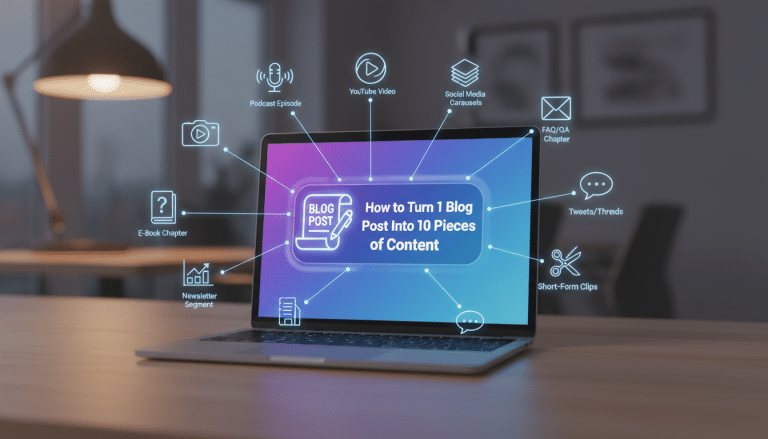 How to Turn One Blog Post Into 10 Pieces of Content
 How to Write Blog Posts That Actually Rank on Google
 Why Pillar Pages Are the Secret Weapon of Top-Ranking Websites
 Why a Slow Website Is Killing Your Search Rankings
 How we found the path to Page One for a Cork innovator