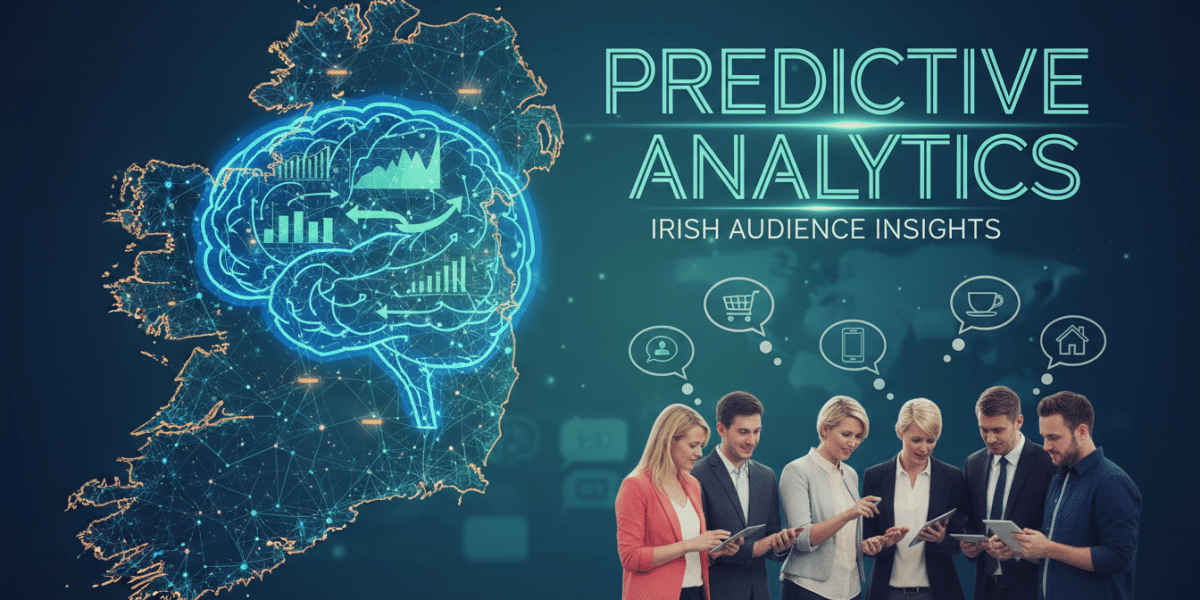
Unlocking the Emerald Isle’s Consumers: What Predictive Analytics Can Tell Irish Marketers About Their Audience
In the bustling, interconnected world of modern business, understanding your customer is the holy grail. For Irish marketers, navigating a vibrant yet often nuanced market, this pursuit is even more critical. The Emerald Isle boasts a unique blend of tradition and modernity, strong local communities, and a globally connected populace. But how do you truly get inside the heads of Irish consumers, anticipate their desires, and tailor your message with precision? The answer lies in the power of data, specifically in what predictive analytics can tell Irish marketers about their audience.
Gone are the days when gut feelings and historical sales reports were enough. Today, forward-thinking Irish businesses are leveraging predictive analytics to move beyond mere observation to intelligent forecasting. This isn’t about guessing; it’s about using sophisticated models to uncover patterns, anticipate future trends, and deliver marketing efforts that resonate deeply and drive measurable results. If you’re an Irish marketer looking to gain a significant edge, understanding and implementing predictive analytics isn’t just an option – it’s quickly becoming a necessity.
What Exactly is Predictive Analytics (and Why Should Irish Marketers Care)?
At its core, predictive analytics is the art and science of using historical data to forecast future outcomes. Think of it as peering into a highly informed crystal ball, but one powered by algorithms and statistical models rather than magic. While descriptive analytics tells you what has happened (e.g., “Our sales were up 10% last quarter”), and diagnostic analytics tells you why it happened (“Sales increased due to a successful social media campaign”), predictive analytics answers the crucial question: what will happen next?
For Irish marketers, this capability is revolutionary. The Irish market, while relatively small, is incredibly dynamic and competitive. Consumers here are increasingly tech-savvy, value authenticity, and have high expectations for personalised experiences. Relying solely on past performance or broad demographic assumptions is a recipe for missed opportunities and wasted budgets.
What predictive analytics can tell Irish marketers about their audience is essentially a roadmap to more effective marketing. It empowers you to:
- Anticipate demand: Know what products or services customers will want, and when.
- Identify at-risk customers: Predict who might churn and intervene proactively.
- Optimise marketing spend: Allocate budget to channels and campaigns that are most likely to convert.
- Personalise experiences: Deliver highly relevant messages and offers that genuinely resonate.
- Uncover new opportunities: Spot emerging trends or untapped market segments before your competitors do.
In a market where every euro and every customer interaction counts, the insights provided by predictive analytics can be the difference between merely surviving and truly thriving.
The Data Goldmine: Fueling Predictive Insights
Before any prediction can be made, you need data – and lots of it. Thankfully, Irish businesses, regardless of their size, are sitting on a goldmine of information. The quality and breadth of this data directly impact what predictive analytics can tell Irish marketers about their audience.
Where does this data come from?
-
First-Party Data: This is your proprietary information, the most valuable asset. It includes:
- CRM Systems: Customer contact details, purchase history, interaction logs.
- Website & App Analytics: User behaviour, pages visited, time spent, conversion paths.
- Loyalty Programs: Detailed purchasing patterns, preferences, engagement.
- Transactional Data: What was bought, when, where, and how often.
- Customer Surveys & Feedback: Direct insights into satisfaction and preferences.
-
Second-Party Data: Data shared directly from a trusted partner, offering expanded insights without the anonymity of third-party data.
-
Third-Party Data: This includes broader demographic, psychographic, and behavioural data from external sources. For instance, data from the Central Statistics Office (CSO) can provide valuable macro-level insights into Irish population trends, economic indicators, and household spending, which can then be combined with your internal data for richer predictions. Social media listening tools can also provide a pulse on public sentiment and emerging topics of discussion across Ireland.
Crucially, for Irish marketers, data privacy and compliance with GDPR are paramount. Ethical data collection and transparent usage aren’t just legal requirements; they build trust with your audience, which is particularly valued by Irish consumers. High-quality, clean, and ethically sourced data forms the bedrock upon which powerful predictive models are built.
Unveiling the Irish Consumer: What Predictive Analytics Can Tell Irish Marketers About Their Audience
This is where the magic happens. By feeding relevant data into sophisticated algorithms, predictive analytics begins to paint a detailed, forward-looking picture of your Irish customer base.
Predicting Purchase Behaviour and Trends
One of the most immediate benefits is the ability to anticipate what and when Irish consumers will buy.
- Seasonal Fluctuations: Beyond obvious holidays like Christmas or Easter, predictive models can pinpoint micro-seasonal trends. For a fashion retailer, this could mean predicting a surge in demand for rain gear in late August as students head back to college, or specific outerwear for the Galway Races.
- Product Affinity: If a customer has bought A and B, predictive analytics can suggest they’re highly likely to buy C next. An Irish grocery store, for example, could use this to suggest artisanal cheeses to customers who frequently buy premium wines, or suggest specific cuts of meat to those who purchase particular craft beers.
- Demand Forecasting: For product-based businesses, accurate demand forecasting helps optimise inventory, reduce waste, and avoid stockouts during peak periods – imagine predicting a spike in demand for hurling equipment in a specific county after a major match victory.
Deepening Customer Segmentation and Personalisation
Forget broad strokes. Predictive analytics allows for incredibly granular segmentation, moving beyond demographics to psychographics and behavioural intent.
- Micro-Segments: Instead of just “urban professionals,” you can identify “Dublin-based professionals aged 25-35, interested in sustainable living, likely to spend on experiences over material goods, and prone to online research before purchase.”
- Dynamic Personalisation: Imagine an Irish travel company predicting which customers are most likely to book a last-minute weekend break to a rural guesthouse versus a city hotel, based on past booking patterns, website browsing, and even current weather forecasts. They can then tailor real-time website content, email offers, or app notifications accordingly.
- Predicting Preferred Channels: Understanding which customers prefer email, SMS, social media, or even a local radio ad based on their past engagement helps allocate resources more effectively.
Optimising Marketing Spend and Channel Effectiveness
Every marketing euro spent in Ireland needs to work hard. Predictive analytics ensures your budget hits its mark.
- ROI Prediction: Before launching a new campaign, models can estimate the likely return on investment for different channels (e.g., social media vs. local newspaper vs. Google Ads) based on historical performance and current market conditions.
- Customer Acquisition Cost (CAC) Optimisation: Identify which customer segments are most cost-effective to acquire and focus resources there. For example, knowing that customers acquired via local community events have a higher predicted CLV than those from a broader digital campaign might shift future budget allocations.
- Churn Prevention: Identify customers showing early signs of dissatisfaction or disengagement. A telecommunications company might predict a customer is likely to switch providers based on reduced data usage, multiple customer service calls, or visits to competitor websites. This allows for proactive retention offers or targeted communication to win them back before they leave.
Anticipating Customer Lifetime Value (CLV)
Understanding the long-term value of a customer is crucial for sustainable growth. Predictive analytics excels at this.
- High-Value Identification: Pinpoint customers who are likely to become your most loyal, high-spending advocates early in their journey. An Irish boutique can then offer these individuals exclusive previews or early access to new collections, fostering deeper loyalty.
- Strategic Resource Allocation: Allocate more resources to nurturing relationships with high-CLV customers, understanding that their long-term contribution outweighs short-term transactional gains.
- Preventing Lapses: Predict when a customer’s engagement might dip and trigger specific campaigns to re-engage them, perhaps through personalised “we miss you” offers or content relevant to their past purchases.
Understanding Localised Nuances and Emerging Opportunities
Ireland is not homogenous. Predictive analytics can highlight regional differences and emerging shifts.
- Geographic Preferences: Are consumers in Cork reacting differently to a product launch than those in Donegal? Predictive models can uncover these subtle variations, allowing for hyper-localised marketing efforts – perhaps a promotion unique to the Munster region for a certain agricultural product, or a different ad campaign targeting urban professionals in Dublin versus families in rural Kerry.
- New Product/Service Demand: By analysing search trends, social media sentiment, and economic indicators, predictive analytics can spot burgeoning interest in areas like sustainable tourism, remote work solutions, or specific health and wellness trends unique to the Irish landscape, offering first-mover advantage.
- Economic Sensitivity: Given Ireland’s open economy, consumer sentiment can fluctuate. Predictive models can integrate economic forecasts to anticipate shifts in discretionary spending, helping businesses prepare for potential upturns or downturns.
Practical Steps for Irish Marketers: Getting Started with Predictive Analytics
The thought of implementing predictive analytics might seem daunting, especially for SMEs. But it doesn’t have to be. Here’s how Irish marketers can begin:
- Define a Clear Problem: Don’t try to predict everything at once. Start with a specific, high-impact business question. Examples: “Which customers are most likely to respond to our next email campaign?” or “What’s the optimal price point for this new product launch?”
- Audit Your Data: What data do you currently collect? Is it clean, accurate, and accessible? Focus on integrating data from different silos (CRM, website, sales).
- Start Small, Learn Fast: You don’t need a massive data science team from day one. Many marketing automation platforms now include built-in predictive capabilities. Even advanced Excel functions or affordable cloud-based tools can offer entry points.
- Consider Expert Help: If internal resources are limited, partner with a data analytics consultant or agency experienced in the Irish market. They can help set up initial models and interpret results.
- Focus on Actionable Insights: The goal isn’t just to make predictions, but to act on them. Ensure your predictions translate into concrete marketing strategies and measurable campaigns.
- Prioritise Privacy: Always keep GDPR at the forefront. Be transparent with customers about data usage and ensure all practices are compliant. Irish consumers are particularly attuned to data privacy, so building trust is non-negotiable.
Challenges and Considerations for the Irish Market
While the benefits are clear, Irish marketers should also be aware of potential hurdles:
- Data Silos: Many businesses, especially smaller ones, have customer data scattered across various systems, making it difficult to unify for analysis.
- Skill Gap: A shortage of in-house data scientists or analysts can be a barrier.
- Budget Constraints: Advanced predictive analytics tools and expertise can be an investment, which might challenge smaller businesses.
- Dynamic Market: The Irish market can be influenced by local events, cultural nuances, and global economic shifts, requiring models to be continuously updated and refined.
- Cultural Nuances: While data provides patterns, understanding the unique cultural context and consumer sentiment in Ireland remains vital for effective messaging.
Conclusion
In an increasingly competitive landscape, simply reaching your Irish audience isn’t enough; you need to truly understand them and anticipate their needs. What predictive analytics can tell Irish marketers about their audience goes far beyond basic demographics. It offers a sophisticated, forward-looking lens that reveals purchase intent, personal preferences, potential churn, and emerging opportunities with remarkable accuracy.
By embracing predictive analytics, Irish marketers can transform their strategies from reactive to proactive, optimise precious resources, foster deeper customer loyalty, and ultimately drive sustainable growth. It’s about moving from informed guesses to intelligent foresight, ensuring your marketing efforts resonate authentically and effectively across the vibrant and diverse communities of the Emerald Isle. The future of marketing in Ireland is data-driven, and predictive analytics is leading the way.
Related Posts
 What are the peak hours for social media engagement in Ireland?
 Google Analytics Hostname Filters: What Irish Marketers Must Know Now
 Find Sources Shaping AI Answers: Guide For Irish Digital Marketers
 Real Estate Marketing 2026: A Blueprint for Irish Success
 AI-Powered MarTech: Innovations Irish Marketers Canʼt Ignore
 Top Landing Page Examples for Irish Digital Marketers
 The Most Important Digital Marketing KPIs for Irish Businesses
 The Best Email Marketing Platforms for Irish Small Businesses