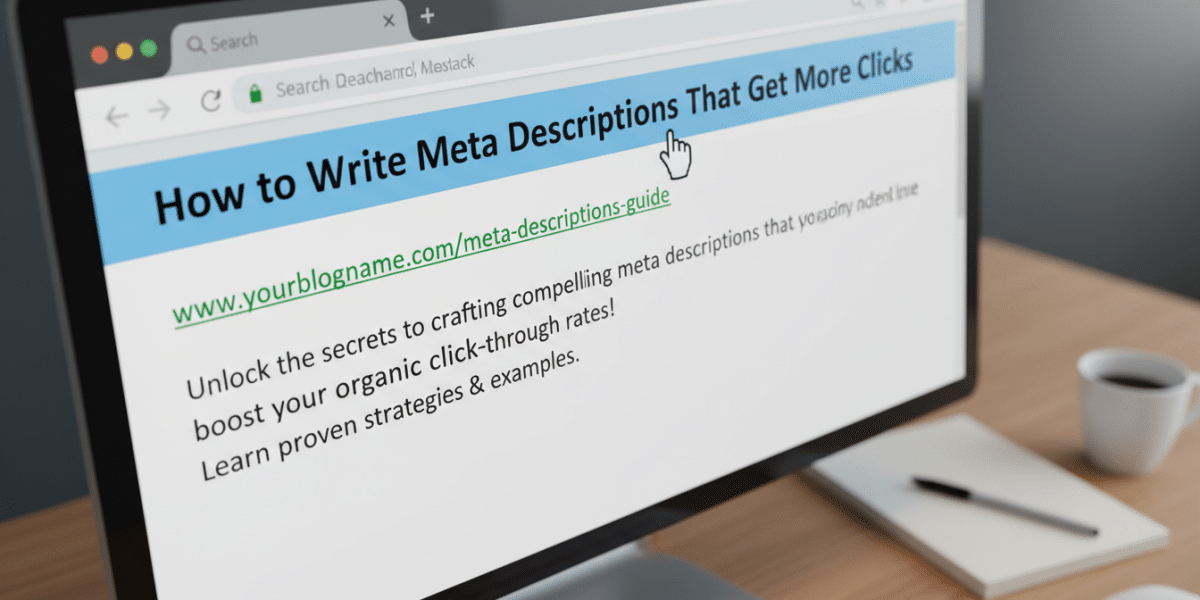
How to Write Meta Descriptions That Get More Clicks
Imagine you’re scrolling through a bustling digital marketplace, searching for something specific. You see a list of stalls, each with a sign overhead (the title) and a little blurb underneath describing what they offer. Which blurb makes you stop, lean in, and ultimately walk into that particular stall?
This is precisely the role of a meta description in the world of search engines. It’s that critical little blurb under your page title in the search results, your chance to grab a user’s attention and convince them your page is the one they need to click. Writing a compelling meta description isn’t just about SEO; it’s about human psychology, persuasive copywriting, and making a promise you can deliver on.
If you’ve ever wondered how to craft these small but mighty snippets to truly stand out, you’re in the right place. This article will walk you through how to write meta descriptions that get more clicks, transforming them from simple summaries into powerful conversion tools.
What Are Meta Descriptions Anyway? And Why Do They Matter So Much?
Before we dive into the “how,” let’s quickly solidify the “what” and “why.” A meta description is an HTML attribute that provides a brief summary of a webpage. Search engines like Google display these descriptions in their search results, typically below the page’s title and URL.
While meta descriptions aren’t a direct ranking factor for Google (meaning they won’t directly boost your position in search results), they are hugely influential in another critical metric: Click-Through Rate (CTR).
Why do they matter for clicks?
Think of a meta description as a mini-advertisement for your content. It’s the second thing a user sees after the page title. If your title grabs their initial interest, your meta description seals the deal. A well-written, enticing description acts as a bridge between the search query and your content, signaling relevance, value, and a reason to choose your link over all the others on the page. In essence, a higher CTR tells Google that users find your content highly relevant, which can indirectly lead to better rankings over time.
The Anatomy of a Click-Worthy Meta Description
Crafting a meta description that truly shines involves a blend of strategic thinking and creative writing. Here are the key elements to focus on:
Keep it Concise and Within Limits
Search engines don’t display an endless amount of text. Google typically truncates meta descriptions at around 155-160 characters on desktop, and even less on mobile. While the exact limit can fluctuate, aiming for this range ensures your most important message isn’t cut off. Think of it as Twitter for your webpage summary – every character counts.
Embrace Your Target Keyword (Subtly!)
Including your primary keyword in your meta description is smart for a couple of reasons. First, it reassures users that your page is relevant to their search query. Second, Google often bolds the keywords a user searched for if they appear in your meta description, making your snippet visually stand out. However, keyword stuffing is a cardinal sin. Integrate it naturally, as part of a compelling sentence, not as a laundry list.
Craft Compelling Ad Copy
This is where your inner copywriter needs to shine. Your meta description is your elevator pitch. It needs to be persuasive, engaging, and make the user feel like their problem will be solved or their curiosity satisfied by clicking your link. Use strong verbs and evocative language.
Solve a Problem or Offer a Benefit
People use search engines because they have a question, a need, or a problem to solve. Your meta description should hint at how your page provides that solution or benefit.
- Instead of: “Our product is great.”
- Try: “Struggling with [problem]? Discover our [product/solution] to effortlessly achieve [desired outcome]!”
Include a Strong Call to Action (CTA)
A subtle but clear call to action can significantly boost your CTR. Phrases like “Learn more,” “Discover how,” “Get your free guide,” “Shop now,” or “Find out everything you need” gently nudge the user towards clicking. Don’t be bossy, be inviting.
Show, Don’t Just Tell (Use Power Words)
Instead of vague statements, use words that paint a picture or evoke an emotion.
- Vague: “Information about gardening.”
- Power Words: “Unlock the secrets to vibrant gardens,” “Transform your backyard,” “Expert tips for lush greenery.”
Words like “discover,” “explore,” “unlimited,” “instant,” “proven,” “exclusive,” and “guide” can add significant punch.
Consider Emojis and Special Characters (Tastefully)
In some niches, emojis (like ✅, ⭐, 🚀) or special characters (like checkmarks or arrows) can help your meta description stand out visually in a crowded search results page. However, use them judiciously and ensure they are appropriate for your brand and industry. A legal firm might avoid emojis, while a lifestyle blog could use them effectively. Test their impact!
Practical Tips for Writing Meta Descriptions That Convert
Knowing the elements is one thing; putting them into practice is another. Here are some actionable tips to help you write meta descriptions that consistently draw more clicks:
Understand Your Audience’s Intent
Before you write a single word, consider who you’re trying to reach and what they’re truly looking for when they type a query into Google. Are they looking for information, a product to buy, a service, or entertainment? Tailor your description to match that intent. A person searching for “best running shoes” wants different information than someone searching for “how to tie running shoes.”
Research Competitors (But Don’t Copy)
Take a look at what your competitors are writing for their meta descriptions on similar topics. What are they doing well? What are they missing? Use this research to identify opportunities to differentiate your content and make your description even more compelling. Don’t copy their exact wording, but learn from their strategies.
A/B Test Your Descriptions
The best way to know what works for your audience is to test it. If you have the tools, try running A/B tests with different meta descriptions for the same page. Change your CTA, your opening line, or your benefit statement. Track your CTR to see which version performs better. This data-driven approach is invaluable for continuous improvement.
Don’t Forget About Mobile
A significant portion of search traffic comes from mobile devices. Ensure your meta description looks good and makes sense on smaller screens. This reinforces the “concise” rule – shorter descriptions tend to perform better across all devices.
Avoid Duplicate Descriptions
Every page on your website should ideally have a unique meta description. Duplicate descriptions can confuse both search engines and users, making it harder for them to understand what makes each page distinct and valuable. It signals a lack of care and can dilute your SEO efforts.
Leverage Schema Markup (Briefly)
While not strictly part of the meta description text itself, schema markup (structured data) can enhance your search snippets with rich results like star ratings, prices, availability, or event details. These “rich snippets” make your search listing even more visually appealing and informative, often leading to a higher CTR, so consider implementing them where appropriate for your content type.
Common Mistakes to Avoid When Crafting Meta Descriptions
Even with the best intentions, it’s easy to fall into common traps. Steering clear of these pitfalls will save you time and improve your results.
Keyword Stuffing
Overloading your meta description with keywords not only makes it unreadable and unnatural, but it can also be seen as spammy by search engines. This hurts user experience and can lead to lower CTRs, as users will quickly recognize it as an attempt to manipulate rankings rather than provide value.
Generic Descriptions
A description that could apply to any page won’t entice anyone. “Learn more here” or “This page has content about our services” is a missed opportunity. Be specific, highlight what makes your page unique, and address the user’s specific query directly.
Overly Long or Truncated Text
As mentioned, meta descriptions get cut off. If your most crucial information or your call to action is at the end of a long description, users might never see it. Prioritize the most important message in the first 120-130 characters.
Misleading Information
Never promise something in your meta description that your page doesn’t deliver. Misleading users will lead to high bounce rates (users clicking back to the search results quickly), which sends negative signals to search engines and erodes trust in your brand. Authenticity is key.
Examples: Before & After
Let’s put theory into practice with some quick examples of how to write meta descriptions that get more clicks.
1. Product Page: “Organic Coffee Beans”
- Before: “Coffee beans for sale. Buy our coffee. We sell organic coffee beans online.” (Generic, keyword stuffed)
- After: “☕ Fuel your day with ethically sourced organic coffee beans! Explore our rich, aromatic blends – freshly roasted & delivered to your door. Shop award-winning flavors today!” (Benefit-driven, power words, CTA, emoji, unique selling points)
2. Blog Post: “How to Grow Tomatoes Indoors”
- Before: “Learn about growing tomatoes. This guide shows you how to grow tomatoes inside.” (Plain, uninspiring)
- After: “Want fresh tomatoes year-round? 🪴 Discover expert tips & step-by-step instructions on how to grow juicy tomatoes indoors, even in small spaces. Your ultimate guide awaits!” (Addresses problem, offers solution, strong CTA, power words)
3. Service Page: “Local Plumbing Services”
- Before: “We offer plumbing services. Call us for a plumber.” (Too brief, no unique value)
- After: “💧 Burst pipe or leaky faucet? Get fast, reliable local plumbing services you can trust! Our certified technicians offer 24/7 emergency repair & upfront pricing. Schedule service now!” (Problem/solution, urgency, trust signals, CTA, unique value propositions)
Conclusion: Your Gateway to More Clicks
Writing effective meta descriptions isn’t rocket science, but it does require thought, creativity, and an understanding of your audience. While they might be small, their impact on your website’s visibility and click-through rate is anything but. By focusing on conciseness, relevance, compelling copy, and a clear call to action, you can transform these unassuming snippets into powerful tools that guide users directly to your content.
Remember, every search result is an opportunity to make a first impression. By mastering how to write meta descriptions that get more clicks, you’re not just optimising for search engines; you’re communicating directly with potential visitors, enticing them with value, and ultimately, inviting them to engage with your valuable content. Start experimenting, analysing, and refining, and watch your CTR soar!
Dublin's ROI-Driven Digital Marketing Agency Home
Related Posts
 How to Write Meta Descriptions That Get Clicks
 Crafting Winning Titles & Metas | Globe Boss SEO Agency Dublin
 Dublin SEO Services for Click-Worthy Titles & Meta Descriptions
 How to
optimise titles and metas for better SEO
How to
optimise titles and metas for better SEO How to Optimise Product Descriptions for SEO and Conversions
 Maximize Clicks & Conversions | Dublin PPC & SEO Experts
 How Meta Ads Can Supercharge Your Dublin Business
 Skyrocket Conversions with Expert Meta Ads Campaigns