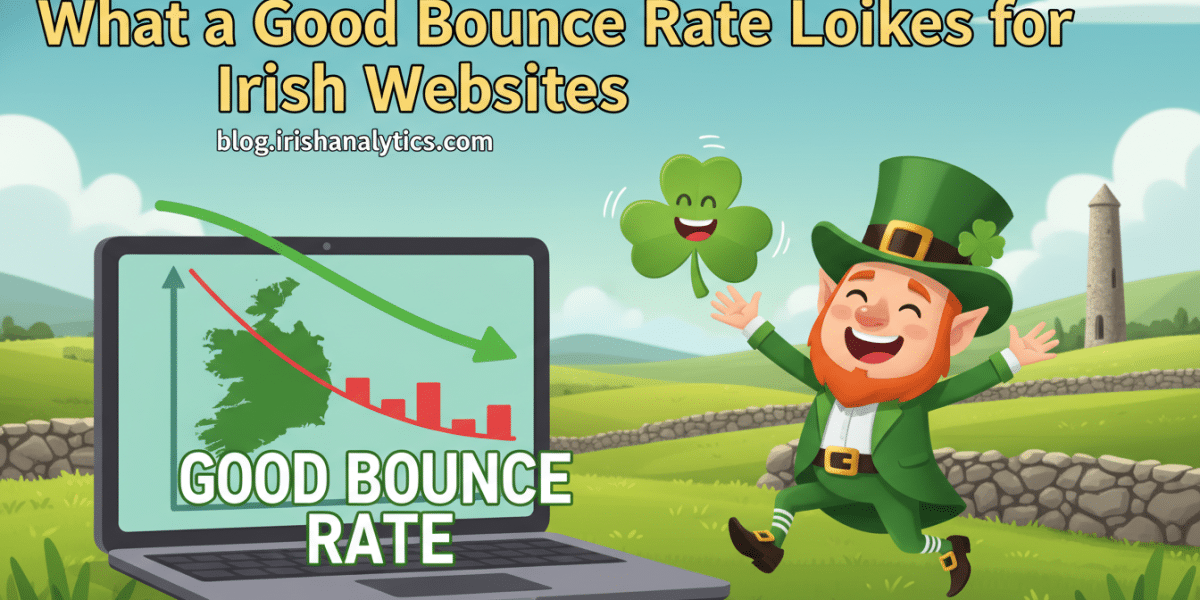
Beyond the Bouncing Ball: Understanding What a Good Bounce Rate Looks Like for Irish Websites
Picture this: A potential customer lands on your Irish business’s website. They’ve clicked through from a search engine, a social media ad, or perhaps a link in an email. They glance at your page, maybe scroll a tiny bit, and then – poof – they’re gone. They didn’t click another link, didn’t fill out a form, didn’t explore further. That, my friends, is a bounce.
For any business operating online, understanding bounce rate is crucial. It’s a metric that can whisper secrets about your website’s performance, user experience, and even the effectiveness of your marketing efforts. But when it comes to the question of what a good bounce rate looks like for Irish websites, the answer isn’t a simple, universally applicable number. It’s a nuanced story told by your industry, your content, your target audience, and ultimately, their intent.
This article will demystify bounce rate, explore the factors that influence it, provide practical benchmarks for various Irish online ventures, and offer actionable strategies to improve your site’s performance, ensuring your visitors stick around longer than a fleeting glance at a rainy day.
Demystifying the Bounce Rate: More Than Just a Number
Before we delve into what makes a good bounce rate, let’s ensure we’re all on the same page about what it actually is.
What Exactly is a Bounce?
In the world of web analytics, a bounce occurs when a user visits a single page on your website and then leaves without interacting further with that page or navigating to any other page on your site. Think of it like someone walking into a shop, looking around the entrance, and walking straight back out without engaging with staff or browsing the aisles.
The bounce rate is then calculated as the percentage of single-page sessions (bounces) divided by the total number of sessions for that specific page or your entire website. So, if 100 people visit your site and 60 of them leave after viewing only one page, your bounce rate is 60%.
Why Does it Matter to Your Irish Business?
A high bounce rate can be a red flag, indicating several potential issues that could be costing your Irish business leads, sales, and valuable engagement:
- Poor User Experience (UX): If users are leaving quickly, it might suggest your site is slow, difficult to navigate, visually unappealing, or not mobile-friendly.
- Irrelevant Content: Perhaps the page doesn’t deliver on the promise of the link they clicked. The content might not be what they expected or needed.
- Misleading Marketing: Your ad or search result title might be attracting the wrong audience, or setting incorrect expectations.
- Impact on SEO: While not a direct ranking factor, a persistently high bounce rate coupled with low time-on-site could signal to search engines that your page isn’t satisfying user intent, indirectly affecting your organic visibility over time.
- Lost Conversions: Every bounce is a missed opportunity for a subscription, a sale, a contact form submission, or any other goal you have for your website.
For Irish businesses looking to compete locally and internationally, understanding and optimising bounce rate is fundamental to digital success.
The Myth of the Universal “Good” Bounce Rate
Let’s get this out of the way: there is no single “magic number” that defines a good bounce rate for all websites. Anyone who tells you that 30% is universally good or 70% is universally bad is missing the bigger picture. Context is absolutely king.
Imagine an Irish tourism blog posting about “The 10 Best Walks in Connemara.” A visitor might find the list, read it through, get all the information they need, and then leave to plan their trip. This would be a bounce, but was it a bad experience? Not necessarily. They found what they were looking for, and their intent was fulfilled.
Conversely, an e-commerce site selling handcrafted Irish jewellery would ideally want a much lower bounce rate. If someone lands on a product page and leaves immediately, it’s likely they didn’t find what they expected, or the price, shipping, or visuals were off-putting. In this case, a high bounce rate is definitely a concern.
Factors Influencing Bounce Rate on Irish Websites
To truly understand what a good bounce rate looks like for your particular slice of the Irish digital landscape, you need to consider the specific factors at play:
Industry Sector & Niche
Different industries naturally have different user behaviours.
- Blogs & News Sites: Often have higher bounce rates (40-70%) because users come for specific information, get it, and leave.
- E-commerce Sites (e.g., an online Irish craft shop): Aim for lower bounce rates (20-45%) as users are expected to browse multiple products, add to cart, and check out.
- Service-Based Businesses (e.g., a Dublin accounting firm): Might see bounce rates in the 30-55% range. Users might land, quickly find contact details or service info, and then call directly.
- Lead Generation (e.g., a renewable energy installer): Similar to service sites, aiming for 30-55%, encouraging users to explore services or fill out a form.
Type of Page
The purpose of a specific page dramatically impacts its expected bounce rate.
- Homepages: Should ideally have a lower bounce rate as they are navigation hubs (25-50%).
- Product/Service Pages: A crucial step in the conversion funnel, so a moderate bounce rate is desirable (20-45%).
- Blog Posts/Articles: Often higher, as users might only want to read that single piece (50-80%).
- Contact Us Pages: Can have a higher bounce rate if users quickly find the number or map they need and then leave (40-70%).
- Dedicated Landing Pages (for specific campaigns): Can have very high bounce rates (60-90%) because their entire purpose is often a single call to action. If the user converts on that page or decides it’s not for them, they leave. The success here is measured by conversion rate, not bounce rate alone.
Traffic Source
Where your visitors come from often dictates their intent and, consequently, their bounce behaviour.
- Organic Search (Google, Bing): Often lower bounce rates (25-50%) because users have a specific query and are actively looking for information. If your page ranks, it’s usually a good match.
- Paid Search (Google Ads): Can be variable. Well-targeted ads linked to relevant landing pages should have moderate bounce rates (30-60%). Poorly targeted ads will lead to high bounces.
- Social Media: Often higher bounce rates (60-90%) as users are browsing casually. They might click out of curiosity rather than specific intent, then quickly return to their feed.
- Email Marketing: Generally lower bounce rates (15-40%) because these are typically engaged users who already know your brand.
- Direct Traffic: Usually very low bounce rates (10-30%) as these users actively typed in your URL, meaning they already know and trust your brand.
Device Type
With the majority of internet traffic now coming from mobile devices, how your site performs on smartphones and tablets is critical for Irish users, just as it is globally.
- Mobile Users: Often have slightly higher bounce rates than desktop users (e.g., 5-10% higher). This is because mobile users are often on the go, multitasking, or just quickly checking something. If your site isn’t perfectly responsive and fast on mobile, they’ll leave instantly.
User Intent & Expectation
This is perhaps the most critical factor. Did your page deliver what the user expected when they clicked to arrive? If an Irish food blogger promises “The Best Scone Recipe Ever” and the page is about SEO, that’s a mismatch of intent, leading to a high bounce rate. Ensure your titles, meta descriptions, ad copy, and internal links accurately reflect the content on the page.
Website Performance & User Experience (UX)
Even if your content is spot on, a poor technical experience will send users packing.
- Loading Speed: Slow-loading sites are deadly. Users expect pages to load almost instantly. A delay of just a few seconds dramatically increases bounce rates.
- Design & Layout: Cluttered, confusing, or visually unappealing designs can overwhelm users. A clean, intuitive layout is key.
- Navigation: If users can’t easily find what they’re looking for, or if your internal linking is non-existent, they’ll bounce.
- Readability: Large blocks of text, tiny fonts, or poor colour contrast will make reading difficult, leading to frustration and departure.
What a Good Bounce Rate Really Looks Like for Irish Websites: Benchmarks & Reality Checks
Given the context we’ve just discussed, here are some general bounce rate ranges to consider. Remember, these are broad guidelines, not strict rules. Your specific circumstances might warrant a different interpretation.
- Excellent (10-25%): Very rare for an entire website. Usually indicates highly engaged, targeted traffic (e.g., direct traffic, loyal customers, single-page conversion funnels where the conversion occurs quickly). If your overall site is in this range, you’re doing exceptionally well.
- Good (26-40%): A healthy range for many e-commerce, service-based, or B2B lead generation websites where users are expected to explore multiple pages. For many Irish businesses, this is an excellent target.
- Average (41-55%): A common range for many websites. It suggests a generally acceptable level of engagement, though there might be room for improvement on specific pages or traffic sources.
- Acceptable (56-70%): Often seen for content-heavy sites like blogs, news portals, or informational resources where single-page consumption is common. Also, some highly specific landing pages might fall here if conversions are still happening. For an Irish blog about local history, this could be perfectly fine.
- High (71% and above): Generally a cause for concern. While some single-purpose pages or specific traffic sources (like social media click-throughs) might naturally creep into this range, a high overall site bounce rate usually signals problems with UX, content relevance, or traffic targeting.
The “Irish” Nuance: While the core principles of bounce rate are universal, the local context for Irish businesses means focusing your efforts on aspects important to your Irish audience. This includes understanding local search terms, cultural design preferences, and the specific needs of consumers in Ireland. For example, ensuring your shipping information is clear for all 32 counties or highlighting your local physical presence can reduce bounces from locally-minded customers.
Practical Strategies to Improve Your Irish Website’s Bounce Rate
Now that we understand what a good bounce rate looks like (and why it varies), let’s talk about how to achieve it for your Irish website.
1. Optimise for Mobile First
This is non-negotiable. Ensure your website is fully responsive, fast, and easy to use on all mobile devices. Test it yourself on different phones and tablets. A clunky mobile experience is a guaranteed bounce for many users browsing on the go.
2. Speed Up Your Site
User patience is a rare commodity. Use tools like Google PageSpeed Insights to identify and fix speed bottlenecks. Compress images, leverage browser caching, and consider a good hosting provider, perhaps one with servers located closer to Ireland for faster load times for local users.
3. Enhance User Experience (UX)
- Clear Navigation: Make it easy for visitors to find what they’re looking for. Use intuitive menus, breadcrumbs, and a prominent search bar.
- Appealing Design: A clean, modern, and professional design builds trust and keeps users engaged. Use whitespace effectively.
- Readable Content: Break up large blocks of text with headings, subheadings, bullet points, and images. Use a legible font and good colour contrast.
- Logical Flow: Guide users naturally through your content. What’s the next logical step you want them to take?
4. Create High-Quality, Relevant Content
This is the heart of engagement.
- Deliver on Promises: Ensure your page content matches the title, description, or ad that brought the user there.
- Solve User Problems: Provide valuable information, answer questions, or offer solutions that meet the user’s intent.
- Engage: Use compelling storytelling, clear language, and relevant visuals. For Irish businesses, this might mean incorporating local examples or cultural references where appropriate.
5. Clear Calls to Action (CTAs)
Once a user has consumed your content, what should they do next? Make it obvious! Use clear, prominent CTAs (e.g., “Shop Our Collection,” “Get a Free Quote,” “Read More Blogs,” “Contact Us Today”).
6. Refine Your Traffic Sources
If you’re getting a lot of traffic but high bounces, you might be attracting the wrong audience.
- Review Keywords: Are your SEO and PPC efforts targeting the right keywords with the right intent?
- Targeting: Refine your audience targeting for social media and paid ad campaigns.
- Ad Copy: Ensure your ad copy accurately represents what’s on the landing page.
7. Implement Internal Linking
Keep users on your site by providing relevant links to other pages within your website. This encourages exploration and deepens engagement. For instance, an Irish food blog writing about soda bread could link to other baking recipes or local ingredient suppliers.
8. A/B Test Your Pages
Don’t guess – test! Experiment with different headlines, images, CTA button colours, layouts, and even content phrasing. Tools like Google Optimize (or similar platforms) can help you determine what works best for your audience.
9. Personalisation (Where Possible)
Tailor content or offers based on user behaviour or demographics. Even simple personalisation, like remembering a user’s language preference, can make a difference.
When is a High Bounce Rate Not a Bad Thing?
It’s important to reiterate that a high bounce rate isn’t always a cause for panic. Consider these scenarios for an Irish business:
- A “Contact Us” Page: If a user quickly finds your phone number or email address, gets what they need, and leaves, that’s a successful interaction, even if it’s a bounce.
- A “Thank You” Page After a Conversion: If a user completes a purchase or fills out a form and lands on a thank you page, they’ve achieved their goal. A subsequent bounce is expected and perfectly acceptable.
- A Single-Purpose Informational Page: If your page provides a direct answer (e.g., “What time does the Cliffs of Moher visitor centre close?”), and the user gets that answer and leaves, their intent was fulfilled.
- A “Store Locator” Page: A user seeking your nearest Irish outlet might find the address or map and then navigate away to their preferred map app. This is a successful outcome.
In these cases, focus on your conversion rates and whether user intent was met, rather than solely on the bounce rate figure.
Conclusion
Understanding what a good bounce rate looks like for Irish websites isn’t about chasing an arbitrary low number. It’s about deeply understanding your audience, their intent, and the specific goals of each page on your site. For Irish businesses, this means crafting a digital experience that resonates with local customers, delivers value efficiently, and makes interaction effortless.
By focusing on exceptional user experience, high-quality content, fast loading times, and ensuring your marketing accurately sets expectations, you can transform your website from a fleeting stop into a valuable destination. Dive into your analytics, ask questions about why users are bouncing (or not bouncing!), and commit to continuous improvement. Your customers – and your bottom line – will thank you for it.
Dublin's ROI-Driven Digital Marketing Agency Home
Related Posts
 The Beginnerʼs Guide to On-Page SEO for Irish Websites
 SEO FAQs for Irish Businesses: What to Expect | Globe Boss
 E-E-A-T for Irish Websites: How to Prove Expertise
 Crawl Budget Optimisation for Large Irish Websites
 Hreflang Tags for Irish Businesses Targeting UK Customers
 Technical SEO and Why Irish Businesses Need It
 How Often Should Irish Businesses Publish Blog Content
 The Biggest Google Ads Mistakes Irish Businesses Make