In the vast, ever-evolving landscape of the internet, where content proliferates at an astonishing rate, standing out from the crowd is less about shouting the loudest and more about being the most credible, knowledgeable, and reliable voice. If you’ve been paying attention to the world of SEO and content creation, you’ve undoubtedly heard the acronym E-E-A-T. But what exactly does E-E-A-T mean beyond the jargon, and more importantly, why is understanding and implementing its principles absolutely crucial for your search rankings?
The short answer is: E-E-A-T is Google’s guiding principle for evaluating the quality of content, especially for topics that impact users’ health, finances, or well-being (often called “Your Money or Your Life,” or YMYL, topics). It’s how Google attempts to ensure that the information it serves its users is not just relevant, but also accurate, trustworthy, and comes from a legitimate source. For anyone striving to rank higher, drive more organic traffic, and genuinely help their audience, mastering E-E-A-T isn’t just a suggestion; it’s the bedrock of a successful online presence.
This isn’t about gaming the system. It’s about building a foundation of real value, real expertise, and real trust with your audience and, by extension, with search engines. Let’s dive deep into what each letter of E-E-A-T stands for and explore the profound impact it has on your visibility in search results.
What Exactly Does E-E-A-T Mean?
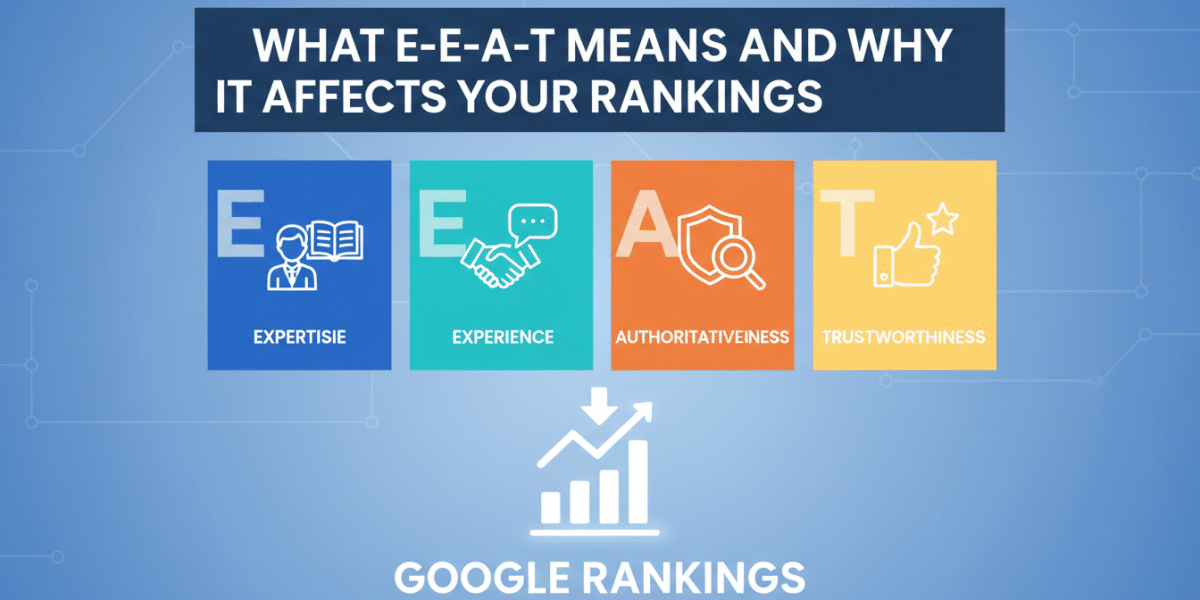
E-E-A-T is an acronym that Google uses in its Quality Rater Guidelines – a document used by human quality raters to evaluate search results. These guidelines, while not a direct ranking factor, reflect the principles and priorities that Google’s algorithms aim to replicate. Initially, it was E-A-T (Expertise, Authoritativeness, Trustworthiness), but in December 2022, Google added another “E” for Experience, making it E-E-A-T. This addition signifies a deeper emphasis on real-world, first-hand knowledge.
Let’s break down each component:
The New Kid on the Block: Experience
Experience refers to the extent to which the content creator has first-hand experience with the topic they are writing about. Are they just rehashing information, or have they actually done what they’re describing? This is a significant shift, prioritizing practical knowledge over purely theoretical understanding.
- What it means: You’ve personally tried the product, visited the place, performed the task, or lived through the situation you’re discussing.
- Why it matters: Content backed by real experience is often richer, more nuanced, and provides insights that can only come from direct involvement. It resonates more deeply with readers and offers genuine utility.
- Practical Example: If you’re reviewing a new camera, sharing photos you’ve taken with it, detailing the challenges you faced using its settings, or discussing your personal feelings about its ergonomics demonstrates experience far better than just quoting specs from the manufacturer’s website. Similarly, a recipe blog post that includes photos of the cooking process and the finished dish, along with tips from the cook’s own kitchen, shows experience.
Expertise: Deep Knowledge Matters
Expertise means having a high level of skill or knowledge in a particular field. This doesn’t necessarily mean having a Ph.D. for every topic, but it does mean demonstrating a profound understanding of the subject matter.
- What it means: The creator has specific knowledge, training, or qualifications that make them a credible source on the topic.
- Why it matters: Expert content is typically accurate, comprehensive, and offers valuable insights that less knowledgeable individuals might miss. It establishes you as a reliable source of information.
- Practical Example: A financial advisor writing about investment strategies, a certified personal trainer sharing fitness advice, or a seasoned mechanic detailing car repair tips all demonstrate expertise. Even for hobby-related content, years of dedicated practice can constitute expertise – a long-time gardener sharing specific planting techniques based on decades of observation is an expert in their field.
Authoritativeness: Building Your Reputation
Authoritativeness refers to the reputation of the content creator and the website as a whole, particularly in the specific niche or industry. It’s about being recognized as a go-to source, a respected voice.
- What it means: Other reputable experts, websites, and institutions reference or acknowledge you as a leading voice. You are widely considered a credible source.
- Why it matters: Authoritative sites and authors are less likely to spread misinformation and are more likely to be trusted by users. This recognition builds a strong brand identity.
- Practical Example: If your business blog is frequently cited by industry publications, if your articles are shared by influential figures on social media, or if you’re invited to speak at industry conferences, you’re building authoritativeness. Backlinks from high-authority sites to your content are a strong signal of authority to Google.
Trustworthiness: The Foundation of Everything
Trustworthiness is the overarching principle that underpins all other aspects of E-E-A-T. It relates to the accuracy, honesty, safety, and transparency of your content and your website.
- What it means: Your content is factual, unbiased, and presented responsibly. Your website is secure, transparent about its purpose, and provides clear contact information.
- Why it matters: Users need to feel safe and confident that the information they are consuming is reliable and that interacting with your website won’t harm them. Google prioritizes user safety and accuracy above all else.
- Practical Example: Using HTTPS for your website (security), clearly stating your privacy policy, providing verifiable sources for statistics, avoiding misleading headlines, correcting errors promptly, and offering clear ‘About Us’ and ‘Contact Us’ pages all contribute to trustworthiness. For e-commerce sites, secure payment gateways and honest product descriptions are vital.
Why E-E-A-T Is No Longer Just a Buzzword – It’s Your Ranking Compass
Google’s mission is to organise the world’s information and make it universally accessible and useful. In an age of rampant misinformation, fake news, and low-quality content churned out for SEO purposes, E-E-A-T serves as Google’s sophisticated filter. It’s their way of fulfilling their promise to users: to deliver the best, most reliable, and most helpful results for any given query.
The Evolution of Google’s Quality Guidelines
From its earliest days, Google has always sought to reward quality. But as search queries became more complex and users relied on Google for increasingly sensitive information (health advice, financial decisions, legal information), the stakes got higher. The introduction and continuous refinement of the Quality Rater Guidelines, with E-E-A-T at their core, signify Google’s commitment to protecting its users from harmful or misleading content. Algorithms are constantly refined to identify and prioritize signals of E-E-A-T.
User Intent and Satisfaction Above All Else
Ultimately, Google’s business model thrives on user satisfaction. If users consistently find low-quality, unhelpful, or untrustworthy results, they’ll stop using Google. E-E-A-T ensures that when someone searches for “best home remedies for a cold,” they don’t find dangerous advice from an unqualified source. Instead, they find well-researched information from medical professionals or reputable health organisations. When they search for “how to fix a leaky faucet,” they get practical, experienced advice that actually solves their problem.
Combating Misinformation and Low-Quality Content
E-E-A-T is Google’s primary weapon against content that seeks to manipulate, mislead, or simply provide no real value. This includes content generated by AI without human oversight, articles written purely for keyword density without genuine insight, or websites designed solely to push affiliate products without honest reviews. By prioritizing E-E-A-T, Google is actively working to make the internet a more reliable and valuable resource for everyone.
Practical Steps to Boost Your E-E-A-T and Elevate Your Rankings
Understanding the what and why is essential, but the real power comes from implementing E-E-A-T principles into your content strategy. Here’s how you can actively work on improving your E-E-A-T signals:
Show, Don’t Just Tell: Leveraging Experience
- Share First-Hand Accounts: For product reviews, include personal photos, videos, and detailed descriptions of your usage experience. For service reviews, describe your journey step-by-step.
- Use Case Studies and Testimonials: If your business offers a service, document client success stories with specific details (with permission, of course).
- Behind-the-Scenes Content: Show how you create your products, perform your services, or conduct your research. This builds transparency and showcases your practical engagement.
- Personal Anecdotes: Weave in relevant personal stories or challenges you’ve faced related to the topic. This makes your content relatable and authentic.
Prove Your Expertise: Credentials and Beyond
- Author Bios: Include detailed author bios on every article, highlighting relevant qualifications, experience, awards, and professional affiliations. Don’t just say “content writer”; say “John Smith, a certified financial planner with 15 years of experience in wealth management.”
- Link to Your Profile/Portfolio: Link the author bio to a dedicated “About Me” or “Author Page” that further establishes their background and credibility.
- Guest Posting on Reputable Sites: Publishing content on well-respected industry websites can enhance your perceived expertise.
- Citations and References: For factual claims, cite your sources (scientific studies, reputable news organisations, official reports). This demonstrates thorough research and respect for existing knowledge.
- Create In-Depth Content: Produce comprehensive guides, whitepapers, and evergreen resources that showcase your deep understanding of complex topics.
Cultivate Authoritativeness: Be a Recognized Voice
- Build High-Quality Backlinks: Earn links from other authoritative websites in your niche. This is a powerful signal to Google that others trust and value your content. Focus on creating link-worthy content rather than aggressive outreach.
- Get Mentions and Citations: Strive to be mentioned (even without a direct link) by industry leaders, news outlets, and academic institutions.
- Social Proof and Engagement: Encourage comments, shares, and discussions around your content. Actively engage with your community. While not a direct ranking factor, strong engagement signals user satisfaction and interest, which are indirect E-E-A-T boosters.
- Thought Leadership: Consistently publish original research, unique perspectives, and innovative ideas that position you as a leader in your field.
- Public Speaking and Media Appearances: Being invited to speak at conferences, give interviews, or contribute to other media solidifies your authority.
Earn Trust: Transparency and Accuracy are Key
- Secure Your Website (HTTPS): This is non-negotiable. A secure connection protects user data and builds immediate trust.
- Clear About Us & Contact Pages: Make it easy for users to understand who you are, what your mission is, and how to get in touch. Include physical addresses, phone numbers, and email.
- Transparent Policies: Have clear privacy policies, terms of service, and return policies (for e-commerce).
- Fact-Checking and Accuracy: Implement a rigorous fact-checking process for all your content. Promptly correct any errors.
- Avoid Aggressive Advertising: Overly intrusive ads or deceptive affiliate links can erode trust.
- User Reviews and Ratings: Encourage and display customer reviews (Google My Business, Yelp, Trustpilot, etc.). Respond to all reviews, both positive and negative, professionally.
- Update Content Regularly: Ensure your content remains current and accurate. Outdated information can quickly become untrustworthy.
The Long Game: E-E-A-T is an Ongoing Commitment
E-E-A-T isn’t a one-time fix or a checkbox you can mark off. It’s an ongoing philosophy that should permeate every aspect of your content creation and online presence. It requires consistent effort, a genuine commitment to providing value, and a relentless focus on your audience’s needs and trust.
Think of it as building your online reputation in the same way you would build a real-world one. You wouldn’t expect to be considered an expert or trustworthy after just one interaction. It takes time, consistent delivery of quality, and a commitment to integrity. Google’s algorithms are becoming increasingly sophisticated at recognizing these long-term signals.
Conclusion
Understanding what E-E-A-T means and why it affects your rankings is no longer optional for anyone serious about their online visibility. In a world awash with information, Google’s commitment to E-E-A-T is its promise to users that they will find the most experienced, expert, authoritative, and trustworthy content available. By embracing and actively working on these four pillars – Experience, Expertise, Authoritativeness, and Trustworthiness – you’re not just optimising for search engines; you’re building a truly valuable, credible, and sustainable online presence that genuinely serves your audience.
Focus on creating content that solves real problems, provides unique insights, and is backed by genuine knowledge and credibility. Do that consistently, and you’ll find your content naturally climbing the ranks, earning the trust of both your readers and the powerful algorithms that govern search. E-E-A-T isn’t just about rankings; it’s about building a better internet.
Dublin's ROI-Driven Digital Marketing Agency Home
Related Posts
 From Experience to Rank The New E-E-A-T Pillar Explained
 Why Human-Written Content Still Wins Over AI in Google Rankings
 How seasonality affects the serps and what it means for SEO
 Google Core Updates Explained: Impact on SEO & Rankings
 The Ultimate SEO FAQ Guide: Expert Answers for Higher Google Rankings
 LCP, INP, CLS Explained for Irish Business Owners
 Why a Slow Website Is Killing Your Search Rankings
 What Is Mobile First Indexing and Why It Affects Your Site