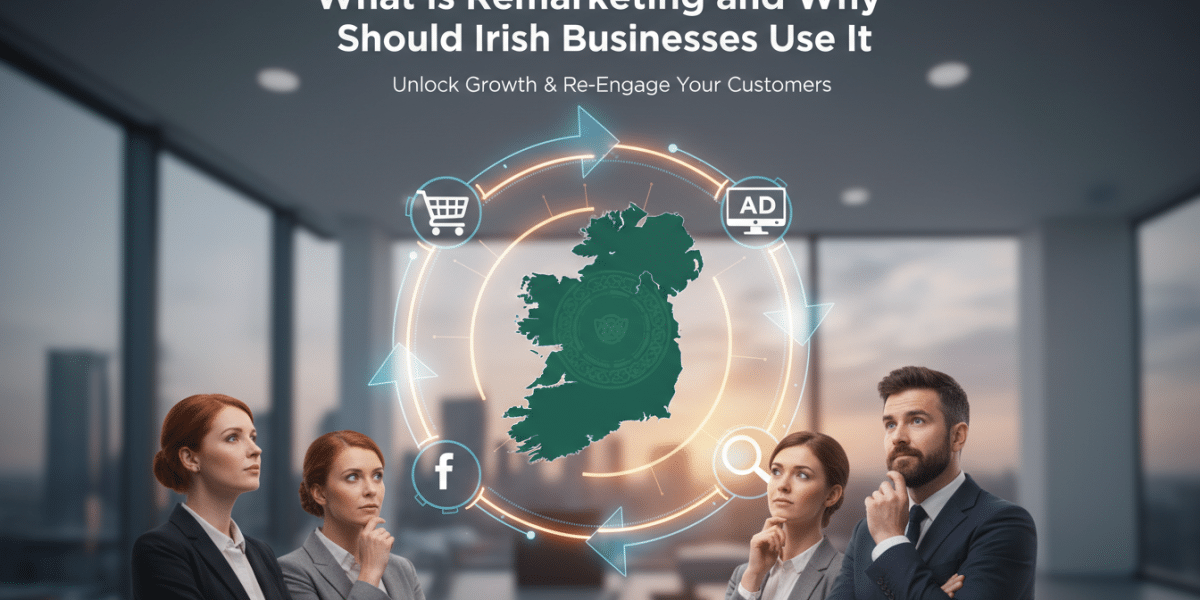
What Is Remarketing and Why Should Irish Businesses Use It? Unlocking Hidden Conversions and Building Lasting Customer Relationships
In the bustling digital marketplace, where attention spans are fleeting and competition is fierce, standing out can feel like an uphill battle. Irish businesses, from the charming local café in Dingle to the innovative tech startup in Dublin, face unique challenges in reaching and retaining customers. Many invest significant time and money in attracting new visitors to their websites, only to watch a large percentage of them leave without making a purchase, booking, or enquiry. It’s a common scenario, and it’s where a powerful strategy known as remarketing steps in as your secret weapon.
Imagine a potential customer browsing your online shop for a handcrafted Aran jumper, adding it to their cart, but then getting distracted and leaving your site. Or perhaps someone visits your hotel’s website, checks out the rooms, but doesn’t book immediately. Without remarketing, those warm leads are often lost. With it, you get a second, third, or even fourth chance to re-engage them, subtly reminding them of what they almost bought or booked.
This article will delve into what exactly remarketing is and, more importantly, illuminate why every Irish business, regardless of size or sector, should be actively using it to drive growth, boost conversions, and build stronger customer relationships in a truly cost-effective manner.
What Exactly Is Remarketing?
At its heart, remarketing (often used interchangeably with “retargeting”) is a form of online advertising that allows you to show targeted ads to people who have previously interacted with your website, app, or even your social media profiles. Instead of casting a wide net for entirely new prospects, remarketing focuses on those who have already shown some level of interest in your brand, products, or services.
Think of it like this: If a customer walks into your physical shop, looks at a product, chats with staff, but leaves without buying, you wouldn’t necessarily chase them down the street. But in the digital world, remarketing gives you a polite, persistent, and incredibly effective way to follow up. It’s about re-engaging those ‘warm’ leads who are already familiar with you, reminding them of your value, and guiding them back to complete an action.
How Does It Work? The Magic of the Tracking Pixel
The mechanics of remarketing might sound complex, but the underlying principle is quite simple. When someone visits your website, a small, unobtrusive piece of code – often called a “pixel” (like the Facebook Pixel) or a “tag” (like the Google Ads remarketing tag) – drops an anonymous cookie onto their browser. This cookie doesn’t store any personal identifiable information, but it tells the advertising platform (like Google Ads, Facebook, Instagram, LinkedIn, etc.) that this specific browser has visited your site.
Later, as that user browses other websites or social media platforms that are part of the advertising network, the platform identifies their cookie and serves them your targeted remarketing ad. It’s a bit like having a digital breadcrumb trail that leads back to your business.
The Core Principle: Reaching Warm Leads
The beauty of remarketing lies in its focus. Instead of spending your advertising budget on people who might never have heard of you (cold leads), you’re investing in reaching individuals who have already demonstrated some level of interest. They’ve visited your site, browsed your products, read your blog, or even started a purchase. These ‘warm’ leads are significantly more likely to convert than cold prospects, making remarketing one of the most efficient advertising strategies available.
Why Is Remarketing a Game-Changer for Irish Businesses?
For Irish businesses operating in a competitive landscape, remarketing isn’t just an optional extra; it’s a fundamental pillar of a successful digital marketing strategy. Here’s why it’s so vital:
1. Sky-High Conversion Rates
This is arguably the most compelling reason. People who have previously visited your website are already somewhat familiar with your brand. They’ve shown intent. Because of this pre-existing connection, remarketing ads tend to have significantly higher click-through rates (CTR) and conversion rates compared to standard display ads aimed at new audiences. For an Irish artisan food producer, this could mean turning more website browsers into actual customers placing orders for their gourmet puddings.
2. Enhanced Brand Recall and Trust
In a world saturated with information, consistency is key. Remarketing keeps your brand top-of-mind. Regular, non-intrusive exposure to your ads helps potential customers remember you, reinforcing your brand identity and building trust over time. For a small B&B in Kerry, repeated exposure to their beautiful imagery and testimonials via remarketing can solidify their presence in a potential guest’s mind when they’re finally ready to book their Irish getaway.
3. Cost-Effectiveness Compared to Cold Outreach
While all advertising costs money, remarketing often offers a superior return on investment (ROI). Because you’re targeting an audience that’s already qualified (i.e., they’ve visited your site), your ad spend is more efficient. You’re not paying to introduce yourself from scratch; you’re paying to nurture an existing relationship. This makes remarketing particularly attractive for Irish SMEs looking to maximise their marketing budget.
4. Deeper Customer Understanding and Personalisation
Remarketing allows for incredible segmentation. You can create different audience lists based on specific actions users took on your site. Did they view a particular product category? Did they read a blog post about a specific service? You can then tailor your ads to be highly relevant to their interests. An Irish furniture store could show ads for couches to people who viewed their “sofas” section, and ads for dining tables to those who browsed the “dining room furniture” category – a level of personalisation that significantly boosts engagement.
5. Combatting Cart Abandonment (Crucial for Irish E-commerce)
Cart abandonment is a huge headache for online retailers globally, and Irish e-commerce businesses are no exception. Customers add items to their cart but then leave before completing the purchase. Remarketing is the most effective tool to recover these lost sales. A gentle reminder ad, perhaps with a limited-time discount code, can often be enough to prompt them to return and complete their purchase. For an online gift shop selling Irish-themed merchandise, this can turn potential losses into guaranteed sales.
6. Nurturing Customer Loyalty and Repeat Business
Remarketing isn’t just for converting new customers; it’s also excellent for retaining existing ones. You can create remarketing lists of past purchasers and offer them complementary products, exclusive deals, or remind them about services they might need again. A local Irish gym could remarket to lapsed members with special re-joining offers, or to current members with ads for new fitness classes or personal training sessions. This fosters loyalty and encourages repeat business, which is far more cost-effective than constantly acquiring new customers.
Practical Remarketing Strategies for Irish Businesses
So, how can Irish businesses put remarketing into action? Here are some practical strategies:
1. Website Visitor Remarketing (General)
The simplest form: target everyone who visited any page on your website within a certain timeframe (e.g., the last 30, 60, or 90 days). Your ads can highlight your unique selling propositions, testimonials, or popular products.
2. Shopping Cart Abandonment Campaigns
This is a must for any Irish e-commerce site. If someone adds items to their cart but doesn’t buy, show them ads specifically featuring those items, perhaps with a subtle call to action like “Don’t forget your order!” or a small incentive (e.g., free shipping).
3. Specific Product/Service Interest Campaigns
Segment your audience based on the specific pages they visited.
- Example: An Irish travel agency could show ads for “Weekend Breaks in Connemara” to users who viewed their Connemara tour packages page, and “City Breaks in Cork” to those who browsed Cork city hotels.
4. Customer List Remarketing (CRM Integration)
Upload your existing customer email lists (ensuring GDPR compliance, of course!) to platforms like Google or Facebook. These platforms can then match those emails to user profiles, allowing you to target ads to your existing customer base. This is fantastic for announcing new products, services, or exclusive offers.
5. Engagement-Based Remarketing (Social Media)
If someone has engaged with your Facebook or Instagram page (liked a post, watched a video, commented), you can create an audience from these users and show them targeted ads. This is powerful for building community and driving social engagement for Irish brands.
6. Cross-Selling and Upselling Opportunities
After a customer makes a purchase, you can remarket to them with complementary products. If someone buys a new laptop from your Irish electronics store, remarket them with ads for laptop bags, extended warranties, or software.
Getting Started with Remarketing: A Simple Roadmap for Irish SMEs
Don’t be intimidated; setting up remarketing is more straightforward than you might think.
1. Choose Your Platform
Start with Google Ads (for search and display network ads) and Facebook/Instagram Ads (for social media remarketing). These cover the vast majority of online user activity.
2. Install Your Tracking Pixel/Tag
This is usually a simple snippet of code that your website developer (or you, if you’re using a platform like Shopify or WordPress with a plugin) can install on all pages of your website. This is the foundation of data collection.
3. Define Your Audiences
Decide who you want to target. Common audiences include:
- All website visitors (last 30-90 days).
- Visitors to specific product/service pages.
- Users who added items to cart but didn’t purchase.
- Past customers.
- Users who engaged with your social media.
4. Craft Compelling Ads
Design visually appealing and clear ads with a strong call to action. Remember the purpose of the ad: to bring them back. Use engaging imagery and concise copy relevant to the specific audience segment.
5. Set Your Budget and Launch
Start with a modest budget and gradually increase it as you see results. Remarketing doesn’t require massive investment to be effective.
6. Measure and Optimise
Monitor your campaign performance closely. Which ads are performing best? Are your conversion rates increasing? Use this data to refine your ads, adjust your audience targeting, and improve your overall strategy.
Common Misconceptions and Best Practices
It’s Not Annoying If Done Right
Many fear remarketing is intrusive. However, when done correctly, with frequency caps (limiting how many times a user sees your ad) and relevant messaging, it feels helpful and timely, not annoying. Nobody wants to see the same ad for a product they just bought 50 times a day.
Respect Privacy (GDPR Context for Ireland)
As an Irish business, you must be fully compliant with GDPR. Ensure your website’s privacy policy clearly states that you use cookies for advertising purposes, and ideally, provide users with a clear option to opt-out. Transparency is key to building trust.
Frequency Capping
Implement frequency caps to control how often an individual sees your remarketing ads. This prevents ad fatigue and ensures a positive brand experience. A good starting point might be 3-5 impressions per day per user.
Conclusion
In the vibrant, fast-paced world of online business, Irish companies have a powerful ally in remarketing. It’s not about being pushy; it’s about being smart, strategic, and remarkably effective. By giving interested prospects and past customers a gentle, timely nudge, you can significantly increase your conversion rates, enhance your brand’s presence, and build a loyal customer base – all while optimising your advertising spend.
From the smallest local crafter to the largest national service provider, understanding what is remarketing and why Irish businesses should use it is no longer a luxury; it’s a necessity for thriving in the digital age. Don’t let those valuable leads slip away. Embrace remarketing, reconnect with your audience, and watch your Irish business flourish.
Dublin's ROI-Driven Digital Marketing Agency Home
Related Posts
 Technical SEO and Why Irish Businesses Need It
 How Often Should Irish Businesses Publish Blog Content
 The Most Important Digital Marketing KPIs for Irish Businesses
 SEO Strategies for Irish Service Businesses
 SEO FAQs for Irish Businesses: What to Expect | Globe Boss
 Hreflang Tags for Irish Businesses Targeting UK Customers
 The Biggest Google Ads Mistakes Irish Businesses Make
 How to Choose the Right Hosting for an Irish Business Website