
The Unsung Hero: Why Site Architecture Matters More Than Keywords for E-Commerce Success
In the ever-evolving digital landscape, e-commerce businesses are constantly searching for the magic bullet that will propel them to the top of search rankings and flood their sites with eager customers. For a long time, the spotlight shone almost exclusively on keywords. “Find the right keywords,” “optimise your content with keywords,” “stuff those keywords in!” – these were the mantras. And while keywords certainly play a role in connecting search queries to your products, focusing solely on them is like trying to build a skyscraper with a fancy coat of paint but no solid foundation.
The truth is, for sustained e-commerce success, something far more fundamental, yet often overlooked, deserves your primary attention: site architecture. In the grand scheme of digital strategy, understanding why site architecture matters more than keywords for e-commerce is not just an advantage; it’s a non-negotiable requirement for growth, visibility, and conversion. It’s the silent powerhouse working behind the scenes, ensuring your beautiful products get discovered, understood, and ultimately purchased.
Beyond the Buzz: Understanding Site Architecture
Before we delve into its supreme importance, let’s clarify what we mean by site architecture. Imagine your e-commerce store as a physical building – a sprawling mall, perhaps. Site architecture isn’t the window displays or the promotional posters (those are your keywords and product descriptions). Instead, it’s the actual blueprint of the building: the layout of the floors, the logical placement of departments, the clear signage, the escalators, and the pathways that guide shoppers from the entrance to exactly what they’re looking for.
In digital terms, site architecture refers to the hierarchical structure of your website, how pages are linked together, and the overall organisation of your content. It dictates how users and search engine bots navigate through your site, from your homepage down to individual product pages, category pages, and blog posts. Its purpose is threefold: to enhance user experience, facilitate search engine crawlability, and provide a scalable framework for future growth.
The User Experience Imperative: Guiding Your Customers Home
Good site architecture is fundamentally about the customer journey. If your website is a labyrinth, users will get frustrated and leave, regardless of how perfectly you’ve keyword-optimised your individual product titles. This is a primary reason why site architecture matters more than keywords for e-commerce conversions.
Intuitive Navigation: A Path, Not a Maze
Think about the last time you struggled to find something on a website. Chances are, you didn’t stick around long. An e-commerce site with clear, intuitive navigation is like a well-lit path through a beautiful garden. Users can easily understand where they are, where they’ve come from, and where they can go next.
- Logical Categories: Products should be grouped into sensible categories and subcategories. For example, “Apparel” -> “Men’s” -> “Shirts” -> “Dress Shirts.” This hierarchy makes sense to a human brain and helps users narrow down their search without thinking too hard.
- Breadcrumbs: These small navigational aids (“Home > Men’s Apparel > Shirts > Dress Shirts”) at the top of a page are invaluable. They show users their current location within the site’s hierarchy and allow them to jump back up to a broader category with a single click.
- Search Functionality: While not strictly architecture, a powerful search bar works hand-in-hand with good architecture. If users can’t find something via navigation, a search should still deliver accurate results, reflecting the underlying organisation of your products.
When users feel in control and can effortlessly browse your products, their engagement increases, bounce rates decrease, and the likelihood of conversion skyrockets.
Speed and Performance: The Need for Digital Velocity
While not always immediately obvious, site architecture heavily influences your website’s speed and performance. A bloated, poorly structured site with excessive redirects, deep linking paths, or inefficient internal linking can slow down page loading times.
In today’s fast-paced world, patience is a scarce commodity online. Studies consistently show that even a one-second delay in page load time can lead to significant drops in conversions and increased bounce rates. Good architecture, by promoting efficient linking and content organisation, contributes to a lighter, faster site that keeps users happy and engaged, especially on mobile devices where connectivity might be less stable.
The Search Engine’s Perspective: Making Sense of Your Digital Storefront
Google and other search engines strive to present users with the most relevant, high-quality results. To do this, they need to understand your website thoroughly. This is where good site architecture becomes your most powerful SEO ally, explaining why site architecture matters more than keywords for e-commerce SEO success.
Crawlability and Indexing: Paving the Way for Bots
Search engines use “bots” or “spiders” to crawl your website, following links from page to page to discover new content and updates. A clear site structure acts as a roadmap for these bots.
- Easy Discovery: If your pages are logically linked, bots can easily crawl from your homepage down to your deepest product pages. Pages that are “orphaned” (not linked from anywhere else on your site) are unlikely to be discovered and indexed by search engines, making them invisible to potential customers.
- Efficient Allocation of Crawl Budget: Every website has a “crawl budget” – the number of pages a search engine bot is willing to crawl on your site within a given timeframe. A messy architecture can lead bots down dead ends or irrelevant paths, wasting this budget. A clean architecture ensures bots spend their time efficiently, discovering your most important content.
- XML Sitemaps: An XML sitemap is a file that lists all the important pages on your website, signaling to search engines which pages you want them to crawl and index. While not a replacement for good internal linking, it’s a vital tool that complements a strong site architecture.
Authority Distribution (Link Equity): Sharing the SEO Love
When another website links to your site, it passes a measure of “link equity” or “link juice” to your domain, signaling authority and trust to search engines. Good internal linking, a cornerstone of strong site architecture, helps distribute this authority throughout your website.
Your homepage and main category pages often receive the most external backlinks. By creating a logical internal linking structure, you can strategically pass some of that valuable link equity from these high-authority pages down to your product pages and subcategories. This helps individual product pages rank better, even for more niche or specific keywords. Without this internal “flow” of authority, many of your product pages might struggle to gain traction, regardless of their keyword optimisation.
Semantic Relevance: Grouping Related Content
Search engines are increasingly sophisticated in understanding context and semantic relationships. A well-architected e-commerce site naturally groups related products and content together through its category structure.
For instance, if you have a category for “Smartphones” with subcategories like “Android Phones” and “iPhones,” and individual product pages within those, Google understands the broader topic your site is addressing. This semantic grouping helps your site rank not just for specific product keywords, but also for broader, more competitive terms like “best smartphones 2024” or “buy mobile phones online,” because your site is perceived as an authority on the topic. Your carefully chosen keywords will be far more effective when housed within a clear, semantically relevant structure.
Scalability and Future-Proofing Your E-Commerce Business
An e-commerce business rarely stays static. New products are added, categories evolve, and content grows. A robust site architecture is built with this future growth in mind, illustrating another crucial reason why site architecture matters more than keywords for e-commerce longevity.
Easy Expansion: Adding New Products and Categories
Imagine trying to add a new department to a physical store that was built without any thought for expansion – it would be a costly, messy nightmare. The same applies to your digital store. A flexible, well-planned architecture allows you to seamlessly integrate new product lines, expand categories, or introduce new content sections (like a blog or a “how-to” guide section) without having to overhaul your entire website. This saves time, money, and prevents disruptions to your user experience and SEO.
Maintenance and Updates: Keeping Your Store Tidy
Just like a physical store needs regular cleaning and maintenance, your e-commerce site does too. A chaotic site structure makes maintenance a headache. Finding broken links, updating outdated content, or reorganizing product lines becomes a daunting task. Good architecture simplifies these processes, ensuring your site remains healthy, functional, and up-to-date, which is vital for both user trust and search engine rankings.
Practical Steps to Build a Robust Site Architecture
Understanding why site architecture matters more than keywords for e-commerce is the first step. The next is taking action.
Plan Before You Build (or Rebuild): The Blueprint Phase
Don’t dive into building a website or adding new products without a plan. Map out your ideal customer journey. Consider:
- Card Sorting: Ask potential customers to group your products into categories that make sense to them.
- Competitor Analysis: Look at how successful competitors structure their sites.
- User Flows: Diagram how users will move from your homepage to a specific product.
Logical Category Hierarchy: From Broad to Specific
Start with 5-7 broad, main categories directly off your homepage. Each main category should then have 3-7 subcategories, and so on. This “pyramid” or “silo” structure is highly effective for both users and search engines. For example:
- Home > Electronics > Televisions > OLED TVs
- Home > Books > Fiction > Science Fiction > Dystopian
Implement Strong Internal Linking: The Web Within Your Web
- Contextual Links: Link to relevant products or categories within your product descriptions, blog posts, and informational pages.
- Related Products/Customers Also Bought: Utilize features that suggest related items on product pages.
- Breadcrumbs: As mentioned, these are essential for navigation and internal linking.
- Footer Links: Include links to important pages like “About Us,” “Contact,” “Privacy Policy,” and top-level categories.
Optimize for Mobile-First: Responsive Design is Non-Negotiable
Ensure your site architecture translates seamlessly to mobile devices. Most users browse and shop on their phones, so a mobile-friendly structure is paramount for a good user experience and SEO.
Regular Audits and Maintenance: Don’t Set It and Forget It
Site architecture isn’t a one-time setup. Regularly audit your site for:
- Broken Links: Use tools like Google Search Console or Screaming Frog.
- Crawl Errors: Monitor GSC for issues that prevent search engines from accessing your content.
- Orphaned Pages: Ensure every important page is linked from somewhere else.
- User Feedback: Pay attention to customer comments about navigation difficulties.
Conclusion: The Foundation of Digital Success
While keywords are the language search engines and users speak, site architecture is the grammar and syntax that makes that language coherent and powerful. You can shout the perfect keywords into the void, but without a robust, user-friendly, and search-engine-optimised structure, your message will be lost.
Good site architecture lays the foundation for excellent user experience, maximizes your SEO efforts, and future-proofs your e-commerce business for scalable growth. It ensures that when customers arrive at your digital storefront, they don’t just see a jumble of products, but a well-organised, inviting space where finding what they need is a joy, not a chore. Investing in a solid site architecture isn’t just a smart move; it’s the essential difference between an e-commerce store that merely exists and one that truly thrives. So, next time you think about optimising your e-commerce site, remember why site architecture matters more than keywords for e-commerce success – it’s the bedrock upon which all other digital marketing efforts stand.
Dublin's ROI-Driven Digital Marketing Agency Home
Related Posts
 Why do Dublin e-commerce sites need technical SEO?
 Building a
successful e commerce website
Building a
successful e commerce website Globe Boss E-commerce Marketing Dublin
 How to Reduce Cart Abandonment on a Dublin E-commerce Site
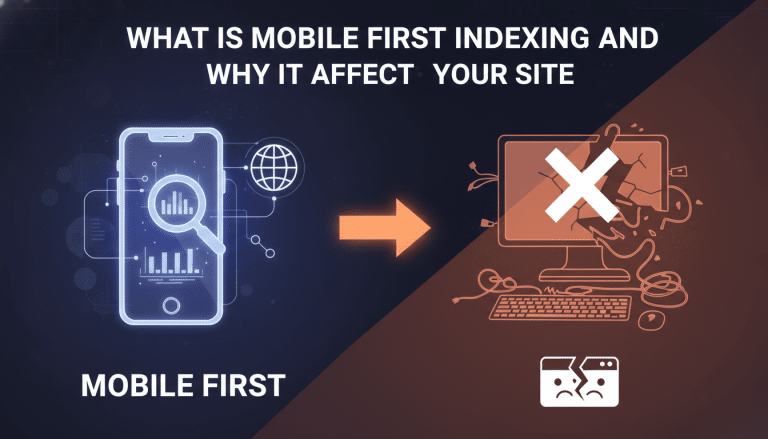 What Is Mobile First Indexing and Why It Affects Your Site
 The Complete Irish E-Commerce SEO Checklist for 2026
 How to Use Google Shopping Ads to Grow an Irish E-Commerce Brand
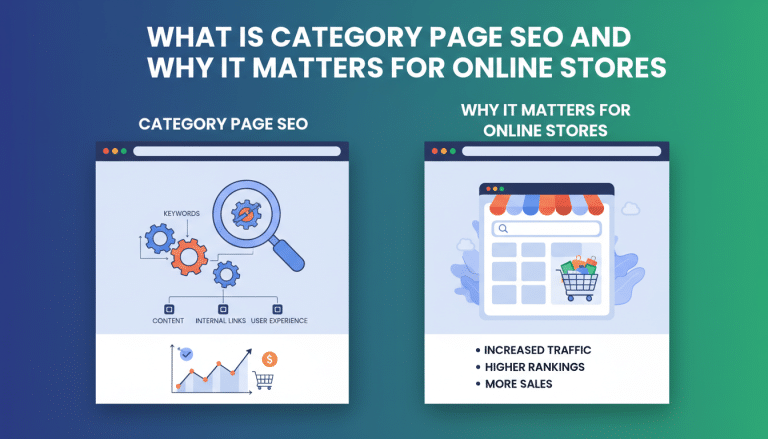 What Is Category Page SEO and Why It Matters for Online Stores