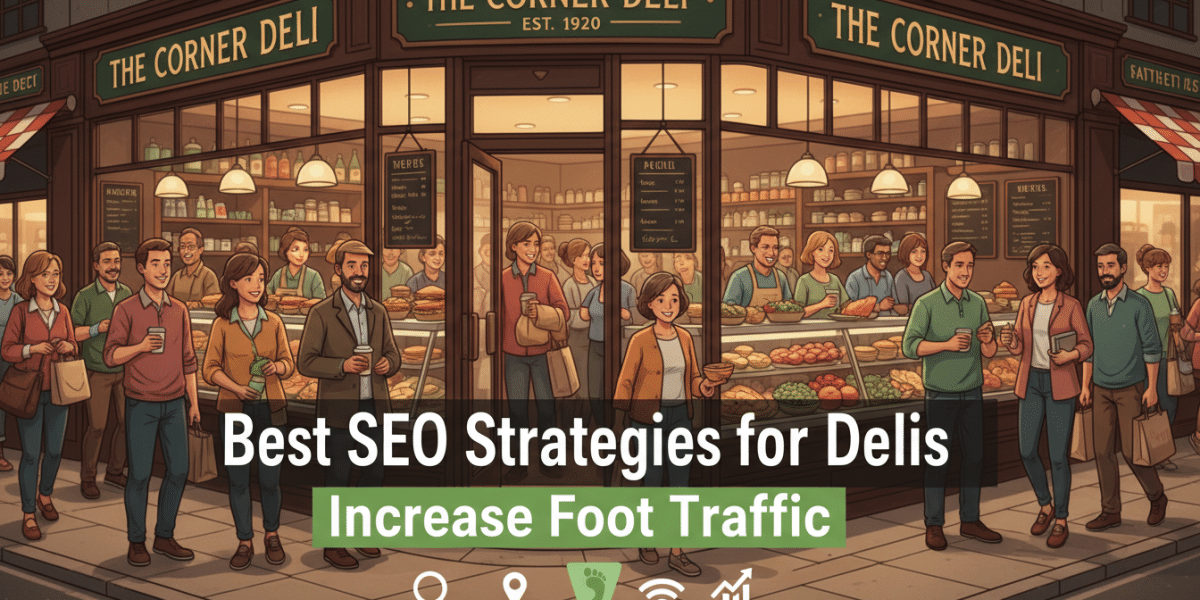
Best SEO Strategies for Delis to Increase Foot Traffic
In the fiercely competitive food service industry, delis face the daily challenge of attracting new customers while retaining loyal patrons. While word-of-mouth and local advertising play a role, a robust Search Engine Optimization (SEO) strategy is paramount to thriving in the digital age. SEO, the practice of optimising your online presence to rank higher in search engine results pages (SERPs) like Google, Bing, and Yahoo, can significantly impact your deli’s visibility, leading to increased foot traffic and ultimately, higher revenue. This article delves into actionable SEO strategies specifically tailored for delis, covering everything from foundational elements to advanced techniques.
1. Claim and Optimize Your Google My Business (GMB) Profile: The Foundation of Local SEO
Your Google My Business profile is arguably the most crucial asset for local SEO. It’s often the first point of contact potential customers have with your deli online. Think of it as your digital storefront, providing essential information and visual appeal.
-
Claim Your Listing: The first step is to claim your GMB listing if you haven’t already. This allows you to control the information displayed about your deli on Google Search and Maps. Search for your business name on Google Maps. If a listing exists, claim it by clicking "Claim this business" or "Own this business?" If no listing exists, you can create one from scratch.
-
Complete and Accurate Information: Ensure all information is complete, accurate, and consistent across all online platforms (website, social media, directories). This includes:
- Business Name: Use your official business name, exactly as it appears on your signage and legal documents.
- Address: Provide your complete physical address, including street number, street name, city, state, and zip code. Double-check for accuracy to avoid misleading customers.
- Phone Number: Use a local phone number that is actively monitored.
- Website URL: Link directly to your deli’s website.
- Business Hours: Accurately reflect your operating hours, including special holiday hours or closures. Update this information promptly if there are any changes.
- Category: Select the most relevant categories for your deli. "Deli" is the primary category, but consider adding secondary categories like "Sandwich Shop," "Restaurant," "Caterer," or "Takeout Restaurant" depending on your offerings.
-
Compelling Description: Craft a concise and engaging description that highlights your deli’s unique selling points. Include keywords that customers might use to search for your deli, such as "fresh ingredients," "homemade bread," "signature sandwiches," "local meats," "catering services," or specific specialties like "Italian subs," "pastrami on rye," or "vegetarian options." Don’t stuff the description with keywords, but rather weave them naturally into the text.
-
High-Quality Photos and Videos: Visual content is crucial for attracting attention and showcasing your deli’s offerings. Upload high-resolution photos and videos of:
- Exterior and Interior: Show off the ambiance of your deli, both inside and out.
- Food Items: Capture appetizing images of your sandwiches, salads, soups, and other specialties. Professional photography is ideal, but well-lit, high-quality smartphone photos can also work.
- Staff: Include photos of your friendly staff to create a welcoming and personal atmosphere.
- Behind-the-Scenes: Consider videos showcasing the preparation of your food or the story behind your deli.
-
Google Posts: Regularly utilize Google Posts to share updates, promotions, events, and special offers. This is a powerful way to keep your listing fresh and engage with potential customers.
- What’s New: Announce new menu items, seasonal specials, or changes to your services.
- Events: Promote any events you’re hosting, such as live music, wine tastings, or holiday specials.
- Offers: Share discounts, coupons, or special promotions.
- Products: Highlight specific menu items with photos and descriptions.
- Manage and Respond to Reviews: Encourage customers to leave reviews on your GMB profile. Positive reviews are a powerful social proof and can significantly influence potential customers’ decisions. Promptly and professionally respond to all reviews, both positive and negative. Thank customers for positive feedback and address any concerns or complaints constructively. Acknowledge negative feedback, apologize for any issues, and offer a solution or resolution.
2. Keyword Research: Understanding What Your Customers Are Searching For
Keyword research is the process of identifying the words and phrases that people use when searching for delis and related services online. Understanding these keywords allows you to optimise your website content and GMB profile to attract the right customers.
-
Brainstorming: Start by brainstorming a list of keywords related to your deli. Think about:
- Your Products: List specific sandwiches, salads, soups, and other menu items.
- Your Location: Include your city, neighborhood, and nearby landmarks.
- Your Specialties: Consider unique offerings or specialties that set you apart from the competition.
- Related Services: If you offer catering, delivery, or online ordering, include those keywords as well.
-
Competitor Analysis: Analyze your competitors’ websites and GMB profiles to identify the keywords they are targeting. Use tools like SEMrush, Ahrefs, or Moz Keyword Explorer to see which keywords they rank for.
-
Keyword Research Tools: Utilize keyword research tools to expand your list and identify high-volume, low-competition keywords. Some popular options include:
- Google Keyword Planner: A free tool from Google that provides data on search volume and keyword competitiveness.
- SEMrush: A comprehensive SEO tool that offers keyword research, competitor analysis, and site auditing.
- Ahrefs: Another powerful SEO tool with features for keyword research, backlink analysis, and content analysis.
- Moz Keyword Explorer: A keyword research tool that provides data on keyword difficulty, opportunity, and potential traffic.
- Long-Tail Keywords: Focus on long-tail keywords, which are longer, more specific phrases that people use when searching. For example, instead of just "deli," target keywords like "best Italian deli near downtown," "deli with outdoor seating," or "deli catering for corporate events." Long-tail keywords often have lower search volume but higher conversion rates because they target a more specific audience.
3. On-Page Optimization: Making Your Website Search Engine Friendly
On-page optimisation involves optimising the content and structure of your website to improve its ranking in search engine results pages.
-
Keyword-Rich Title Tags and Meta Descriptions: Optimize the title tags and meta descriptions for each page on your website, including your homepage, menu pages, and contact page. Title tags are the clickable headlines that appear in search results, while meta descriptions are short summaries of the page content. Include relevant keywords in both, and write compelling copy that encourages users to click through to your website. Keep title tags under 60 characters and meta descriptions under 160 characters.
-
Compelling and Informative Content: Create high-quality, informative, and engaging content that provides value to your website visitors. This includes:
- Detailed Menu: Provide a clear and detailed menu with descriptions and prices for each item. Include high-quality photos of your food.
- About Us Page: Tell the story of your deli, highlighting your history, values, and unique selling points.
- Location and Hours: Clearly display your address, phone number, and operating hours on every page of your website.
- Blog: Consider creating a blog to share recipes, news about your deli, or information about local food events.
-
Optimized Images: Optimize images by using descriptive file names and alt tags. Alt tags are alternative text descriptions that are displayed if the image cannot be loaded. Use relevant keywords in your file names and alt tags to help search engines understand what the image is about. Compress images to reduce file size and improve page loading speed.
-
Mobile-Friendly Design: Ensure your website is mobile-friendly and responsive. A mobile-friendly website adapts to different screen sizes and devices, providing a seamless user experience on smartphones and tablets. Google prioritizes mobile-friendly websites in search results. Use Google’s Mobile-Friendly Test to check your website’s mobile-friendliness.
-
Internal Linking: Link to other relevant pages on your website to improve navigation and help search engines understand the structure of your site. For example, link from your menu page to your catering page, or from your about us page to your blog.
- Schema Markup: Implement schema markup, which is structured data that helps search engines understand the content of your website. Schema markup can be used to provide information about your business name, address, phone number, hours of operation, menu, reviews, and more. This can enhance your search engine results and make your website more visible to potential customers. Use Google’s Structured Data Markup Helper to create schema markup for your website.
4. Off-Page Optimization: Building Authority and Trust
Off-page optimisation refers to activities you undertake outside of your website to improve your search engine ranking. This primarily involves building backlinks from other reputable websites.
-
Local Citations: Build citations, which are online mentions of your business name, address, and phone number (NAP). Ensure your NAP information is consistent across all online platforms. List your deli in relevant online directories, such as Yelp, TripAdvisor, Foursquare, Zomato, and local business directories.
-
Backlink Building: Earn backlinks from other reputable websites in your industry or local community. This can be achieved through:
- Guest Blogging: Write guest posts for other food blogs or websites.
- Local Partnerships: Partner with other local businesses and organisations and ask them to link to your website.
- Press Releases: Issue press releases to announce new menu items, events, or other news about your deli.
- Sponsorships: Sponsor local events or organisations and get a link back to your website from their website.
- Social Media Marketing: Engage with your customers on social media platforms like Facebook, Instagram, and Twitter. Share photos of your food, promote special offers, and run contests to increase brand awareness and drive traffic to your website. Include links to your website in your social media profiles and posts.
5. Measuring and Analyzing Your Results: Tracking Your Progress and Making Adjustments
SEO is an ongoing process, and it’s important to track your results and make adjustments to your strategy as needed.
-
Google Analytics: Use Google Analytics to track website traffic, user behavior, and conversion rates. This will help you understand how people are finding your website and what they are doing once they get there.
-
Google Search Console: Use Google Search Console to monitor your website’s performance in Google Search. This tool provides data on search queries, impressions, clicks, and ranking positions.
-
Keyword Ranking Tracking: Track your keyword rankings to see how your website is performing for your target keywords. Use a keyword ranking tool like SEMrush, Ahrefs, or Moz Rank Tracker.
- Regular Reporting: Create regular reports to track your progress and identify areas for improvement. Analyze your data and make adjustments to your SEO strategy as needed.
By implementing these SEO strategies, delis can significantly improve their online visibility, attract more customers, and ultimately increase foot traffic and revenue. Remember that SEO is a long-term investment that requires consistent effort and adaptation to changing search engine algorithms. Stay informed about the latest SEO trends and best practices and continuously optimise your online presence to stay ahead of the competition.
Dublin's ROI-Driven Digital Marketing Agency Home
Related Posts
 Increase Foot Traffic in Dublin with SEO
 Local SEO Dublin 2 Experts for Higher Foot Traffic
 Local Search Optimization Tips for Deli Owners
 Conversion Rate Optimization Top 10 Strategies for Success
 E-commerce SEO Secrets to Drive More Sales in 2024
 Increase Organic Traffic With An Eye On Conversions
 SEO Strategies for Irish Businesses to Boost Online Visibility
 Globe Boss Conversion Rate Optimization Dublin