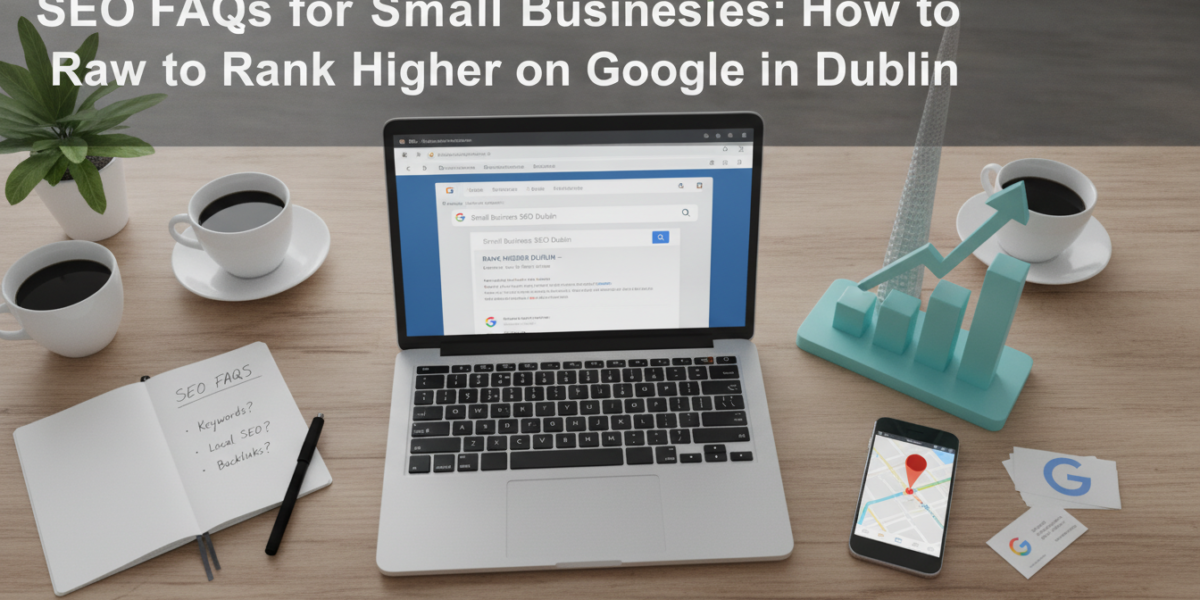
If you run a small business in Dublin and you’ve ever wondered why your competitors seem to appear on Google before you do, you’re not alone. Search engine optimisation — or SEO — is one of the most frequently misunderstood areas of digital marketing, yet it’s also one of the most powerful ways to grow your customer base without spending a fortune on ads. This guide answers the questions Dublin business owners ask most often, in plain language that actually makes sense.
What Is SEO and Why Does It Matter for Dublin Businesses?
SEO is the process of improving your website so that it appears higher in Google’s search results when people look for products or services like yours. When someone in Dublin searches “accountant in Rathmines” or “best coffee shop near me,” Google ranks websites based on hundreds of factors — and the businesses that understand those factors tend to win.
For small businesses operating in a competitive city like Dublin, showing up on the first page of results isn’t just nice to have. Studies consistently show that the first five organic results on Google receive around 67% of all clicks, with results beyond page one rarely getting any meaningful traffic at all.
The good news? You don’t need a massive budget to compete. You need a clear strategy and the patience to stick with it.
How Does Google Decide Who Ranks at the Top?
This is one of the most common questions, and the honest answer is: it’s complicated, but not mysterious.
Google uses an algorithm with over 200 known ranking factors. However, the most important ones for small businesses break down into three core areas:
Relevance
Your website needs to clearly communicate what you do, who you serve, and where you’re based. If you’re a plumber serving Clontarf, Dublin, your site should make that obvious — not just in one line of text, but throughout your content, your page titles, and your metadata.
Authority
Google measures how trustworthy your site is by looking at how many other reputable websites link to it. These are called backlinks, and earning them from local Dublin directories, industry associations, or news outlets can significantly improve your rankings.
Experience
Since 2022, Google has placed growing emphasis on user experience signals — how fast your site loads, whether it works properly on mobile, and how long people stay on your pages before clicking away. A slow, clunky website can actively hurt your rankings, regardless of how good your content is.
How Long Does SEO Take to Work?
This is probably the question we hear most often — and it deserves an honest answer.
SEO is not a quick fix. For most small businesses starting from scratch, it typically takes three to six months to see meaningful movement in rankings, and up to twelve months to reach genuinely competitive positions for popular search terms.
That said, the timeline depends on several factors:
- Your competition — ranking for “Dublin solicitor” is far harder than ranking for “vegan baker in Portmarnock”
- Your starting point — a brand new website with no content or links will take longer than an established site being optimised for the first time
- How consistently you invest — SEO that stops and starts rarely delivers lasting results
The businesses that see the strongest long-term returns from SEO tend to treat it as an ongoing investment rather than a one-time project.
SEO in Dublin: Local Ranking Factors That Actually Matter
Ranking nationally is one challenge. Ranking locally — appearing when someone in Dublin searches for your specific type of business — involves a slightly different set of priorities.
Google Business Profile
If you haven’t claimed and fully completed your Google Business Profile (formerly Google My Business), do it today. This is the single highest-impact action a local Dublin business can take. Your profile controls how you appear in Google Maps and in the local results box that sits above organic listings.
Make sure your profile includes:
- Accurate business name, address, and phone number
- Opening hours that are kept up to date
- At least 10 high-quality photos
- A genuine response to every review — positive and negative
Local Citations
A “citation” is any online mention of your business name, address, and phone number — even without a link. Directories like Golden Pages, Yelp Ireland, and Eircode-linked listings all contribute to how Google verifies your location and legitimacy.
Consistency matters here. If your address appears differently across three different platforms, Google may struggle to trust that your details are correct.
Localised Content
Creating content that speaks directly to Dublin customers — a blog post about your Sandyford location, a guide to a local industry trend, a case study involving a recognisable Dublin neighbourhood — sends strong relevance signals to Google and resonates with local readers.
Common SEO Mistakes Small Dublin Businesses Make
Even well-intentioned SEO efforts can go wrong. Here are the mistakes we see most frequently:
Targeting keywords that are too broad. Trying to rank for “solicitor” when you’re a two-person firm in Drumcondra is a long road. Focusing on “family law solicitor Dublin” or “conveyancing solicitor north Dublin” is more realistic and often more profitable.
Neglecting mobile performance. Over 60% of searches in Ireland now happen on mobile devices. If your website doesn’t load quickly and display cleanly on a smartphone, you’re losing potential customers before they’ve even read a word.
Publishing content just for the sake of it. Google has become increasingly good at identifying thin, unhelpful content. A single well-researched, genuinely useful article will outperform ten shallow blog posts every time.
Ignoring technical issues. Broken links, duplicate pages, and missing metadata might seem invisible, but they create friction for Google’s crawlers and can suppress your rankings across the entire site.
Do I Need to Hire an SEO Agency, or Can I Do It Myself?
For some small businesses, a DIY approach to SEO is entirely viable — especially in the early stages. Free tools like Google Search Console and Google Analytics provide more insight than most business owners realise, and platforms like Semrush offer affordable entry-level plans that make keyword research accessible.
However, there are situations where professional support makes more sense:
- You’re in a highly competitive sector (legal, financial, healthcare, hospitality)
- You’ve had the site for years but traffic has stalled or declined
- You’ve been penalised by a Google algorithm update and aren’t sure why
- You simply don’t have the time to invest consistently
A reputable SEO agency working with Dublin businesses should be transparent about their process, realistic about timelines, and able to show you clear evidence of results from previous clients. If an agency promises “first page in 30 days” without any caveats, treat that as a warning sign.
Frequently Asked Questions
What is the difference between organic SEO and paid ads?
Organic SEO refers to earning your position in Google’s search results through relevance, authority, and technical quality — you don’t pay per click. Paid ads (Google Ads) place your website at the top of results immediately, but the moment you stop paying, the visibility disappears. Most Dublin businesses benefit from both, but SEO builds long-term value that ads cannot replicate.
How much does SEO cost for a small business in Dublin?
Costs vary considerably depending on the scope of work. Freelancers might charge €400–€800 per month, while agencies typically range from €800 to €3,000+ depending on competition and the scale of activity required. That said, cost should always be weighed against potential return — ranking well for the right keywords can generate consistent leads at a fraction of the cost of paid advertising over time.
Is it worth having a blog for SEO purposes?
Yes, but only if you commit to producing genuinely useful content. A blog that’s updated regularly with relevant, well-written articles helps your site rank for a wider range of search terms, demonstrates expertise, and gives other websites something worth linking to. A blog that’s updated twice a year with generic posts adds very little value.
Will getting more reviews on Google help my rankings?
Reviews are a confirmed local ranking signal. More reviews — particularly recent ones — improve your visibility in local search results and in Google Maps. Encouraging satisfied customers to leave an honest review is one of the simplest and most effective local SEO actions available to Dublin businesses.
How do I know if my SEO is actually working?
Track three things: your rankings for target keywords (tools like Google Search Console show this for free), your organic traffic (visible in Google Analytics), and the number of leads or enquiries coming through your website. Rankings alone don’t pay the bills — what matters is whether more of the right people are finding you and taking action.
Conclusion
SEO for small businesses in Dublin doesn’t have to be overwhelming. At its core, it comes down to making sure Google can understand what you do, trust that you’re legitimate, and confidently show your website to people who are actively looking for what you offer.
The businesses that succeed with SEO aren’t necessarily the ones with the biggest budgets — they’re the ones that take a consistent, informed approach and treat their website as the valuable business asset it is. Whether you’re just getting started or trying to understand why your current efforts aren’t delivering, the answers are usually practical and actionable once you know where to look.
Ready to improve your rankings and get more customers finding your Dublin business online?
Our team works with small businesses across Dublin to develop clear, results-focused SEO strategies tailored to your goals and your budget. Whether you’d like a no-obligation consultation, a site audit, or just want to ask a few questions before deciding anything, we’re happy to help.
Get in touch today — email us at moc.ssobebolg@ofni or call us on +353 1 868 2345. We’ll take the time to understand your business and point you in the right direction.
Dublin's ROI-Driven Digital Marketing Agency Home
Related Posts
 Why Local SEO is Essential for Small Businesses in 2024
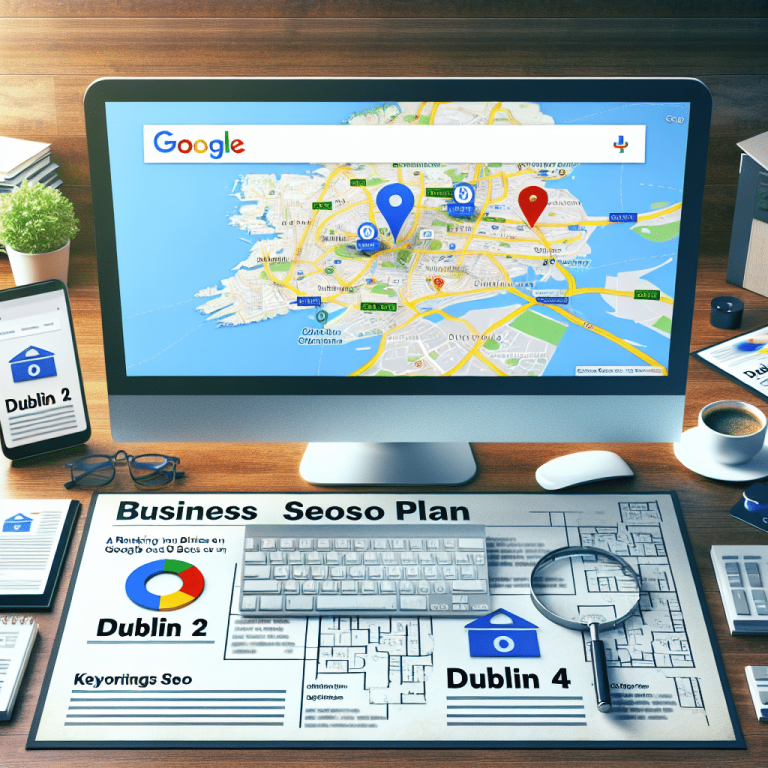 How do I rank my business on Google Maps for ʼDublin 2ʼ or ʼDublin 4ʼ?
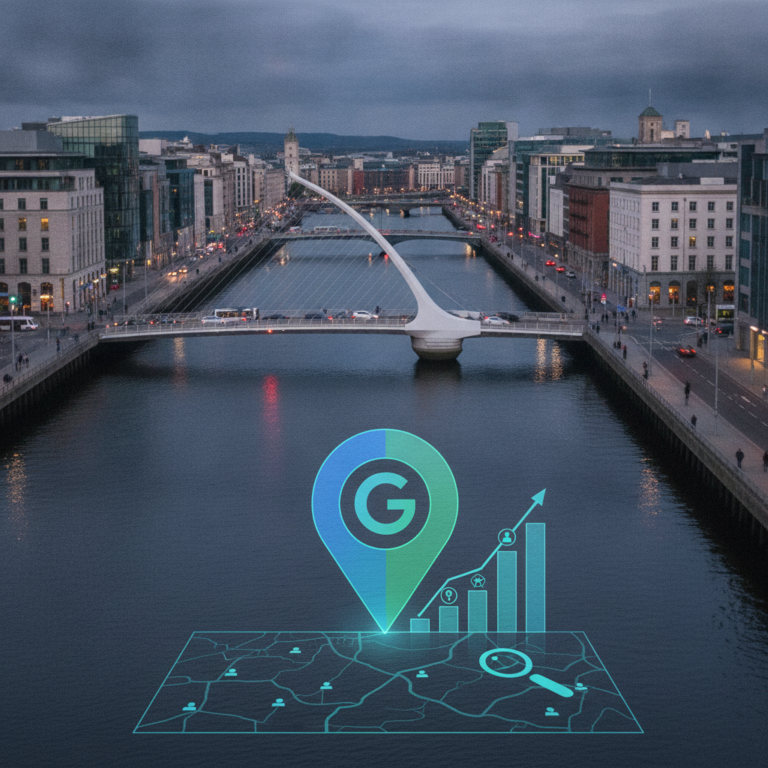 Google Business Profile Optimization Dublin: Essential for local businesses
 SEO FAQs for Irish Businesses: What to Expect | Globe Boss
 Best Irish SEO Services for Small Businesses
 Local SEO Dublin 2 Experts for Higher Foot Traffic
 Local SEO Guide for Yelp and Small Business Growth
 Proven SEO Results for Dublin Small Firms