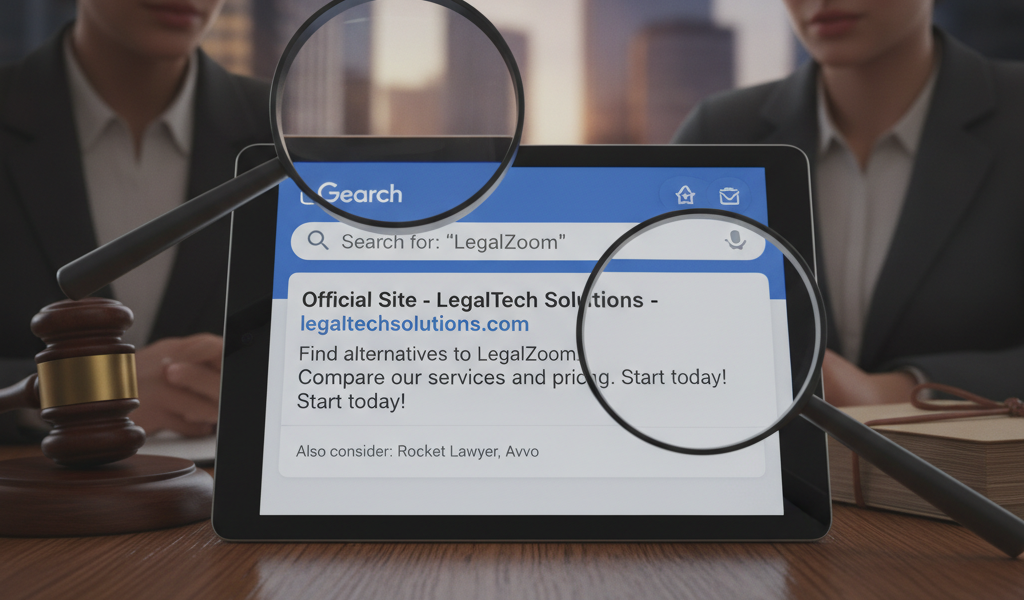
Competitor bidding in Google Ads is one of the most debated tactics in digital marketing. The idea is straightforward: you bid on a rival’s brand name as a keyword, so your ad appears when someone searches for them. It’s aggressive, it’s common, and — perhaps surprisingly — it’s largely legal. But "largely legal" leaves a lot of room for nuance, and getting it wrong can land you in serious trouble.
This guide breaks down exactly where the legal boundaries lie, what Google’s own policies say, and how to run competitor bidding campaigns that are both effective and above board.
Is Competitor Bidding in Google Ads Actually Legal?
The short answer is yes — in most cases. Bidding on a competitor’s brand name as a keyword is permitted under Google Ads policy. Google made this clear when it removed restrictions on competitive keyword bidding back in 2004, allowing advertisers to bid on virtually any keyword they choose, including trademarked terms.
The legal picture does get more complicated when you look at how your ad is actually written. Bidding on the keyword is one thing; what you say in the ad copy is another matter entirely.
The Keyword vs. The Ad Copy Distinction
This is the most important distinction in the entire topic. You are generally free to bid on a competitor’s brand name as a keyword. However, you cannot use that trademarked brand name in your ad copy without the trademark owner’s permission.
For example, you could bid on the keyword "HubSpot" and show an ad for your CRM software — but your ad text cannot say "Better than HubSpot" or "HubSpot alternative — try us instead" using the word HubSpot itself. That use of a trademarked name in the ad creative is where you cross into legally grey (and potentially infringing) territory.
What Google’s Trademark Policy Actually Says
Google restricts the use of trademarked terms in ad text in the following scenarios:
- Resellers and informational sites may be permitted to use a trademark in ad copy, but they must meet specific criteria and often need prior authorisation.
- Competitive advertising — using a competitor’s trademark to disparage their product — is not permitted in ad copy.
- If a trademark owner files a complaint with Google, the platform will investigate and may restrict the use of that term in ad text.
It’s worth noting that Google’s policy primarily governs ad copy, not keyword targeting. So the bidding itself remains permitted; the creative execution is where you need to tread carefully.
The Legal Framework Beyond Google’s Rules
Google’s policies exist separately from trademark law. Even if Google allows something, that doesn’t mean it’s legally safe in every jurisdiction.
Trademark Infringement Considerations
In the United States, the "nominative fair use" doctrine allows businesses to reference a competitor’s trademark in certain contexts — particularly for comparison or commentary — as long as it doesn’t create confusion about the source of the product. European trademark law takes a slightly stricter view, particularly under EU Directive 2008/95/EC and its successors, which require that comparative advertising be objective and not misleading.
In Ireland and the UK, the Position aligns broadly with EU frameworks (Ireland remains subject to EU law, while the UK has retained equivalent provisions post-Brexit). Comparative advertising is permitted but must not be deceptive, denigrate the competitor’s brand, or cause confusion in the marketplace.
Passing Off and Consumer Confusion
Beyond trademark infringement, there’s the common law tort of "passing off." If your ad creates the impression that your business is affiliated with, endorsed by, or the same as a competitor, you could face a claim even without using their trademarked name directly.
The test courts typically apply is whether a consumer would be deceived or confused about the source of the product or service. Ads that imply a connection where none exists — or that mimic a competitor’s branding style closely — can fall into this territory.
How to Run Competitor Bidding Campaigns the Right Way
Done correctly, competitor bidding can be genuinely valuable. Studies have shown that appearing alongside a competitor’s brand can capture intent-heavy traffic from users who are already in buying mode. The key is keeping your campaigns both compliant and strategically sound.
Stick to Generic and Descriptive Ad Copy
Your ad should stand on its own merits. Focus on what makes your product or service genuinely better — faster delivery, lower pricing, superior support, specific features. You don’t need to name the competitor to be compelling.
Example of compliant ad copy:
- Headline: "Looking for a Smarter CRM?"
- Description: "Switch to a platform that scales with your business. Try free for 30 days."
This targets a competitor’s keyword without referencing the trademark in the text.
Use Negative Keywords Strategically
Once you’re running competitor campaigns, negative keywords become essential. You don’t want to waste budget on users searching for the competitor’s support pages, login portals, or job listings. Add negatives like "login," "sign in," "careers," and "customer service" to keep your traffic relevant.
Monitor Quality Score Carefully
Competitor keywords often have lower Quality Scores for your ads because the landing page relevance to the search query is naturally lower. A poor Quality Score drives up your cost-per-click and reduces your ad’s position. Invest time in crafting landing pages that address the intent behind the search — even without mentioning the competitor by name.
Create Dedicated Landing Pages
A generic homepage won’t convert competitor traffic effectively. Build a landing page that speaks directly to someone who might be evaluating their options — highlight comparison points, offer a free trial or demo, and make switching feel easy. This both improves conversion rates and signals relevance to Google’s algorithm.
Common Mistakes That Create Legal and Compliance Risk
Even experienced advertisers make errors in competitor bidding campaigns. Here are the most common ones to avoid.
Using the competitor’s name in the ad copy. This is the most frequent mistake, and one of the most legally risky. Even subtle inclusion — such as in a URL path like /vs-hubspot/ — can trigger trademark complaints.
Making false comparative claims. If you state that your product is "faster," "cheaper," or "better" than a named competitor, those claims need to be accurate and substantiable. Vague superiority claims without evidence can attract regulatory scrutiny, particularly in the EU under the Misleading Advertising Directive.
Bidding on trademark + "scam" or "problems." Some advertisers bid on keywords like "[Competitor] problems" or "[Competitor] reviews" to capture dissatisfied users. This sits in particularly murky legal territory and risks both reputational backlash and legal challenge.
What Happens If a Competitor Reports You?
Trademark owners can file complaints directly with Google. When this happens, Google investigates whether the trademark is being used in ad text — not in keywords. If a violation is found, Google may restrict the use of that term in your ad copy, though it generally won’t prevent you from bidding on the keyword itself.
You may also receive a cease-and-desist letter from the competitor’s legal team. These should always be taken seriously and reviewed with a qualified solicitor or trademark attorney before you respond. In some cases, the complaint may have merit; in others, it may be a scare tactic. Either way, professional advice is essential.
FAQ: Competitor Bidding in Google Ads
Is it legal to bid on a competitor’s brand name in Google Ads?
Yes, in most jurisdictions — including Ireland, the UK, and the US — bidding on a competitor’s brand name as a keyword is legal. What you cannot do is use that trademarked name in your actual ad copy without permission. Always check local trademark law if you’re operating across multiple markets.
Can a competitor force Google to stop my ads?
A competitor can file a trademark complaint with Google, which may result in restrictions on using their trademarked term in your ad copy. However, they cannot typically prevent you from bidding on their brand name as a keyword. Google’s policies are separate from legal proceedings.
What should I include on my landing page for competitor campaigns?
Focus on your unique value proposition, any comparison-friendly differentiators (pricing, features, support), and a clear call to action. Avoid mentioning the competitor by name if you’re concerned about trademark issues. A free trial or demo offer works particularly well for converting this type of traffic.
How much does competitor bidding typically cost?
Competitor keywords often carry a higher cost-per-click than your own branded terms because your Quality Score is likely lower. Costs vary widely by industry — in competitive sectors like legal, finance, or SaaS, you might pay anywhere from €5 to €30+ per click for a rival’s brand keyword. Budget planning is important from the outset.
Is competitor bidding worth it for small businesses?
It can be, especially if you’re targeting a competitor who has strong brand awareness that your business lacks. You’re essentially borrowing their audience’s intent. However, the cost-per-acquisition can be high, so it’s worth testing with a modest budget before scaling.
Conclusion
Competitor bidding in Google Ads sits in a space where smart strategy meets genuine legal responsibility. The good news is that the rules are fairly clear once you understand the distinction between keyword targeting and ad copy. Bid on the keyword? Generally fine. Use the trademark in your ad text? That’s where it gets risky.
The most successful competitor campaigns are the ones that focus on genuine value — not just on capturing a rival’s traffic, but on converting it with a compelling, honest offer. Understanding the legal framework, respecting trademark boundaries, and investing in quality landing pages will give you a campaign that performs well and stands up to scrutiny.
Thinking about running competitor bidding campaigns or want to make sure your current setup is compliant? Our team is happy to walk you through the options and help you build a strategy that’s both effective and legally sound. Reach out at your convenience — email us at moc.ssobebolg@ofni or call +353 1 868 2345 and we’ll be glad to help.
Dublin's ROI-Driven Digital Marketing Agency Home
Related Posts
 Google ads bug inflating some cost per click cpcs for non us campaigns
 Google ads to discontinue content targeting for youtube conversion campaigns in 2023
 Globe Boss Google Ads Management Dublin
 Google Ads vs SEO: What Should Dublin Businesses Choose?
 Globe Boss: PPC and Google Ads Dublin
 How to Lower Your Google Ads Cost-Per-Acquisition in Ireland
 How to Run Google Ads Without Wasting Your Budget
 The Biggest Google Ads Mistakes Irish Businesses Make