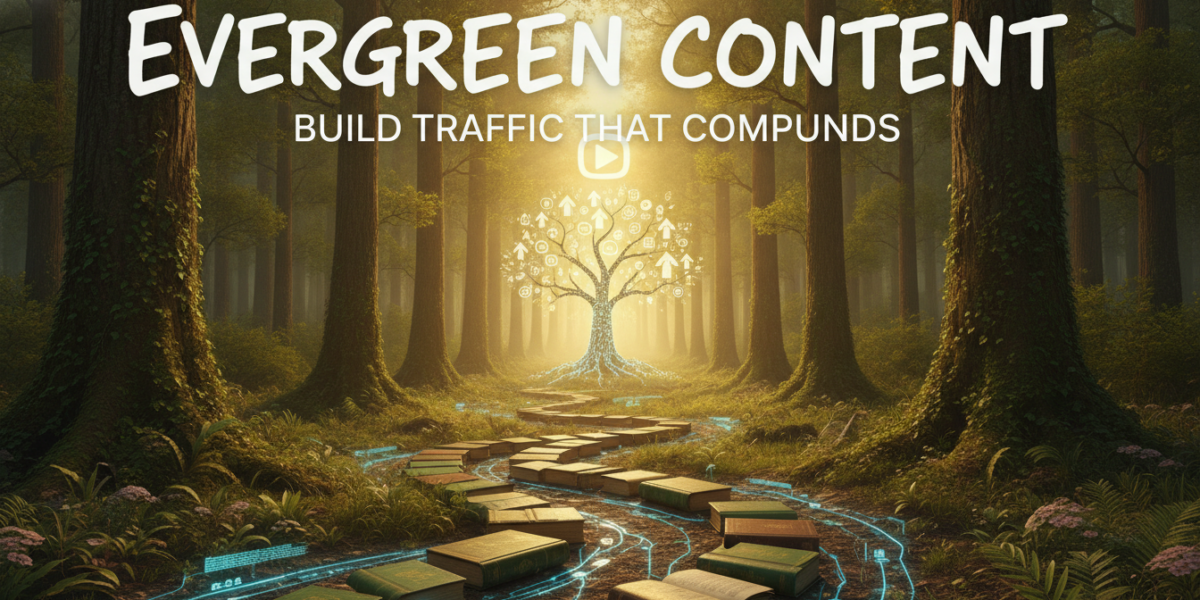
If you’ve ever published a blog post that got a burst of clicks in the first week and then disappeared into the void, you already understand the problem that evergreen content solves. Unlike news articles or trend-driven pieces that expire the moment the moment passes, evergreen content keeps working long after you hit publish. It answers questions people ask today, tomorrow, and five years from now — and that consistency is exactly how you build traffic that compounds.
What Is Evergreen Content (and Why Does It Matter)?
Evergreen content refers to content that remains relevant and useful over a long period of time. The name comes from evergreen trees, which keep their leaves year-round regardless of season. In content marketing, it means the same thing: material that doesn’t wilt when the news cycle moves on.
Think about a piece like "How to Write a Cover Letter." That question gets asked by job seekers every single day, across every industry, in every country. It was relevant in 2010, it’s relevant now, and it will still be relevant in 2030. Compare that to "Best Marketing Trends for Q3 2022" — useful for a moment, forgotten soon after.
The reason evergreen content matters comes down to compounding returns. SEO authority builds gradually. A page that earns backlinks, earns trust signals, and accumulates consistent click-through rates will continue to rise in rankings over months and years. You do the work once, and the asset keeps paying dividends.
The Compounding Effect: How Traffic Builds Over Time
Why Compound Traffic Outperforms Short-Term Spikes
Most content marketers chase traffic spikes — the viral post, the trending topic, the big campaign launch. These spikes feel satisfying, but they’re often followed by a steep drop. Evergreen content operates differently. It starts slowly, builds steadily, and eventually reaches a kind of critical mass where organic traffic flows in consistently without additional promotion.
HubSpot has publicly shared data showing that roughly 75% of their monthly blog traffic comes from older posts — articles published months or even years before. That’s a compelling argument for playing the long game.
The Role of Backlinks in the Compound Effect
When a piece of content is genuinely useful and timeless, other websites naturally link to it as a reference. Those backlinks improve your domain authority, which improves ranking across your entire site, which brings in more traffic to all your pages. One strong evergreen article can lift your whole content ecosystem.
This isn’t a fast process. It often takes six to twelve months for evergreen content to reach its ranking potential, depending on your domain’s existing authority and how competitive the topic is. But unlike a paid ad that stops the moment your budget does, this traffic doesn’t switch off.
Choosing the Right Topics for Evergreen Content
Not every topic is a good candidate. The key is identifying questions and subjects that have consistent, stable search demand — not spikes tied to news events or seasonal trends.
Look for topics that:
- Answer a fundamental question in your industry
- Address a problem that doesn’t change much over time
- Serve a broad audience at multiple stages of awareness
- Have clear search intent (informational, how-to, or definitional)
Google’s autocomplete and "People Also Ask" boxes are genuinely useful here. If a question has been baked into Google’s suggestions, it’s been asked thousands of times. Keyword research tools like Ahrefs, SEMrush, or even free tools like Ubersuggest can show you monthly search volume alongside how stable that volume is month-to-month.
Avoid topics with a clear expiration date. Anything tied to a specific year, a trending product, or a regulatory moment that’s likely to change is better suited to a news-style article — not an evergreen piece you’ll be maintaining for years.
How to Structure Evergreen Content for Long-Term Performance
Depth Over Length
Evergreen content should be thorough, not just long. A 2,000-word article that genuinely covers a topic from multiple angles, answers follow-up questions, and anticipates objections will always outperform a padded 3,000-word piece that circles the same point repeatedly.
Think about what a reader needs to walk away feeling genuinely informed. What do they probably already know? What gaps are they filling? What misconceptions might they carry in?
Headers, Structure, and Scannability
People don’t read articles the way they read novels. They scan first, then read the sections that grab them. Clear H2 and H3 headings, short paragraphs, and logical section flow all serve that behavior.
Breaking content into logical chunks also helps with featured snippet opportunities. Google often pulls structured, clearly formatted answers for position zero results — and evergreen, well-organized content is exactly what that algorithm looks for.
Internal Linking Strategy
One underused advantage of evergreen content is how well it supports internal linking. Because the content stays relevant, you can link to it from new articles indefinitely. Over time, this creates a hub-and-spoke content architecture where your strongest evergreen pieces sit at the center of a web of related content — continuously gathering link equity and traffic.
Maintaining and Refreshing Evergreen Content
Why Updates Are Non-Negotiable
Even content designed to last needs occasional maintenance. Statistics become outdated. Tools get discontinued. Best practices evolve. A piece that was accurate in 2020 might subtly mislead readers in 2025 — and Google’s quality guidelines increasingly reward freshness, particularly for topics in fast-moving industries.
The good news is that updating existing content is far more efficient than creating new content from scratch. You’re not rebuilding — you’re renovating.
A Simple Refresh Checklist
- Check all statistics and replace outdated figures with current data
- Update any tool or product recommendations that may have changed
- Add new examples or case studies if the topic has evolved
- Review the meta title and description for current keyword relevance
- Check for broken links and replace them with live alternatives
- Add internal links to any newer content published since the original went live
Aim to audit your top-performing evergreen pieces at least once a year. High-traffic pieces in competitive niches may benefit from a review every six months.
Formats That Work Particularly Well for Evergreen Content
Some content formats naturally lend themselves to evergreen treatment:
How-to guides answer procedural questions that rarely change at their core. "How to negotiate a salary," "How to write a business proposal," "How to set up Google Analytics" — these are perennial.
Definition and explainer posts are among the most durable formats. "What is content marketing?" "What does ROI mean?" These questions are being asked by new audiences constantly.
Comparison pieces work well when comparing concepts, approaches, or categories — rather than specific products that may change or disappear.
FAQ pages and resource hubs serve as permanent reference points that readers bookmark and return to repeatedly.
Video content in evergreen format also compounds well, particularly on YouTube, where the algorithm rewards consistent watch time rather than recency.
Evergreen Content vs. Trending Content: Finding the Right Balance
This isn’t an either/or decision. A content strategy that relies entirely on evergreen material can miss opportunities to build topical authority around emerging conversations. And a strategy built purely on trending content burns enormous effort for diminishing returns.
A practical balance for most content-driven websites is roughly 70/30 — about 70% of content investment going toward evergreen topics, 30% toward timely or trend-responsive pieces. The exact ratio depends on your industry, your publishing frequency, and how much your audience values being up-to-date.
The point is to be intentional. Every piece you publish should have a clearly defined purpose — and for evergreen content, that purpose is to become a long-term traffic asset.
Frequently Asked Questions
What makes content truly "evergreen" vs. just long-lasting?
Evergreen content addresses questions or topics with stable, persistent demand — not just content that happens to age well. A comprehensive guide to email marketing basics is evergreen. A detailed breakdown of a specific 2024 email platform feature is not. The distinction is whether the underlying question will still be asked in five years.
How long does it take for evergreen content to rank?
Generally speaking, most new content takes three to six months to begin ranking meaningfully, and evergreen pieces often reach their peak performance after twelve months or more. This varies significantly based on your domain authority, the competitiveness of the keyword, and the quality of your content relative to what’s already ranking.
Is evergreen content worth investing in for a new website?
Absolutely — arguably even more so than for established sites. New websites have no legacy traffic, so building a foundation of high-quality evergreen content creates the long-term asset base that compounds as your domain gains authority. It’s a slower start, but it builds something sustainable.
How often should I update evergreen content?
A full review once a year is a reasonable baseline for most content. For topics in fast-moving sectors — finance, technology, health — a six-month cycle makes more sense. If a major industry change happens that affects your content, update it immediately rather than waiting for the scheduled review.
Can evergreen content work for local businesses?
Yes, and it’s often an underused opportunity. A local solicitor, accountant, or trades business can build evergreen guides around questions their customers consistently ask — what to look for in a contractor, how to read a lease agreement, what permits are needed for a home renovation. The audience is more specific, but the compounding effect works the same way.
Conclusion
Evergreen content is one of the most reliable long-term investments in digital marketing. Unlike campaigns that switch off or trends that expire, a well-researched, well-structured evergreen piece keeps generating traffic, building authority, and delivering value to readers for years. The returns compound gradually — which means the best time to start building evergreen content was a year ago, and the second-best time is now.
The key is approaching it with genuine intent: choose topics with stable demand, write with depth and clarity, build in a regular maintenance schedule, and let the content work as a permanent asset rather than a one-off publication. Done consistently, this approach transforms your website from a brochure into a traffic engine.
Ready to Build Content That Works for You Long-Term?
If you’d like to discuss how to develop an evergreen content strategy for your website, our team is happy to help. Whether you need guidance on topic selection, content creation, or a full SEO content audit, we can walk you through the options. Reach out at any time — email us at moc.ssobebolg@ofni or call +353 1 868 2345 and we’ll be glad to talk through what makes sense for your goals.
Related Posts
 How to create contents that gets traffic
 Effective Content Marketing Tactics
 Dublin Content Marketing Strategies
 Globe Boss: Content Strategy Agency Dublin
 7 Data Driven Content Strategy Tips for Improving Conversions
 SEO-Friendly FAQ Page Creation | Dublin Content Strategy
 SEO
Content
 Google answers if adding content daily increases rankings