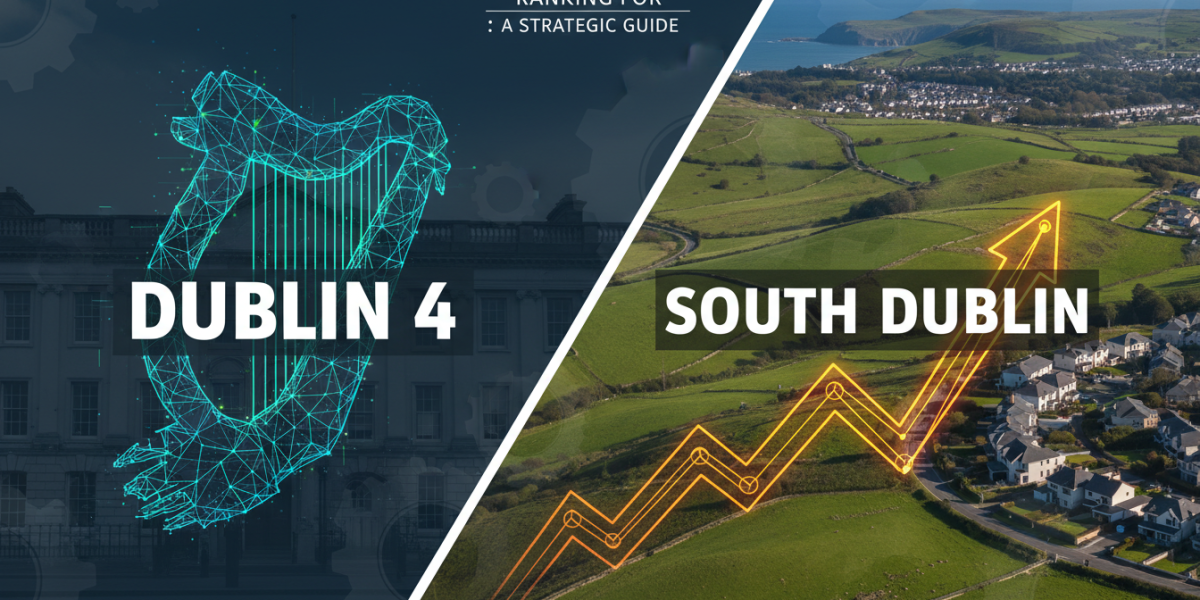
If you’re running a business in Dublin and trying to figure out which geographic keyword to target, the choice between "Dublin 4" and "South Dublin" isn’t just a matter of preference — it’s a strategic decision that can meaningfully affect your visibility, traffic quality, and ultimately your revenue. Understanding how these two terms behave in search, and who is actually typing them into Google, gives you a genuine competitive edge.
Why the Distinction Matters More Than You Think
At first glance, these two terms might seem interchangeable. Both refer to parts of Dublin south of the Liffey. But from an SEO perspective, they attract different audiences, carry different search intent, and compete in entirely different keyword landscapes.
"Dublin 4" is a postcode-driven term. It conjures specific associations — Ballsbridge, Donnybrook, Sandymount, and Ranelagh. It’s aspirational, specific, and strongly tied to premium property, upscale dining, and professional services. "South Dublin," on the other hand, is broader. It can encompass Dundrum, Stillorgan, Tallaght, Rathfarnham, and beyond — or even the administrative county of South Dublin, which is technically a separate local authority from Dublin City.
That distinction between Dublin City Council (which covers D4) and South Dublin County Council (which covers areas like Tallaght, Clondalkin, and Lucan) is something many businesses overlook entirely.
Understanding Search Intent Behind Each Term
Who Searches for "Dublin 4"?
People searching for "Dublin 4" are usually looking for something specific to that postcode. Think: "best restaurants Dublin 4," "solicitors Dublin 4," or "property to rent Dublin 4." These are often high-intent, geographically precise searches. The user knows where they want to be.
Because D4 carries a certain social cachet in Ireland, searches associated with it often have commercial intent attached to higher price points. Businesses targeting this term are typically competing in a relatively compact geographic zone but with well-resourced competitors.
Who Searches for "South Dublin"?
"South Dublin" casts a wider net. Searches like "plumbers South Dublin," "childcare South Dublin," or "personal trainers South Dublin" suggest users open to a broader service area. Volume is generally higher, but so is competition — and the intent can be less targeted.
There’s also a geographic ambiguity issue. Someone in Dundrum searching "South Dublin" may expect local results very different from someone in Rathcoole doing the same search. This makes conversion rates less predictable unless your landing pages are carefully structured.
Keyword Volume and Competition: The Numbers
Based on typical Irish search patterns, "South Dublin" as a modifier tends to generate higher monthly search volumes than "Dublin 4" across most service categories. For example, terms like "dentist South Dublin" may attract 200–400 monthly searches, while "dentist Dublin 4" might see 100–200.
However, the conversion rate story often flips. Because "Dublin 4" searches are more specific, businesses that rank for them frequently report stronger lead quality. A user who searches "accountant Dublin 4" knows exactly what they want and where — that precision often translates to a higher close rate.
The competition for Dublin 4 terms can also be fierce in certain niches — particularly estate agents, restaurants, and legal services — because the postcode itself is a brand signal.
How Google Interprets Local Relevance for Each Term
Google’s Treatment of Postcodes vs. Region Names
Google tends to handle postcode-based queries with strong local intent signals. If someone searches "gym Dublin 4," Google’s local algorithm will heavily weight proximity and relevance within that postcode boundary. Your Google Business Profile location, website content referencing D4 landmarks, and local citations all feed into this.
For "South Dublin," Google’s interpretation is broader and sometimes inconsistent. Because there’s no single defined boundary that users universally understand, results can vary significantly by the searcher’s device location. This makes proximity-based SEO slightly less predictable for region-wide terms.
The Role of Your Google Business Profile
Regardless of which term you target, your Google Business Profile (GBP) is the anchor of local SEO in Dublin. Your registered address determines which local pack results you appear in. If your physical address is in D4, you have a natural ranking advantage for Dublin 4 searches — but you may need deliberate content strategy to appear for broader "South Dublin" terms.
One effective approach: build location-specific service pages. A plumber based in Sandymount, D4, might have separate pages targeting "emergency plumber Dublin 4" and "plumber South Dublin" — each with distinct content, local references, and structured data.
Building a Dual-Target Strategy
You don’t necessarily have to choose between "Dublin 4" and "South Dublin." Many businesses benefit from targeting both — but it requires a structured content approach rather than just swapping keywords from page to page.
Here’s a framework that works:
- Anchor your homepage and GBP to your primary physical location — whether that’s D4 or a South Dublin county address.
- Create dedicated service-area pages for the secondary term, with genuinely useful content: local landmarks, travel directions, case studies from clients in that area.
- Build local citations consistently — Eircode, Golden Pages, and industry directories should reflect your correct location.
- Earn local backlinks — a mention from a Dublin 4 residents’ association or a South Dublin business journal carries real authority signals.
- Use schema markup for local business, including service areas, to help Google understand your geographic reach beyond your registered address.
Common Mistakes Dublin Businesses Make
Targeting Too Broadly Too Soon
Many small businesses try to rank for "South Dublin" before they’ve properly optimised for their immediate area. This dilutes your authority. Start tight — own your immediate postcode, then expand.
Ignoring the County vs. City Distinction
The confusion between South Dublin County Council and Dublin City Council’s southside postcodes (D6, D8, D12, D14, etc.) trips up both users and businesses. If your service covers Tallaght but your content only mentions D4, you’re leaving a significant audience underserved.
Thin Location Pages
Duplicate pages with just the town name swapped out are a red flag for Google and a disappointment for readers. Each location page should include local context — nearby landmarks, specific services offered in that area, testimonials from local clients.
Local Linking and Authority Signals for Dublin
Building genuine local authority matters enormously in a relatively small market like Dublin. Some concrete steps:
- Get listed in the Dublin Chamber of Commerce directory
- Seek coverage in local outlets like Dublin.ie, The Dublin Inquirer, or county-level community publications
- Sponsor or partner with local events in D4 (Ballsbridge Horse Show, for example) or South Dublin (Tallaght Stadium events, local GAA clubs)
- Engage actively in local Google Business Q&A and respond to all reviews — this signals active management to Google’s local algorithm
These aren’t just vanity plays. Hyperlocal links are genuinely harder to replicate than generic directory listings, which gives them lasting SEO value.
FAQ
Is it better to target "Dublin 4" or "South Dublin" for a service-based business?
It depends on your physical location and service area. If you’re based in D4 and serve a premium clientele, "Dublin 4" terms are likely to convert better. If you serve a wider geography south of the city, building content around "South Dublin" will capture higher search volume. Many businesses benefit from targeting both with separate, well-built pages.
How long does it typically take to rank for these terms?
Local SEO results in Dublin typically start showing movement within 3–6 months of consistent effort, assuming your Google Business Profile is fully optimised, citations are clean, and you’re regularly publishing relevant content. Competitive niches like legal or property services may take 6–12 months to see page-one results.
Does my physical address limit which terms I can rank for?
Your registered GBP address strongly influences your local pack rankings, but it doesn’t entirely prevent you from ranking in organic results for nearby areas. A well-structured service-area content strategy, supported by local links, can extend your organic reach meaningfully beyond your immediate postcode.
What’s the difference between South Dublin the county and South Dublin the general concept?
South Dublin County Council is a distinct local authority covering Tallaght, Clondalkin, Lucan, and Rathfarnham among others. "South Dublin" as a colloquial term is often used more broadly to include D4, D6, D14, and beyond — areas that fall within Dublin City Council. This ambiguity affects both user searches and how Google interprets results.
Should I use "D4" or "Dublin 4" in my content?
Use both. Many Dubliners naturally write and search using both formats. "D4" tends to appear more in casual, social, and colloquial contexts, while "Dublin 4" is more common in formal searches. Including both naturally in your page content and metadata ensures you capture the full range of how people actually search.
Conclusion
Choosing between "Dublin 4" and "South Dublin" as SEO targets isn’t a binary decision — it’s a question of strategy, intent alignment, and honest assessment of where your business operates and who it serves. Dublin 4 offers precision and premium intent; South Dublin offers reach and volume. The most effective local SEO strategies don’t force a choice between them but instead build a content architecture that lets you compete intelligently in both landscapes.
The key is doing it properly — with real content, genuine local signals, and a clear understanding of how Google reads geographic relevance in an Irish context. Done right, local SEO in Dublin is one of the highest-ROI marketing investments a business can make.
Ready to work out the right local SEO strategy for your Dublin business? Whether you’re targeting D4, South Dublin, or both, our team can help you build a plan that actually delivers results. Get in touch — email us at moc.ssobebolg@ofni or call +353 1 868 2345 and we’ll be happy to talk through your options, no obligation required.
Dublin's ROI-Driven Digital Marketing Agency Home
Related Posts
 Rathmines SEO Guide: Compete in Dublin 6
 Frequently Asked SEO Questions: A Complete Guide by Globe Boss SEO Agency Dublin
 Top 25 SEO FAQs Answered by Globe Boss SEO Agency Dublin
 Local SEO for Dublin 2 Businesses: A Complete Guide
 Why Your Dublin Plumber Website Isnʼt Ranking (And How to Fix It)
 How to Rank #1 for ʼNear Meʼ Searches in Dublin
 How to Rank in ChatGPT Search for Dublin Businesses
 Why Most Dublin Blog Posts Never Rank (And How to Fix Yours)