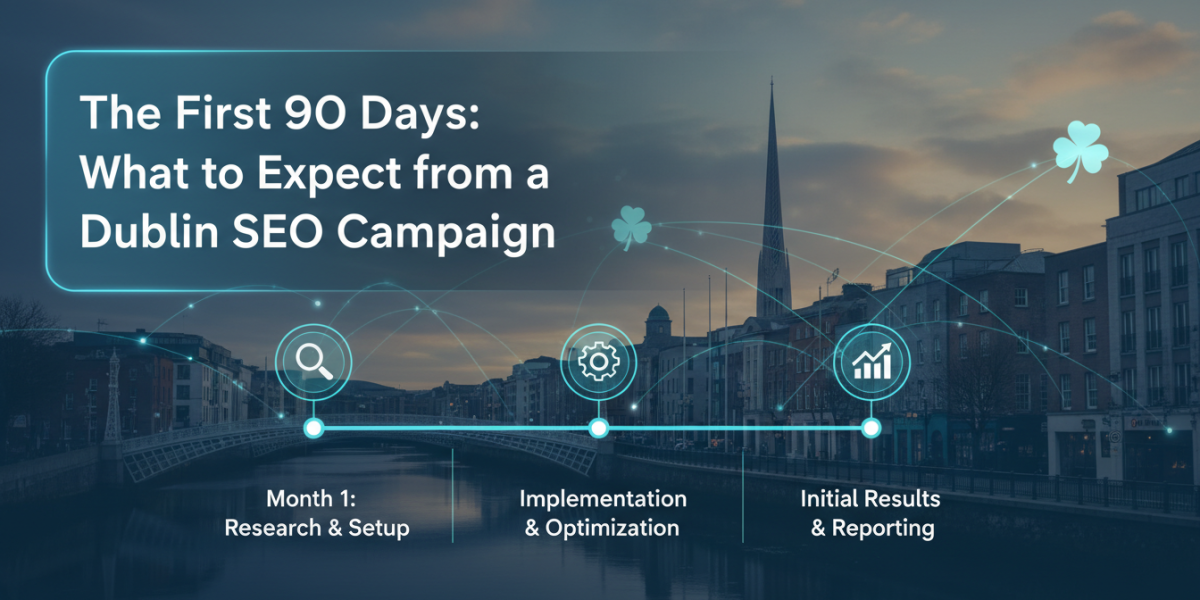
Starting an SEO campaign can feel like stepping into the dark. You’ve invested in the work, briefed an agency, and now you’re waiting — but waiting for what, exactly? If you’re a Dublin business owner or marketing manager who has recently kicked off a Dublin SEO campaign, this guide is for you. We’ll walk through exactly what happens in those critical first three months, why the timeline works the way it does, and how to tell if your campaign is actually on track.
Why the First 90 Days Are Different from Everything That Follows
SEO doesn’t work like paid advertising. With Google Ads, you can launch a campaign on a Monday and see traffic by Tuesday. Organic search is fundamentally different — it’s built on trust, consistency, and technical credibility, all of which take time to establish.
The first 90 days are largely about laying groundwork. This isn’t a slow start — it’s a necessary phase that determines how well everything else performs. Think of it like building a house: you can’t skip the foundations just because they’re not visible from the street.
Google’s own documentation acknowledges that it can take several months for new or refreshed content to be properly indexed, evaluated, and ranked. Industry benchmarks regularly suggest that meaningful organic ranking improvements take between three and six months, sometimes longer for competitive markets like Dublin’s.
The Dublin Market Has Its Own Dynamics
Dublin is a relatively small city geographically, but it’s densely competitive online. You’re often competing not just with local businesses, but with national Irish companies and even international brands targeting Irish users. Industries like hospitality, legal services, financial advice, and trades are especially saturated in search results.
That context matters when setting expectations. A plumber in Ranelagh faces different competition than a niche B2B software company in the Digital Hub. Your 90-day trajectory will partly depend on the competitive landscape you’re operating in.
Month One: Audit, Strategy, and Technical Foundations
The first month of a well-run Dublin SEO campaign is rarely glamorous. It’s diagnostic. An experienced agency will spend this time understanding your website’s current state before making a single change.
What a Technical Audit Actually Covers
A thorough technical audit looks at crawlability, site speed, mobile usability, URL structure, duplicate content, broken links, Core Web Vitals, and how your pages are currently indexed. Tools like Screaming Frog, Google Search Console, and Semrush are standard across the industry for this kind of work.
You might receive a report flagging dozens of issues. Don’t panic — most sites have them. What matters is which issues are prioritised. A slow-loading homepage or pages blocked by robots.txt are more urgent than a slightly long meta description.
Keyword Research With Local Intent
Month one also involves serious keyword research. For a Dublin business, this means identifying terms people in Ireland actually search for — not just global search volumes. "Accountant Dublin", "emergency electrician south Dublin", "best coffee near Grand Canal Dock" — these all have different search volumes, intent signals, and competition levels.
Good keyword research maps terms to specific pages and considers the full funnel: awareness, consideration, and decision-stage queries. It’s not just about finding the most-searched phrase; it’s about finding terms you can realistically rank for that will bring in the right kind of traffic.
Competitor Analysis
Understanding who ranks above you — and why — is essential early intelligence. This typically includes analysing competitors’ backlink profiles, content strategies, and site structures. In Dublin‘s market, you’ll often find that top-ranking local competitors have strong directory citations, solid on-page content, and a handful of authoritative links from Irish publications or industry bodies.
Month Two: On-Page Optimisation and Content Work
With the audit complete and strategy agreed, month two shifts toward visible action. This is when changes start going live on your site.
On-Page SEO: More Than Just Meta Tags
On-page optimisation means aligning each key page with its target keyword and search intent. That includes title tags, H1 headings, body copy, internal linking, image alt text, and schema markup where relevant.
But it goes beyond technical tweaks. A services page that previously read like a brochure might be rewritten to directly answer common questions, include specific details about your offering, and use language that matches how Dublin customers actually search. This kind of content improvement is often the difference between page two and page one.
Starting the Content Engine
Most Dublin SEO campaigns will include a content strategy that runs beyond month one. Blog posts, location pages, FAQs, and service area pages all play a role in expanding your site’s relevance and topical authority.
In month two, you’ll typically see the first pieces of this content going live. A well-written post targeting a specific long-tail query — "how much does a solicitor cost in Dublin", for example — might not rank immediately, but it starts the indexing clock. Google needs to find it, crawl it, and assess it before it can compete for visibility.
Google Business Profile and Local Signals
For businesses serving Dublin customers in person or within a specific area, the Google Business Profile (formerly Google My Business) is critical. Month two often includes a full audit and optimisation of this listing — categories, service descriptions, hours, photos, and review management.
Local SEO signals like NAP consistency (Name, Address, Phone number across directories), citations on platforms like Yelp, Golden Pages, and Yelp Ireland, and localised landing pages all feed into how well you appear in Dublin’s local pack results.
Month Three: Momentum, Link Building, and Early Data
By month three, the campaign starts to generate usable data. You’re not expecting to dominate page one yet, but you should be seeing meaningful signals of progress.
What Movement Looks Like at 90 Days
Realistic early indicators include:
- Improved crawl health — fewer technical errors, faster load times
- Indexed content — new pages and blog posts appearing in Google Search Console
- Keyword ranking movement — target terms shifting from unranked to positions 20–50, or from page two to page one for lower-competition terms
- Click-through rate improvements — better titles and meta descriptions generating more clicks even at similar positions
- Traffic uplift on specific pages — especially pages that received significant on-page work
Don’t fixate on any single metric. A 15% increase in organic traffic after 90 days, combined with improvements in crawl coverage and keyword visibility, is a far better sign than one keyword jumping to position three while everything else remains flat.
Link Building: The Long Game Begins
Off-page SEO — primarily link building — is one of the most important ranking factors and one of the slowest to bear fruit. Month three is often when the first outreach and link acquisition efforts get underway.
In an Irish context, high-value links come from sources like local business directories, industry associations, Irish news sites, local chambers of commerce, and partner organisations. A link from the Dublin Chamber of Commerce or a mention in the Irish Times carries far more weight than a generic directory link from a content farm.
Ethical link building takes time. Agencies that promise dozens of links per month are often cutting corners, which can result in Google penalties down the line.
Common Mistakes Businesses Make in the First 90 Days
Even with the right agency, there are ways businesses can inadvertently slow their own progress.
Changing the brief mid-campaign. Switching target keywords, rebranding, or restructuring your site during the first three months can reset a lot of work. Stability is an asset in SEO.
Expecting results too soon. If you’re reviewing rankings weekly in month one and raising concerns when nothing has moved, you may be creating unnecessary pressure that leads to shortcuts. Trust the process while holding the agency to milestones, not week-by-week fluctuations.
Underinvesting in content. Some businesses want the technical work done but resist producing new content. In competitive Dublin markets, content depth is what separates ranking sites from invisible ones.
Ignoring mobile and speed. Over 60% of Irish searches happen on mobile devices. A slow or clunky mobile experience will undermine even the best SEO strategy.
Frequently Asked Questions
How long before I see results from a Dublin SEO campaign?
Most businesses see early signs of movement — improved rankings for lower-competition terms and better indexing — within 60 to 90 days. More significant organic traffic growth typically takes four to six months, depending on your starting point and the competitiveness of your sector. Highly competitive Dublin niches like legal or financial services may take longer.
What should I expect from my SEO agency in the first month?
You should receive a detailed technical audit, a keyword research document or strategy outline, and a content and optimisation plan. If an agency jumps straight into publishing content or building links without an audit phase, that’s a red flag — it suggests they’re not tailoring the work to your site’s actual needs.
Is local SEO different from regular SEO?
Yes, meaningfully so. Local SEO focuses on appearing in geographically relevant searches and the Google local pack. It involves Google Business Profile optimisation, local citations, and location-specific landing pages. For most Dublin businesses serving local customers, local SEO should be a core part of the strategy from day one.
How do I know if my Dublin SEO campaign is on track?
Ask your agency for a 30-day and 60-day progress report covering technical fixes completed, keywords tracked and their movement, content published, and links acquired. Comparing Google Search Console data at the start and end of month three is a reliable way to assess genuine progress.
What if I’ve been burned by an SEO agency before?
Unfortunately, poor experiences with SEO agencies are common. The best way to protect yourself is to look for transparency — agencies that explain what they’re doing and why, show you the data, and set realistic expectations rather than guaranteed rankings. No legitimate SEO agency can guarantee a number-one ranking.
Conclusion
The first 90 days of a Dublin SEO campaign aren’t about instant results — they’re about building something that compounds over time. Done properly, this phase sets the technical, strategic, and content foundations that allow rankings to grow and stabilise in the months that follow.
If you approach this period with realistic expectations, clear communication with your agency, and a willingness to invest in quality content and genuine link-building, you’re setting yourself up for the kind of sustainable growth that paid traffic simply can’t replicate. Dublin’s market is competitive, but it’s absolutely winnable with the right approach and the patience to let the work take effect.
Ready to start your SEO campaign or want to understand what’s possible for your Dublin business? Get in touch with our team — we’re happy to walk you through what a realistic strategy would look like for your specific situation. Email us at moc.ssobebolg@ofni or call +353 1 868 2345 and we’ll take it from there.
Dublin's ROI-Driven Digital Marketing Agency Home
Related Posts
 Globe Boss Dublin Mobile First Marketing Leaders
 Human First Dublin Content Globe Boss Agency
 Mobile First Indexing for Dublin Websites
 How long does it take to see ROI from a Dublin-based SEO campaign?
 The True Cost of SEO Services in Dublin What You Should Expect
 SEO-First Website Development for Dublin Businesses
 Dublin Web Design Built for Search Engine Success
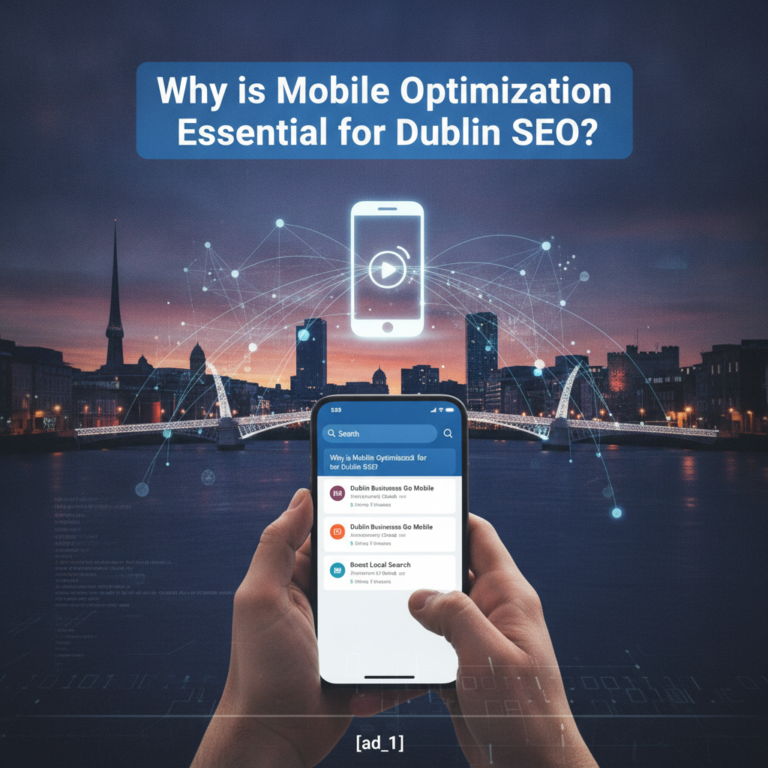 Why is mobile optimisation essential for Dublin SEO?