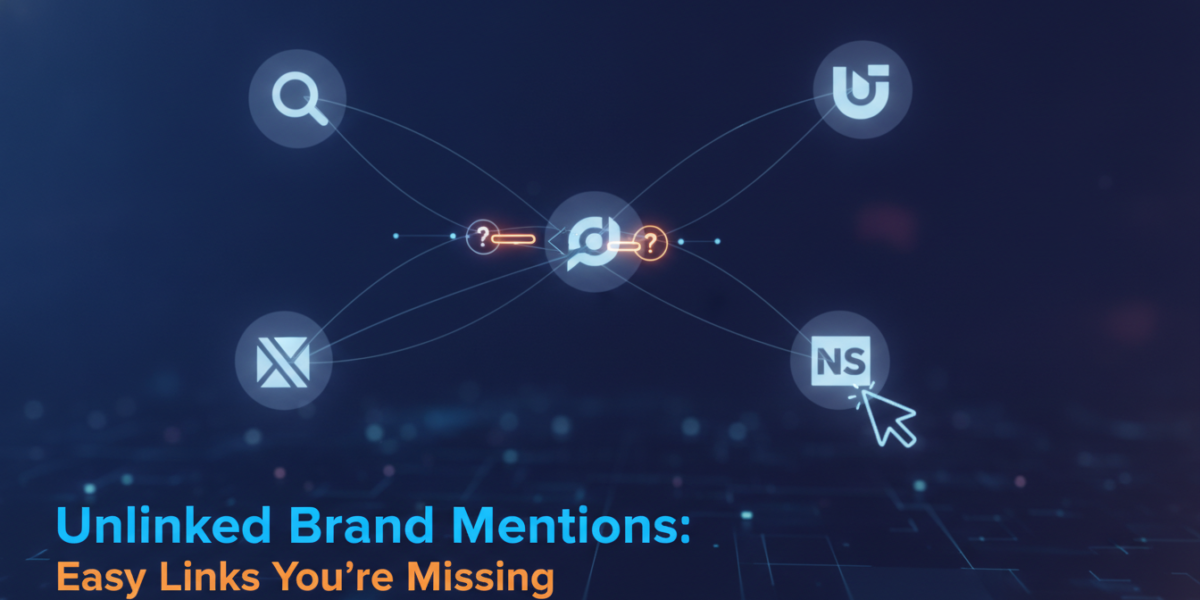
If someone writes about your brand online but forgets to add a hyperlink back to your website, that mention is doing half the job it could be. Unlinked brand mentions are one of the most overlooked link building opportunities in SEO — and converting them into actual backlinks is often far simpler than building links from scratch. You already have the goodwill, the relevance, and the context. All that’s missing is the link itself.
What Are Unlinked Brand Mentions?
An unlinked brand mention is exactly what it sounds like: someone references your business, product, or service name on a webpage without including a clickable hyperlink to your site. The mention might appear in a blog post, a review, a news article, a listicle, or even a podcast transcript.
These mentions already signal that someone values your brand enough to talk about it. But without the hyperlink, search engines like Google can only partially credit that authority signal. A live link passes "link equity" — the ranking power that helps your site climb in search results — while a plain text mention does not transfer that same value.
That’s the gap worth closing.
Why Unlinked Mentions Are Worth Your Attention
The Numbers Make the Case
Think about how many articles get published every day that reference established brands without linking to them. A HubSpot guide might mention a tool. A travel blogger might name-drop a hotel. A tech journalist might cite a software company. In most cases, that reference is a missed opportunity.
Converting even a handful of unlinked mentions into real backlinks can meaningfully improve your domain authority over time — especially when those mentions appear on high-authority websites.
You’re Starting from a Position of Strength
Cold link outreach — emailing strangers to ask them to link to your content — is hard. Response rates are often in the single digits. But reaching out about an unlinked mention is different: the person has already shown interest in your brand. That warm relationship makes the conversation far more natural.
You’re not asking for a favour out of nowhere. You’re simply pointing out something they missed and making it easy for them to fix it.
How to Find Unlinked Brand Mentions
This is where most people get stuck, but the process is actually straightforward once you know where to look.
Google Search Operators
Start with a simple search: "your brand name" -site:yourdomain.com. This surfaces pages that mention your brand but excludes your own website. Scroll through the results and check each one for a hyperlink. If there’s no link to your site, you’ve found a candidate.
You can refine this further with operators like "your brand name" intext:"brand name" -site:yourdomain.com to narrow down results to pages where the mention appears in the body of the content.
Monitoring Tools
Tools like Ahrefs, Semrush, Moz, and Google Alerts can automate much of this work. Set up a brand alert in Google Alerts and you’ll receive notifications whenever your brand is mentioned online — though this only catches new mentions going forward.
Ahrefs has a dedicated "Brand Mentions" feature under their Content Explorer tool that lets you filter mentions by whether a link exists. This saves enormous amounts of manual checking time.
Social Listening Platforms
Platforms like Mention.com or Brand24 cast a wider net, including forums, social media, and news sites. While social media links are typically "nofollow" and carry limited SEO value, mentions on blogs and editorial sites discovered through these platforms can be highly valuable.
Turning Mentions Into Links: A Practical Outreach Approach
Finding the mentions is just the beginning. The real work — and the real reward — is in the outreach.
Step 1: Qualify Your Targets
Not every unlinked mention is worth pursuing. Prioritise pages that:
- Have strong domain authority (DA 40+ is a reasonable benchmark)
- Are editorially relevant to your niche
- Have been recently published or updated
- Receive genuine traffic (use tools like Ahrefs’ Site Explorer to estimate)
A link from a high-authority industry publication is far more valuable than ten links from low-traffic directories.
Step 2: Find the Right Contact
Look for the article author’s name and search for their email or social media profile. Many writers include contact details in their bios. LinkedIn is often useful here. If you can’t find the author, look for the site’s general contact or editorial email.
Avoid sending generic messages to info@ addresses when possible — personalised outreach to named individuals gets significantly better responses.
Step 3: Write a Human Outreach Email
This is where most outreach fails. People send templated, robotic emails that scream "SEO request" — and editors bin them immediately.
Instead, keep it short, warm, and specific. Here’s the tone you’re going for:
"Hi [Name], I came across your piece on [Topic] — really enjoyed the section on [specific detail]. I noticed you mentioned [Brand Name] in the article. Would you be open to adding a link to our site? Happy to share the URL if helpful. Thanks!"
That’s it. No essay. No hard sell. Just a polite, specific, and easy-to-action request.
Step 4: Follow Up Once
If you don’t hear back within a week, send one follow-up. Keep it equally brief. After that, move on — chasing beyond two emails rarely converts and risks damaging the relationship.
What to Do When You Get a "Yes"
When someone agrees to add the link, respond quickly with the exact URL you’d like them to use. Make it effortless on their end.
It’s also worth specifying the anchor text you’d prefer — ideally your brand name or a natural phrase from the surrounding context. This gives you a degree of control over how the link appears in terms of SEO relevance.
Once the link is live, verify it using a tool like Ahrefs or even a simple browser check. Thank the writer or editor personally. This small gesture builds goodwill and may open doors for future collaboration.
Common Mistakes to Avoid
Over-automating the outreach. Mass email tools used without personalisation are easy to spot and quick to ignore. Scale carefully and maintain a human voice.
Targeting low-quality sites. A backlink from a spammy or irrelevant site can actually harm your SEO. Vet every domain before reaching out.
Ignoring brand variants. People may mention your brand using abbreviations, misspellings, or product names. Search for variations of your brand name as well as your core business name.
Forgetting about images and logos. If a site uses your logo without linking to you, that’s another form of unlinked mention worth recovering. A polite request for image attribution with a link is often successful.
Scaling This Into a Repeatable Process
Once you’ve converted your first batch of mentions, the strategy works best as an ongoing habit rather than a one-off audit.
Set up Google Alerts for your brand name and key product names. Review them weekly. Log every mention in a simple spreadsheet with columns for URL, domain authority, contact found, outreach sent, and link status. This doesn’t need to be complicated — even a basic Google Sheet works well.
Review your pipeline monthly. Over six to twelve months, a consistent effort here can add dozens of high-quality backlinks with far less effort than traditional link building campaigns.
FAQs About Unlinked Brand Mentions
What is the difference between a brand mention and a backlink?
A brand mention is any reference to your business name online, whether it includes a link or not. A backlink is a clickable hyperlink from another website to yours. Both signal credibility, but only a backlink passes the direct SEO value ("link equity") that helps improve search rankings.
How do I know if a mention is worth pursuing?
Focus on domain authority, topical relevance, and traffic. A mention on a respected industry site with strong organic traffic is worth pursuing. A mention on a dormant blog with no audience is probably not worth the outreach effort.
Is it rude to ask someone to add a link to their article?
Not at all, provided you ask politely. Editors and bloggers often appreciate the heads-up — it’s a minor edit for them and genuinely helpful context for their readers. A respectful, brief email is almost never perceived negatively.
How long does it take to see results from this strategy?
Newly acquired backlinks are typically crawled and indexed by Google within a few days to a few weeks. The ranking impact from a handful of strong links may be visible within one to three months, though this depends on your overall domain profile and competitive landscape.
Can I do this for a local or small business?
Absolutely. In fact, for local businesses, unlinked mentions in local press, community blogs, or regional directories can be especially powerful. Local citations with links directly support local SEO rankings, which are often more competitive and immediately impactful for smaller businesses.
Conclusion
Unlinked brand mentions represent some of the lowest-hanging fruit in the entire world of link building. The hard part — earning the mention in the first place — has already been done. All that remains is a polite conversation and a simple link update.
By building a consistent process around finding and recovering these mentions, you’re not just chasing links. You’re strengthening relationships, improving your brand’s visibility, and accumulating long-term SEO value without the cold-start friction of traditional outreach campaigns. It’s a strategy that rewards patience and consistency, and one that any business — from a local service provider to a growing e-commerce brand — can put into practice today.
Want help finding and recovering your unlinked brand mentions? Whether you’re just getting started with SEO or looking to sharpen an existing strategy, we’re happy to talk it through. Reach out to our team — email us at moc.ssobebolg@ofni or call +353 1 868 2345 and we’ll point you in the right direction.
Dublin's ROI-Driven Digital Marketing Agency Home
Related Posts
 Competitor Backlink Analysis Uncovering Your Rivals’ Best Irish Links
 Do inbound links have less impact on google rankings
 How to Get Your Dublin Business Mentioned by ChatGPT
 Dublin Brand Voice SEO Globe Boss Leaders
 How to Use Storytelling to Make Your Brand More Searchable
 Why Community Management Is the New Brand Loyalty for Irish Firms
 How to Use Google Shopping Ads to Grow an Irish E-Commerce Brand
 How to make your brand the talk of the town and the web