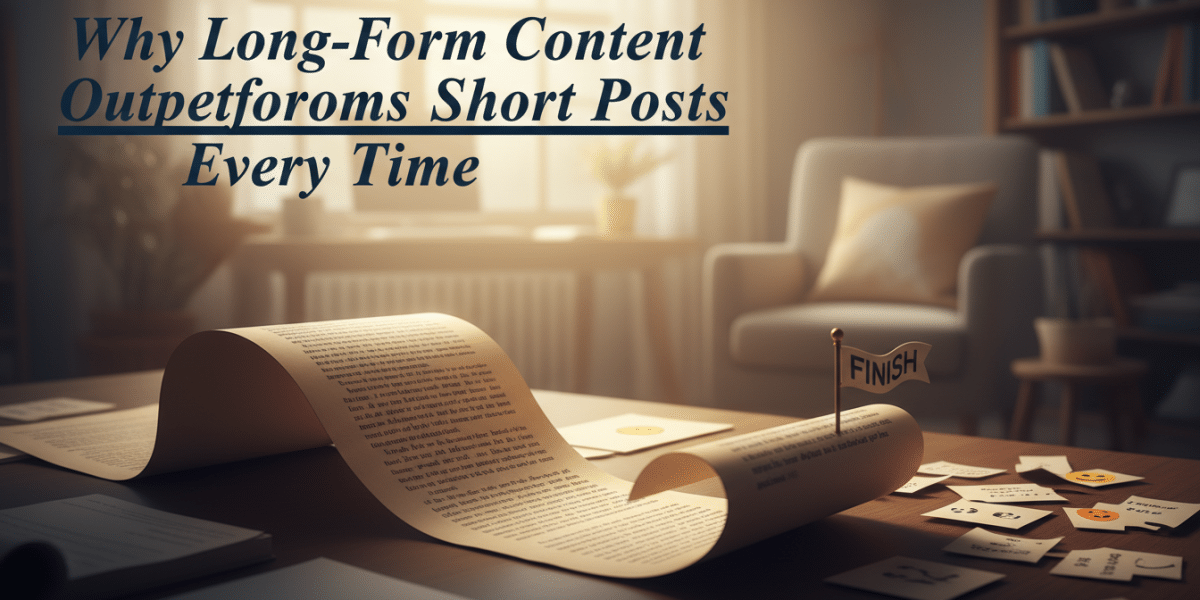
In a world obsessed with instant gratification and shrinking attention spans, it’s easy to fall into the trap of believing that only short, snackable content can capture an audience. We scroll through endless feeds of bite-sized updates, quick tips, and fleeting memes, leading many to conclude that anything longer than a tweet is destined for the digital graveyard. But beneath this fast-paced surface lies a powerful, undeniable truth: long-form content outperforms short posts every time.
This isn’t just about word count; it’s about the depth, value, and lasting impact that comprehensive pieces deliver. While short posts have their place in quick updates and social media interactions, they simply can’t compete with the multifaceted benefits of well-researched, engaging, and extensive articles. Let’s dive deep into why investing in long-form content isn’t just a good idea, but a strategic imperative for anyone serious about building authority, engaging an audience, and achieving measurable results.
The Illusion of Instant Gratification: Why We Crave Short
Before we champion the extensive, it’s important to acknowledge the undeniable appeal of the brief. Short-form content offers immediate answers, quick entertainment, and requires minimal commitment. In our busy lives, this feels efficient. A 30-second video, a 150-word blog post, or a pithy infographic can deliver a snapshot of information, a momentary chuckle, or a fleeting piece of news.
This instant gratification can be addictive, creating a perception that our audiences prefer quick hits above all else. However, while short content excels at capturing initial attention, it often falls short when it comes to truly educating, persuading, or building a lasting connection. It’s like tasting a delicious appetizer – it leaves you wanting more, but rarely provides a satisfying meal on its own. The real substance, the real value, often requires a deeper dive, which is precisely where long-form content shines.
The Power of Depth: Delivering True Value and Understanding
At its core, the primary reason long-form content outperforms short posts every time is its unparalleled ability to provide genuine depth and comprehensive value. When you delve into a topic thoroughly, you move beyond surface-level explanations and offer a complete picture.
Comprehensive Exploration
Imagine you’re trying to learn a new skill, like “how to build a small garden shed.” Would you rather read a 200-word blog post that offers a basic checklist of materials, or a 2,500-word guide that details every step from foundation laying to roofing, complete with tool lists, safety tips, common pitfalls, and material recommendations? The answer is obvious. Long-form content allows for a full exploration of a subject, breaking down complex ideas into manageable, understandable sections. It anticipates questions and provides answers before they’re even asked.
Answering All the Questions
Readers often come to your content with a specific problem or a set of questions. Short posts might answer one or two of these, but a well-crafted long-form piece aims to address all potential queries. This comprehensive approach establishes your content as a definitive resource. When readers find everything they need in one place, they don’t have to leave your site to find supplementary information, which keeps them engaged with your brand longer. This isn’t just convenient for the reader; it’s incredibly valuable for your website’s analytics.
Building Authority and Trust: Becoming a Go-To Resource
In an age of misinformation and countless voices vying for attention, establishing credibility is paramount. Long-form content is an unparalleled tool for building authority and fostering trust with your audience.
Demonstrating Expertise
When you publish a detailed, well-researched article on a topic, you’re essentially putting your expertise on full display. You’re showing that you’ve done your homework, understand the nuances, and can articulate complex ideas clearly. This isn’t something easily conveyed in a 500-word post. A deep dive into a subject proves you’re not just skimming the surface but are a true expert, someone worth listening to.
Fostering Credibility
Trust is built over time, through consistent demonstrations of value and reliability. When readers consistently find comprehensive, accurate, and insightful information on your site, they begin to view you as a credible source. This credibility translates into a stronger brand reputation. People are more likely to share content from sources they trust, subscribe to newsletters, and ultimately, convert into customers or clients. A meticulously crafted guide is far more likely to earn a valuable backlink from another reputable site than a quick opinion piece.
SEO Superpowers: How Long-Form Content Wins the Search Game
While we write for real readers, not search engines, the reality is that search engines are a primary gateway to those readers. And in the realm of Search Engine Optimization (SEO), long-form content outperforms short posts every time. Google and other search engines are designed to deliver the most relevant, comprehensive, and high-quality results to user queries.
Richer Keyword Opportunities
Longer content naturally allows for the inclusion of a wider array of relevant keywords and phrases, including long-tail keywords. These are specific, often multi-word phrases that users type into search engines (e.g., “best non-toxic paint for nursery walls” instead of just “nursery paint”). By covering a topic extensively, you organically incorporate more of these long-tail queries, making your content discoverable for a broader range of searches. Short posts often struggle to capture this diversity without sounding keyword-stuffed.
Higher Ranking Potential
Search engines increasingly prioritize content that demonstrates expertise, authoritativeness, and trustworthiness (E-E-A-T). Comprehensive long-form articles signal to Google that your page offers substantial value. They often have lower bounce rates and higher dwell times (the amount of time users spend on your page), both of which are positive signals to search algorithms that indicate users found your content helpful and engaging. Studies consistently show a correlation between content length and higher search rankings.
Earning Backlinks and Shares
High-quality, in-depth articles are prime candidates for earning backlinks from other websites and shares on social media. When someone references a statistic, needs to explain a complex concept, or simply wants to point their audience to a definitive resource, they’re far more likely to link to a comprehensive guide than a superficial post. These backlinks are crucial for SEO, signaling to search engines that your content is valuable and authoritative within your niche.
Deepening Engagement: More Time, More Impact
Engagement goes beyond a quick click or a fleeting glance. True engagement means holding a reader’s attention, fostering interaction, and making a lasting impression. This is another area where long-form content outperforms short posts every time.
Holding Attention Longer
It’s simple math: if a reader is consuming a 2,000-word article, they are spending significantly more time on your page than if they read a 300-word post. This increased “time on page” isn’t just an SEO signal; it means your message has more opportunity to sink in. The reader is more immersed in your brand’s voice, values, and insights. This deeper immersion leads to a stronger connection and recall.
Encouraging Interaction
Comprehensive articles often provoke more thoughtful comments, questions, and discussions. When you provide a wealth of information, readers are more likely to have specific points they want to discuss, agree or disagree with, or ask for clarification on. This interaction builds community around your content and provides invaluable feedback for future content creation. It transforms a passive reading experience into an active, two-way dialogue.
Beyond the Click: Driving Conversions and Business Goals
Ultimately, most content strategies are tied to business objectives, whether that’s lead generation, sales, or building a loyal customer base. Long-form content outperforms short posts every time when it comes to moving readers further down the conversion funnel.
Nurturing the Customer Journey
The sales cycle for many products and services isn’t linear or immediate. It often involves a period of research, consideration, and comparison. Long-form content is perfectly suited for nurturing prospects through this journey. A detailed white paper, a comprehensive product guide, or an in-depth case study can address pain points, explain benefits, overcome objections, and build the necessary trust and confidence before a purchase decision is made. Short posts can introduce a product, but they rarely have the persuasive power to close a deal.
Stronger Calls to Action (CTAs)
Within a long-form article, you have ample space to strategically place and justify your calls to action. By the time a reader reaches a CTA in a comprehensive piece, they’ve likely received significant value, understood your expertise, and developed a connection. This makes them far more receptive to downloading an e-book, signing up for a webinar, or making a purchase. The CTA feels like a natural next step, rather than an abrupt interruption.
The Long-Term Asset: Repurposing and Evergreening Your Content
One of the most powerful, yet often overlooked, advantages of long-form content is its longevity and versatility. It’s not just a one-off piece; it’s a foundational asset that can fuel your content strategy for months, even years.
Evergreen Content Status
High-quality, in-depth articles on fundamental topics tend to be “evergreen” – meaning they remain relevant and valuable over a long period. Unlike news articles or trending topics that quickly become outdated, a comprehensive guide on “how to start a small business” or “the principles of healthy eating” will continue to attract traffic and provide value for years to come, requiring only minor updates. This makes your initial investment in creation incredibly cost-effective in the long run.
Repurposing Goldmine
A single, robust piece of long-form content can be broken down and repurposed into dozens of smaller content assets. Think of a 3,000-word ultimate guide. From this, you could create:
- Multiple short blog posts, each focusing on a specific section.
- Infographics summarizing key data points.
- A series of social media posts with quotes or tips.
- A podcast episode or video script.
- An email drip campaign.
- A presentation or webinar.
- A lead magnet (e.g., a downloadable PDF version).
This strategy maximizes the return on your initial content creation effort, reaching different audiences on different platforms with tailored content, all stemming from one powerful source.
The Art of Storytelling: Connecting on a Deeper Level
Finally, and perhaps most importantly, long-form content outperforms short posts every time because it provides the canvas necessary for true storytelling and emotional connection.
Emotional Connection
Stories are how humans learn, remember, and connect. A short post might present a fact, but a long-form article can weave that fact into a compelling narrative, complete with examples, case studies, and personal anecdotes. This allows you to explain not just what something is, but why it matters, demonstrating the impact on real people or situations. This emotional resonance makes your content memorable and fosters a deeper bond with your audience.
Memorable Narratives
When you have the space to build a narrative, introduce characters (even abstract ones like “the struggling business owner”), and demonstrate a transformation, your message becomes sticky. People remember stories long after they’ve forgotten bullet points. Long-form content provides the space for this narrative arc, creating a more engaging and impactful reading experience that lingers in the reader’s mind.
Conclusion: The Enduring Power of Depth
In a content landscape often characterized by speed and brevity, it’s tempting to focus solely on short-form pieces. However, the evidence is overwhelming: long-form content outperforms short posts every time across nearly every meaningful metric. It delivers superior value, builds unwavering authority, dominates search engine results, fosters deeper engagement, drives more meaningful conversions, and serves as an evergreen, versatile asset for your entire content strategy.
While short posts have their place in the immediate, the true power lies in the comprehensive. By investing in well-researched, in-depth, and engaging long-form content, you’re not just creating content; you’re building a library of lasting value, establishing yourself as a trusted expert, and cultivating an audience that is deeply connected and loyal. So, next time you’re planning your content strategy, remember that while speed might win the sprint, depth always wins the marathon.
Dublin's ROI-Driven Digital Marketing Agency Home
Related Posts
 Turning Short Tail Ideas into High-Converting Long Tail Content
 Short-Form Video Content Marketing
 A guide to long form content
 TikTok Ads in Ireland: Setup, Costs and Creative Tips
 How to Use Short-Form Video to Promote Your Dublin Business
 How to Write Email Subject Lines That Get Opened Every Time
 Short-Form Video Dominates How to Win on TikTok Ireland
 Short Tail vs Long Tail Finding the Perfect Balance for Your Blog