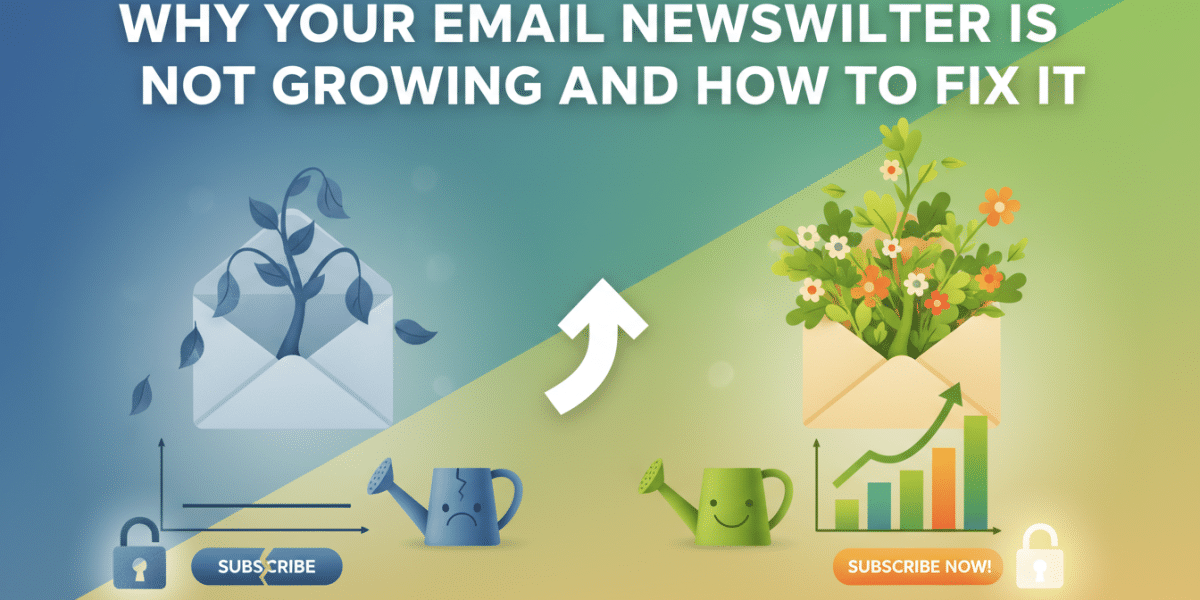
Why Your Email Newsletter Is Not Growing and How to Fix It
You’ve put in the work. You’ve crafted engaging content, perhaps even designed a beautiful template, and faithfully hit ‘send’ on your email newsletter. Yet, despite your best efforts, your subscriber count remains stubbornly stagnant. It’s a frustrating scenario many content creators, businesses, and solopreneurs face: why your email newsletter is not growing.
You might feel like you’re shouting into the void, or worse, that your valuable insights are simply not resonating. The good news is, you’re not alone, and more importantly, this isn’t an insurmountable problem. Often, the reasons behind a stagnant email list are common, identifiable, and entirely fixable.
In this comprehensive guide, we’re going to dive deep into the most common reasons your email newsletter might be struggling to gain traction. More importantly, we’ll provide actionable, natural-sounding strategies and practical examples to help you turn the tide, attract new subscribers, and foster a thriving community around your content. Let’s uncover why your email newsletter is not growing and equip you with the tools to fix it.
The Content Conundrum: Is Your Newsletter Delivering What People Need?
The most fundamental reason people subscribe – and stay subscribed – is the value they perceive in your content. If your email newsletter isn’t growing, the first place to look is often right there in the inbox.
Your Content Lacks Clear Value or Is Irrelevant
Imagine opening an email and thinking, “Why did I get this?” If your subscribers are having that thought, your content might not be hitting the mark. Generic, unfocused, or overly promotional emails quickly lead to unsubscribes or, worse, ignored messages.
How to Fix It:
- Define Your Niche and Audience: Who are you writing for? What are their pain points, interests, and aspirations? Tailor every piece of content to address these specifically. Instead of “Weekly Updates,” think “Solutions for Small Business Owners Struggling with Marketing.”
- Solve Problems, Offer Insights: Don’t just share news; provide solutions. Teach them something new, offer a fresh perspective, or give them actionable steps they can take right away.
- Example: If you’re a finance blogger, instead of just sharing market news, offer “3 Steps to Protect Your Investments During Volatility.”
- Entertain and Engage: Not everything has to be purely utilitarian. Sometimes a compelling story, a thought-provoking question, or even a dash of humor can make your email newsletter a joy to open.
- Ask Your Audience: Send a quick survey to your existing (even small) list. Ask what they want to learn, what problems they face, and what kind of content they enjoy most. This direct feedback is invaluable.
Inconsistent Sending Schedule
One week your email drops on Monday, the next it’s Friday, then there’s a three-week gap. Inconsistent sending is a surefire way to make subscribers forget about you. Out of sight, out of mind – and out of the inbox.
How to Fix It:
- Establish a Rhythm: Decide on a consistent schedule – weekly, bi-weekly, or monthly – and stick to it. Consistency builds anticipation and trust.
- Tip: If you’re just starting or struggle with content creation, begin with a less frequent schedule (e.g., bi-weekly) and ramp up if you can maintain quality.
- Plan Ahead with a Content Calendar: Outline your topics for the next few weeks or months. This helps you stay organised, pre-write content, and avoid last-minute scrambles.
- Set Realistic Expectations: Don’t promise daily emails if you can only manage one a month. Be upfront about your frequency.
Poor Readability and Design
Even the most brilliant insights can be lost if they’re presented in a confusing, cramped, or visually unappealing way. Walls of text, tiny fonts, or emails that break on mobile devices are guaranteed to send readers clicking away.
How to Fix It:
- Prioritize Scannability: Use short paragraphs, clear headings (like these!), bullet points, and numbered lists. People scan emails; make it easy for them to grasp the main points quickly.
- Mobile-First Design: A vast majority of people check emails on their phones. Ensure your email template is responsive and looks great on smaller screens. Test it!
- Visual Appeal: Incorporate relevant images, GIFs, or even short videos to break up text and enhance engagement. Just don’t overdo it or use massive files that slow loading times.
- Clear Call-to-Action (CTA): What do you want your reader to do next? Make it obvious with a prominent button or linked text.
The Visibility Void: Are People Even Finding Your Sign-Up Form?
Even if your content is gold, it won’t help your email newsletter grow if no one knows it exists or how to sign up. Many creators make the mistake of hiding their sign-up opportunities.
Your Sign-Up Forms Are Hidden or Ineffective
Is your sign-up form buried in your website’s footer, or only visible after an endless scroll? If it’s not prominent, it’s not working.
How to Fix It:
- Prominent Placement:
- Above the Fold: Place a clear sign-up form or call-to-action near the top of your website’s homepage.
- Sidebar: If you have a blog, a sidebar widget is an excellent place for an opt-in form.
- Within Blog Posts: Embed a sign-up form relevant to the post’s topic directly into your articles.
- Sticky Bars/Pop-ups: Implement non-intrusive pop-ups (like exit-intent or timed after a user has engaged with content) or a sticky bar at the top/bottom of your site. Avoid aggressive, immediate pop-ups that annoy visitors.
- Clear and Concise: Keep the sign-up form simple. Usually, just an email address (and maybe a first name) is enough to start.
You Lack a Compelling Value Proposition
“Sign up for our newsletter!” is not a value proposition; it’s a request. People need a compelling reason to hand over their email address. What’s in it for them?
How to Fix It:
- Highlight the Benefits: Clearly articulate what subscribers will gain. Will they get exclusive tips, early access, discounts, curated content, or a dose of inspiration?
- Weak: “Subscribe for updates.”
- Strong: “Unlock weekly strategies to boost your productivity by 20% – delivered straight to your inbox.”
- Use Specific Language: Be precise about the type of content and frequency. “Get our best marketing tactics every Tuesday morning” is more appealing than “Join our mailing list.”
You’re Not Actively Promoting Your Newsletter
Building an email list isn’t passive. You can’t just set up a form and expect people to flock to it. You need to actively promote your email newsletter everywhere your audience hangs out.
How to Fix It:
- Social Media: Regularly share snippets or enticing teasers from your latest newsletter on platforms like Instagram, Twitter, LinkedIn, or Facebook. Always include a direct link to sign up.
- Blog Posts: End every blog post with a strong call-to-action to subscribe, offering a relevant incentive.
- Podcast/Video: Mention your email newsletter prominently in your podcast episodes or YouTube videos. Provide a clear, easy-to-remember URL.
- Email Signature: Include a link to your sign-up page in your professional email signature.
- Guest Appearances: If you guest post or appear on other podcasts, always mention your newsletter as a way to connect further.
No Lead Magnet or Incentive
Why should someone sign up right now? A lead magnet (also known as an opt-in incentive) provides that immediate gratification and motivation. If your email newsletter is not growing, this is often a major missing piece.
How to Fix It:
- Create a High-Value Freebie: Offer something genuinely useful that solves a specific problem for your target audience.
- Examples: A downloadable guide, checklist, template, mini-eBook, exclusive webinar recording, free course, coupon code, or even access to a private resource library.
- Make it Relevant: The lead magnet should be directly related to the content you’ll be sending in your newsletter. If it’s not, you’ll attract the wrong subscribers.
- Promote it Everywhere: Treat your lead magnet as a product. Highlight its benefits on your sign-up forms, social media, and website.
The Technical & Engagement Traps: Beyond the Surface
Sometimes, the issues preventing your email newsletter from growing aren’t just about content or visibility, but how your emails are being handled and whether they’re reaching the right people in the right way.
Your Emails Are Not Being Delivered (Spam Filters)
You can write the best email in the world, but if it lands in the spam folder, it’s effectively invisible. Poor deliverability severely impacts open rates and, indirectly, growth, as people don’t share what they don’t see.
How to Fix It:
- Maintain a Clean List: Regularly remove inactive subscribers (those who haven’t opened emails in 6+ months). Sending to disengaged addresses signals to email providers that your content isn’t valuable.
- Avoid Spammy Language: Words like “free,” “winner,” “guarantee,” excessive capitalization, and exclamation marks can trigger spam filters.
- Authenticate Your Domain: Set up SPF, DKIM, and DMARC records for your sending domain. This tells email providers that you are who you say you are, improving trust and deliverability. Consult your email service provider (ESP) for guidance.
- Don’t Buy Lists: This is a cardinal sin. Purchased lists are notorious for high bounce rates and spam complaints, which will tank your sender reputation.
You’re Not Segmenting Your Audience
Sending the exact same email to every single subscriber is like talking to a crowd of strangers and assuming they all have the same interests. A lack of personalization can lead to disengagement and unsubscribes.
How to Fix It:
- Tag Subscribers by Interest: During sign-up, or through click tracking, allow subscribers to indicate their specific interests.
- Example: If you run a craft blog, tag subscribers interested in “knitting patterns” versus “paper crafts.”
- Segment by Engagement: Send different content or re-engagement campaigns to active versus inactive subscribers.
- Personalize Content: Use your subscriber’s name in the greeting. Reference their past interactions or stated preferences. Relevant content makes your email newsletter feel like a personal conversation, not a broadcast.
You’re Ignoring Your Analytics
Your email service provider (ESP) provides a treasure trove of data: open rates, click-through rates, unsubscribe rates, and more. If you’re not looking at these metrics, you’re flying blind.
How to Fix It:
- Regularly Review Key Metrics:
- Open Rate: How many people are opening your emails? A low open rate might indicate a weak subject line or deliverability issues.
- Click-Through Rate (CTR): Are people clicking on the links inside your email? A low CTR suggests your content isn’t compelling enough or your calls to action aren’t clear.
- Unsubscribe Rate: Are too many people leaving? This could point to content relevance issues or sending too frequently.
- A/B Test: Experiment with different subject lines, CTA buttons, email layouts, or even sending times. Use your analytics to see what performs best and continually optimise.
- Learn and Adapt: Don’t just look at the numbers; understand why they are what they are. Use these insights to refine your strategy for a growing email newsletter.
The Overwhelm & Perfectionism Pitfall
Sometimes, the biggest barrier to growth isn’t a technical flaw or a content gap, but the human tendency towards overwhelm or the pursuit of unobtainable perfection.
Analysis Paralysis or Waiting for “Perfect”
You might be spending endless hours tweaking your welcome sequence, agonizing over every word, or researching every possible email platform. While preparation is good, perfectionism can become a trap that prevents you from ever launching or consistently sending.
How to Fix It:
- Embrace “Good Enough”: Your first emails won’t be your best, and that’s okay. The most important thing is to start, gather feedback, and iterate.
- Focus on Consistency Over Perfection: A slightly imperfect but consistent newsletter will always outperform a perfectly crafted one that rarely sees the light of day.
- Set Small, Achievable Goals: Instead of “grow my list by 10,000,” aim for “send my newsletter every Tuesday for the next month” or “implement one new sign-up form this week.”
- Batch Your Work: Dedicate specific blocks of time to content creation, design, and scheduling to streamline the process and reduce last-minute stress.
Conclusion: Your Email Newsletter Can Grow
Watching your email newsletter stagnate can be disheartening, but it’s a clear signal that it’s time for a strategic pivot. The journey to a thriving email list isn’t about one magic bullet; it’s about a combination of genuine value, consistent effort, smart promotion, and careful optimisation.
By addressing the core issues we’ve discussed – from ensuring your content truly resonates, to making it easy for people to find and sign up, and leveraging the power of personalization and analytics – you can transform your email strategy. Stop wondering why your email newsletter is not growing and start implementing these fixes. Remember, every successful email list started small. Focus on providing immense value to the subscribers you do have, make it effortless for new ones to join, and consistently refine your approach. With these actionable steps, you’re well on your way to cultivating an engaged audience that eagerly anticipates every email you send.
Related Posts
 How LinkedIn Ads Can Grow Your Dublin Business
 How to build an email subscriber list for Irish audiences?
 How to start and grow a blog in 2025
 7 email marketing tips for start ups the drum
 Crafting engaging email newsletters
 Canonical Tags: Fix Duplicate URLs the Right Way
 Email Marketing Automation Techniques
 Nutritionist SEO: Grow Your Client Base Through Search