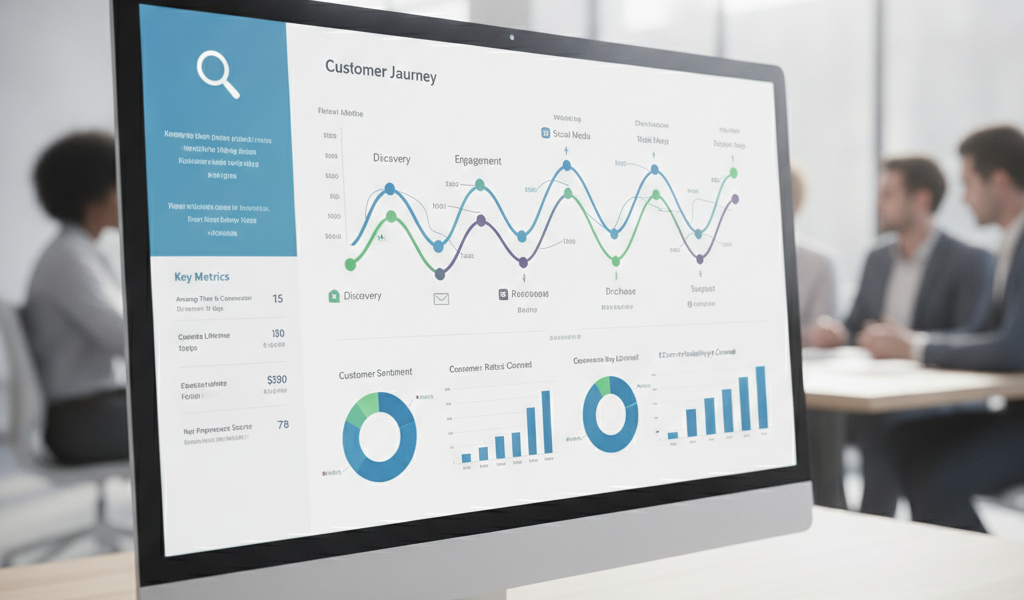
Understanding Customer Journey Analysis Tools
Customer journey analysis tools are essential for businesses looking to understand and enhance the customer experience. They help in tracking a customer’s interactions with a brand across various touchpoints, enabling businesses to analyse behaviours, preferences, and pain points. For a Dublin-based SEO and digital marketing agency like Globe Boss, utilising these tools can significantly improve customer engagement and satisfaction.
Importance of Customer Journey Analysis
Customer journey analysis is vital for identifying how customers interact with a brand from the first touch to final purchase and beyond. This analysis assists in refining marketing strategies, enhancing customer experiences, and increasing conversions. Without properly understanding the customer journey, businesses risk investing time and resources in strategies that may not resonate with their audience.
Types of Customer Journey Analysis Tools
Various tools are available for analysing customer journeys. Here are some of the most effective ones:
1. Google Analytics
Google Analytics is a staple for digital marketing. It allows businesses to track user behaviour, including page views, bounce rates, and conversion paths. Set up goals within Google Analytics to measure crucial milestones in the customer journey, such as newsletter sign-ups or purchases.
2. Hotjar
Hotjar offers heatmaps and session recordings to visualise user interaction on your website. With this tool, you can observe how visitors navigate your site and identify any obstacles that may hinder conversions. Hotjar’s feedback polls also allow you to gather direct insights from customers.
3. Customer Journey Mapping Tools
Tools like Lucidchart or Miro enable businesses to create detailed customer journey maps. These visual representations outline the entire journey, from awareness to post-purchase, highlighting customer emotions, barriers, and potential touchpoints.
4. CRM Systems
Customer Relationship Management (CRM) systems, such as Salesforce or HubSpot, provide comprehensive data on customer interactions. They facilitate tracking of customer history, preferences, and interactions with various marketing channels, thus enhancing personalised marketing efforts.
5. Social Listening Tools
Social media platforms are essential touchpoints. Tools like Brandwatch or Hootsuite allow businesses to monitor mentions, sentiment, and trends. These insights can influence the way companies approach their audience and tailor their messaging.
Steps to Implement Customer Journey Analysis
Implementing customer journey analysis requires a systematic approach. Here are practical steps to get started:
- Define Goals: What do you want to achieve with customer journey analysis? Focus on specific outcomes like increasing conversion rates or enhancing customer satisfaction.
- Identify Customer Personas: Develop a detailed profile of your target customers. Consider demographics, interests, and purchasing behaviours relevant to the Irish market.
- Map Customer Touchpoints: List all the touchpoints where customers interact with your brand. For a Dublin-based business, include both online (social media, website) and offline (stores, events) touchpoints.
- Utilise Tools: Implement the customer journey analysis tools mentioned earlier. Regularly review data to measure performance across different touchpoints.
- Analyse and Adjust: Use insights gathered from your analysis to make data-driven decisions. Adjust marketing strategies as necessary to optimise the customer experience.
Real Numbers and Timelines
Customer journey analysis is not an overnight process. It typically takes three to six months to gather sufficient data and start observing trends. For example, if a Dublin-based business implements Google Analytics and runs A/B tests on two landing pages, a period of six weeks could yield clear insights regarding which page performs better in terms of conversion rates.
Similarly, using Hotjar, you may find that 70% of visitors drop off after viewing your homepage. From this, you can deduce that improvements on that page have a significant potential impact on overall conversions.
Leveraging Insights from Customer Journey Analysis
Insights from these tools can lead to better tailored marketing campaigns. For example, if analysis shows that most customers enter your conversion funnel after engaging with specific content, you can focus your SEO efforts on creating more of that type of content.
If you discover that customers are struggling with navigation on a particular section of your website, you can enhance user experience by redesigning it. This proactive approach can lead to increased customer loyalty and repeat business.
Common Challenges in Customer Journey Analysis
While implementing customer journey analysis is crucial, it comes with challenges, such as:
- Data Overload: Businesses often struggle with interpreting vast amounts of data.
- Integration Issues: Integrating different tools and platforms can be complex.
- Change Resistance: Team members may resist changes based on analysis findings.
To overcome these challenges, it’s essential to have structured training and change management strategies in place, ensuring that everyone understands the importance of customer journey analysis.
FAQ
What is the average time required for effective customer journey analysis?
Typically, it requires between three to six months to gather sufficient data to derive actionable insights.
Can small businesses benefit from customer journey analysis?
Absolutely. Customer journey analysis helps businesses of all sizes understand their customers better and tailor their marketing strategies accordingly.
How often should I analyse the customer journey?
Regular analysis is crucial, ideally on a quarterly basis, to stay in tune with changing customer behaviours and preferences.
Are there free tools available for customer journey analysis?
Yes, tools like Google Analytics offer free versions which can be quite powerful for businesses starting with customer journey analysis.
Conclusion
In conclusion, customer journey analysis tools are indispensable for any business looking to improve its overall customer experience. By leveraging these tools effectively, businesses such as Globe Boss can gain valuable insights that lead to increased customer satisfaction and loyalty.
For a detailed understanding of where your digital strategy stands, consider obtaining a free SEO audit or explore creating robust traffic-driving strategies outlined in The Traffic Playbook.
For further assistance, email moc.ssobebolg@ofni or call +353 1 868 2345.
Related Posts
 Customer journey tracking and analysis
 Advanced Analytics for Marketers
 AI-Driven Customer Insights
 The journey of a thousand leads starts with one click
 Are You Giving Customers Info in The Wrong Sequence
 5 tools to monitor your SEO competitors
 The 14 best ai analytics software tools and platforms for 2025 solutions
 Tools and resources getting started with Google analytics 4