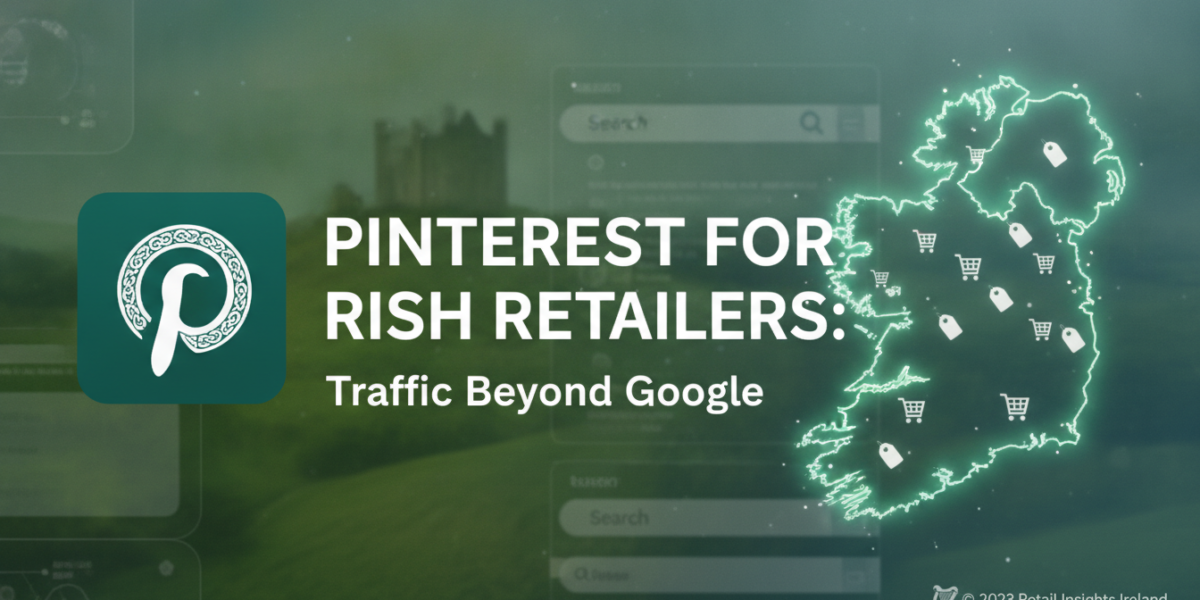
If you run a retail business in Ireland and your entire digital strategy revolves around Google, you’re leaving a significant opportunity on the table. Pinterest for Irish retailers is one of the most underused traffic channels available today — and unlike Google, where you’re competing with established giants and paying through the nose for clicks, Pinterest offers something genuinely different: a platform where people actively search for things to buy, plan purchases weeks or months in advance, and discover brands they’ve never heard of before.
This isn’t about chasing the next shiny social media trend. It’s about understanding where your potential customers are already spending time, and making sure your products show up there.
Why Pinterest Is Different From Every Other Platform
Most social media platforms are built around connection — following people, engaging with content, reacting to news. Pinterest is built around intent. Users come to the platform specifically to discover products, plan projects, save ideas, and ultimately make decisions.
That shift in user mindset is enormous for retailers.
When someone pins a pair of earrings from a Galway-based jeweller, they’re not passively scrolling. They’re curating. They’re saving it because they want it, or because they’re planning a gift, or because they’re building a wishlist for an occasion that’s still months away. That’s a buyer in motion, not just a browser.
The Search Behaviour Nobody Talks About
Pinterest processes over 5 billion searches every month. That’s not social engagement — that’s discovery with commercial intent baked in. Users type things like "Scandinavian kitchen accessories Ireland," "sustainable Irish linen gifts," or "handmade leather bags women" — and they’re looking to act on what they find.
For Irish retailers, this represents a direct line to consumers who are already in purchasing mode.
Longer Shelf Life Than Any Other Platform
A Facebook post might get traction for 24 hours. An Instagram Reel fades within days. A well-optimised Pinterest pin, on the other hand, can continue driving traffic for months or even years. It compounds over time rather than burning out immediately — making it one of the most cost-efficient content investments a small retailer can make.
Getting Set Up: Pinterest for Irish Retailers Who Are Starting From Scratch
Setting up Pinterest properly doesn’t take long, but doing it right from the start saves a lot of wasted effort later. Here’s how to approach it.
Create a Business Account
If you already have a personal Pinterest account, convert it or create a separate business account. The business account gives you access to Pinterest Analytics, the ability to run Promoted Pins (paid ads), and the option to enable a Shop tab directly on your profile.
Go to business.pinterest.com, enter your website URL, and select your business category. For most Irish retailers, categories like "Retail and Shopping" or "Arts and Crafts" (if relevant) are the most appropriate starting points.
Claim Your Website
This step is critical. Claiming your website links your pins back to a verified source, which tells Pinterest (and users) that you’re a legitimate business. It also means that whenever someone pins content from your website, those pins get attributed to your account automatically.
The process involves adding a small piece of HTML to your site’s header or uploading a verification file. Most platforms like Shopify, WordPress, and Squarespace have direct Pinterest integrations that simplify this.
Set Up Rich Pins
Rich Pins automatically pull in metadata from your product pages — including the current price, availability, and a direct link. For product-based retailers, this is a game-changer. It means your pins stay up-to-date without manual intervention, and buyers can see the price before they even click through.
To enable Rich Pins, you’ll need to apply through Pinterest’s Rich Pins Validator and make sure your product pages use proper meta tags or schema markup.
Building a Pinterest Strategy That Actually Works
Having an account is one thing. Having a strategy is another entirely. Here’s what separates the retailers who get consistent traffic from those who post occasionally and wonder why nothing happens.
Think in boards, not just pins. Boards are how Pinterest organises content, and they’re how users discover you. Create boards that your target customer would genuinely want to follow — not just "Our Products," but "Cosy Irish Home Interiors," "Gift Ideas Under €50," or "Spring Wardrobe Inspiration." Each board is a doorway for a different type of buyer.
Pin consistently, not in bursts. The Pinterest algorithm rewards regular activity. Pinning 10 images every day for a week, then going quiet for a month, signals inconsistency. Aim for 5–15 pins per day if possible, using a scheduler like Tailwind to spread them out. Yes, that sounds like a lot — but you’re repinning other relevant content alongside your own, which takes minutes.
Write descriptions that people actually search. Pinterest descriptions are indexed by the platform’s search algorithm. Include the types of phrases your customers naturally use — "handmade ceramic mugs made in Cork," or "affordable linen cushion covers Ireland" — but write them as sentences, not keyword lists. Think of it as describing the pin to a friend.
Using Seasonal Content to Your Advantage
Irish retail is deeply seasonal — Christmas, Valentine’s Day, Mother’s Day, back-to-school, and the summer wedding season all drive significant spend. Pinterest users plan ahead by an average of 30–45 days before a seasonal event, sometimes longer.
This means your Christmas content should be live in October. Your Valentine’s gift guides should be pinned in January. Getting ahead of the curve here gives your content time to build traction before the rush hits.
Pinterest Shopping Features Irish Retailers Should Be Using
Pinterest has invested heavily in shopping functionality over the past few years, and many Irish retailers simply haven’t taken advantage of it yet.
The Shop Tab and Product Catalogues
If you connect your product catalogue to Pinterest (available via Shopify integration or through a product feed), you can populate a Shop tab directly on your Pinterest profile. Visitors can browse and filter your products without leaving Pinterest — reducing friction significantly.
Products uploaded through a catalogue also become eligible to appear in Pinterest’s shopping spotlight and related product feeds, which means passive discovery even when you’re not actively pinning.
Pinterest Lens and Visual Search
Pinterest’s visual search tool, Lens, allows users to take a photo of something in the real world and search for similar products on the platform. If a user photographs a lamp in a coffee shop they like, Pinterest will surface visually similar products — including yours, if your imagery is strong and your metadata is correctly configured.
For Irish retailers selling home décor, fashion, jewellery, or lifestyle products, this is a particularly powerful feature. It means your products can appear in searches that don’t involve any typed keywords at all.
What Makes a Pin Actually Perform
The difference between a pin that drives traffic and one that sits there unnoticed usually comes down to a handful of specific factors.
Vertical images win. Pinterest is a mobile-first platform, and vertical images (with a 2:3 ratio — typically 1000 x 1500 pixels) take up more screen space and get more engagement. Horizontal images get cropped and overlooked.
Context sells better than plain product shots. An image of a candle on a marble surface beside a cup of coffee performs better than a plain white background product shot. Lifestyle imagery helps users visualise the product in their own lives — which accelerates the decision to buy.
Text overlays can help, used sparingly. Adding a short phrase like "Handmade in Co. Clare" or "The perfect birthday gift" to an image can increase clicks, but only when it enhances the image rather than covering it. Pinterest’s own data suggests that pins with light text overlays consistently outperform those without.
Measuring What’s Working
One of the most common frustrations among retailers new to Pinterest is not knowing whether it’s actually driving results. The answer is in the data — but you need to know where to look.
Pinterest Analytics (accessed via your business account dashboard) shows you impressions, saves, link clicks, and audience insights. The key metric for retailers is outbound clicks — how many times someone clicked through from Pinterest to your website.
Connect Pinterest to Google Analytics by using UTM parameters on your pin links. This lets you track exactly which pins are sending traffic, how long those visitors stay on your site, and whether they convert. Set it up once and it runs automatically.
FAQ: Pinterest for Irish Retailers
Is Pinterest actually worth it for small Irish retailers?
Yes — particularly for product-based businesses. The platform’s strength is commercial intent, meaning users come ready to buy or plan purchases. Even with a small following, well-optimised pins can drive consistent traffic over time. The investment is mainly in setup and content, not advertising spend.
How long before I see results from Pinterest?
Pinterest rewards patience. Most accounts start to see meaningful traffic growth between three and six months after consistent, strategic pinning. Unlike paid ads, the results build and compound rather than stopping the moment you pause activity.
Do I need a big budget to advertise on Pinterest in Ireland?
Not at all. Promoted Pins (Pinterest’s paid ad format) can be run on modest budgets — many retailers start with as little as €5–€10 per day to test campaigns. That said, organic Pinterest can drive substantial traffic without any ad spend at all, particularly for visually compelling products.
What types of Irish retail businesses perform best on Pinterest?
Fashion, jewellery, home décor, food and drink, gifts, crafts, baby products, and wedding-related businesses tend to perform particularly well. If your product can be photographed attractively, it has a place on Pinterest.
Can I manage Pinterest alongside my other social media without it becoming overwhelming?
Yes, especially if you use a scheduling tool like Tailwind. Once you establish a content rhythm and understand what performs, Pinterest can be managed in a few hours per week. It also repurposes well — images you’re already using for Instagram or your website can often be adapted for Pinterest with minimal extra effort.
Conclusion
Pinterest isn’t a replacement for Google — but it’s a powerful complement to it, and for many Irish retailers, it’s an untapped source of qualified, ready-to-buy traffic. The platform’s combination of visual discovery, long content shelf life, and strong purchase intent makes it genuinely worth investing time in. Whether you sell handmade jewellery in Sligo or homewares through a Shopify store in Dublin, there are customers on Pinterest right now searching for exactly what you offer.
The retailers who start building their Pinterest presence today will have a meaningful head start in six months’ time. The best moment to get started was a year ago. The next best moment is now.
Ready to grow your traffic beyond Google? If you’d like to explore how Pinterest and broader digital marketing strategies could work for your retail business, we’re happy to talk it through. Get in touch with our team — email us at moc.ssobebolg@ofni or call +353 1 868 2345 and we’ll be glad to help you find the right approach for your business.
Related Posts
 40% Drop In Google Search: Effects On Irish Content Publishers
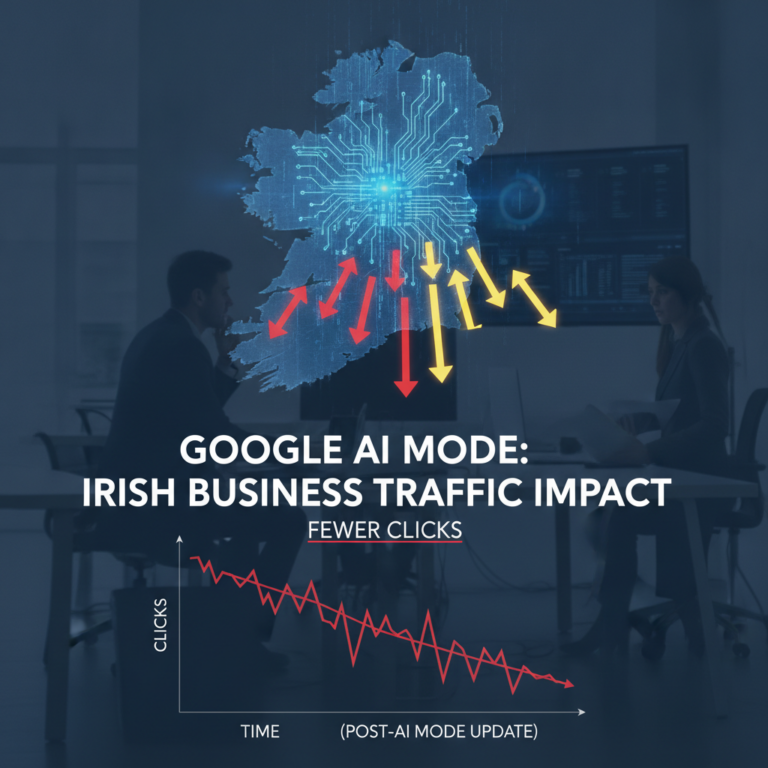 Google AI Mode Sends Fewer Clicks: Irish Business Traffic Impact Analysis
 YouTube Shopping Features: Opportunities For Irish E-Retailers
 Googleʼs Query Fan-Out R4T-Diffusion: Impact On Irish SEO Tactics
 Redditʼs Role in Googleʼs Irish Forum Results
 Google Analytics Hostname Filters: What Irish Marketers Must Know Now
 Google Indexing API Silent Failures: Crisis For Irish Job Board Sites
 Is Your Irish Business Website Inside Google AI Retrieval Pipeline? Check Now