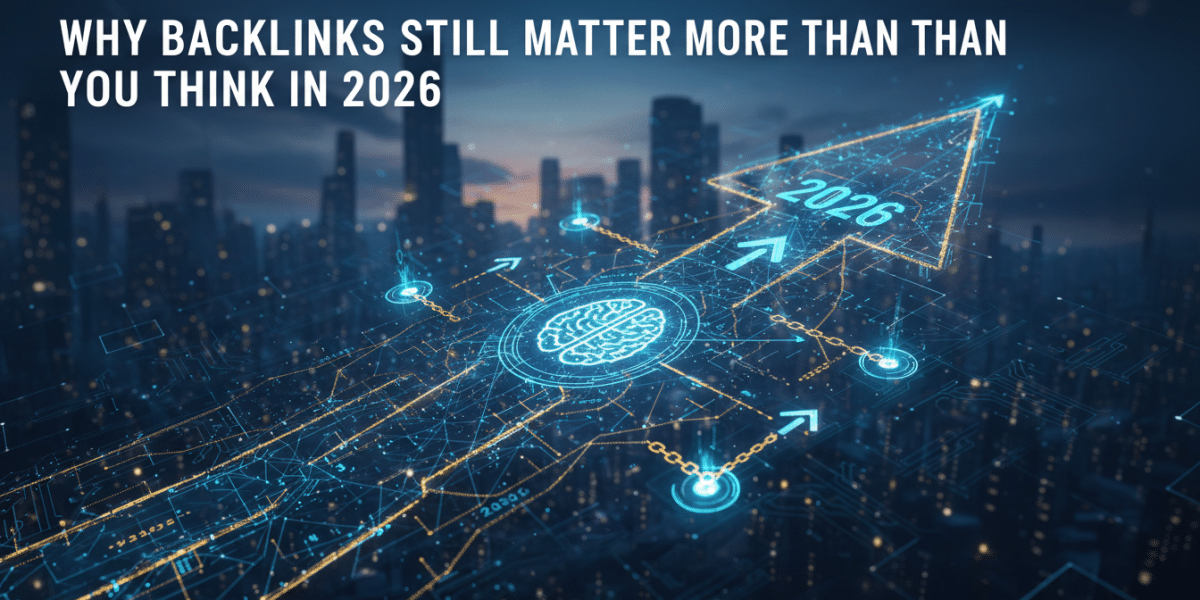
The digital landscape is a whirlwind of change. Every year, we witness seismic shifts in search engine algorithms, the rise of new technologies like generative AI, and an ever-increasing volume of content vying for attention. In this dynamic environment, it’s easy to get caught up in the latest trends and wonder if foundational SEO principles still hold water. We hear whispers that backlinks are becoming less important, that AI will simply “know” quality, or that user experience will completely eclipse link signals. But if you’re serious about your online presence, it’s crucial to understand a timeless truth: backlinks still matter more than you think in 2026.
Despite the predictions of their demise, backlinks remain an indispensable pillar of organic search success. They are not merely a relic of SEO past; they are evolving, becoming more nuanced, and their intrinsic value as a signal of trust, authority, and relevance is, if anything, amplified in our hyper-competitive, AI-infused future. Let’s delve into why these digital endorsements continue to be a powerful force shaping your visibility and credibility online.
The Enduring Foundation of Trust: Why Backlinks are Irreplaceable
At its core, a backlink is an endorsement. When one website links to another, it’s essentially saying, “Hey, my audience might find value here.” Search engines, particularly Google, have spent decades perfecting their ability to interpret these endorsements. While their algorithms have become incredibly sophisticated, capable of understanding semantics, user intent, and even the nuances of natural language, the fundamental concept of a trusted source vouching for another remains a robust signal of quality. In a world saturated with content, both human and AI-generated, these genuine endorsements are more critical than ever.
E-E-A-T in the Age of AI: A Deeper Dive
The concept of E-E-A-T (Experience, Expertise, Authoritativeness, and Trustworthiness) has been paramount for Google for years, especially for “Your Money Your Life” (YMYL) content that can impact users’ health, finances, or safety. Backlinks are a direct conduit for demonstrating E-E-A-T.
Imagine a situation in 2026 where AI can generate highly coherent and plausible content on virtually any topic. How do search engines differentiate genuine expert advice from well-worded AI fabrications or even misleading information? This is where E-E-A-T, heavily influenced by backlinks, steps in.
- Experience: If industry leaders and practitioners are linking to your “how-to” guide or case study, it suggests you have real-world experience.
- Expertise: Scholarly articles, research papers, or reputable industry blogs linking to your content signal that you are an expert in your field.
- Authoritativeness: When authoritative publications, news outlets, or government bodies link to your site, it establishes you as an authority.
- Trustworthiness: A site with a strong, clean backlink profile from other trusted sources is inherently seen as more trustworthy.
Practical Example: If you run a finance blog, a link from a respected financial news site or a renowned economist’s personal blog carries immense weight. It signals to Google (and users) that your content is vetted and trustworthy, making it far more likely to rank for sensitive financial queries than a site with no such endorsements, regardless of how well-written its AI-generated content might be. This dynamic highlights precisely why backlinks still matter more than you think in 2026.
More Than Just a Vote: Contextual Relevance
In 2026, it’s not just about the sheer number of backlinks. The context and relevance of those links are paramount. A link from a highly relevant, topically aligned website carries significantly more weight than one from a completely unrelated site, even if that unrelated site has high authority. Search engines are intelligent enough to understand the topical relationship between linking pages.
Practical Example: A link to your gourmet coffee blog from a specialty food retailer’s website is far more valuable than a link from a car dealership‘s blog, even if the car dealership has a higher Domain Authority. The contextual relevance tells search engines that your site is a credible resource within the coffee niche. This refined understanding of link context is a prime reason why backlinks still matter more than you think in 2026.
Beyond Rankings: The Multifaceted Value Proposition
While improved search rankings are often the primary goal of link building, the benefits of a robust backlink profile extend far beyond the SERP. In 2026, these additional advantages are more crucial than ever for holistic digital growth.
Driving Targeted Referral Traffic
A high-quality backlink isn’t just a signal to search engines; it’s a direct pathway for potential customers or readers. When a reputable site in your niche links to your content, its audience—who are already interested in that topic—are exposed to your brand. This can result in highly qualified referral traffic that converts at a much higher rate than generic organic search traffic.
Practical Example: If your SaaS product for project management is featured on a leading project management industry blog, not only do you gain an authoritative backlink, but you also attract visitors who are actively looking for solutions like yours. This direct pipeline of interested users is a compelling reason why backlinks still matter more than you think in 2026.
Enhancing Discoverability and Indexing
For new websites or new content, backlinks play a vital role in discovery. Search engine crawlers follow links to find new pages and content. Without backlinks, it can take much longer for search engines to discover, crawl, and index your site, effectively leaving your content invisible. In an era where new content is published every second, links provide the necessary breadcrumbs for search engines to find your valuable contributions.
Building Brand Authority and Recognition
Being linked to by prominent websites elevates your brand’s perception. It positions you as an expert, a thought leader, or a valuable resource within your industry. This increased visibility and association with respected entities contribute to stronger brand recognition and trust among your target audience. It’s a form of digital PR that pays dividends in credibility and influence. Think of it as a public endorsement that builds your brand’s reputation organically.
Navigating the 2026 Landscape: What’s Changed (and What Hasn’t)
While the core principle of backlinks remains, the tactics for acquiring them and how search engines evaluate them have evolved. Understanding these nuances is key to effective link building in 2026.
Quality Over Quantity: The Ultimate Principle
This isn’t new advice, but its importance is magnified in 2026. Search engines are better than ever at identifying manipulative link schemes, spammy links, and irrelevant connections. A handful of high-quality, editorially earned backlinks from authoritative, relevant sources will always outperform hundreds of low-quality, purchased, or spammy links. Focusing on genuine relationships and providing real value is the only sustainable strategy.
The Rise of Semantic Understanding and AI: How Backlinks Adapt
The advent of advanced AI in search algorithms means a deeper semantic understanding of content and links. AI doesn’t negate the power of backlinks; instead, it helps search engines interpret their context and intent with greater accuracy. This means:
- Better Spam Detection: AI is excellent at identifying unnatural link patterns and penalizing sites that engage in black-hat tactics. This makes legitimate, high-quality links stand out even more.
- Enhanced Relevance Evaluation: AI can better understand the topical relationship between the linking and linked pages, giving more weight to truly relevant endorsements.
- Nuanced Trust Signals: AI contributes to a more holistic understanding of E-E-A-T, where backlinks are one crucial piece of a larger, intricate puzzle that includes author history, user engagement, and factual accuracy.
This evolution in algorithmic intelligence solidifies why backlinks still matter more than you think in 2026, as genuine links become even more distinguishable from artificial ones.
User Experience and Backlinks: An Indirect Connection
While user experience (UX) is a direct ranking factor, backlinks play an indirect but significant role. Sites that consistently earn high-quality backlinks are often those that provide exceptional content, excellent user experience, and valuable resources. A site that focuses on creating link-worthy content naturally fosters a better user experience, as it prioritizes quality, readability, and utility. Furthermore, links can guide users to helpful resources, improving their overall journey on your site or across the web.
Practical Strategies for Earning Backlinks in 2026
So, if backlinks still matter more than you think in 2026, how do you go about acquiring them in a way that aligns with modern best practices and algorithmic intelligence?
Content is Still King (and Link-Worthy)
The fundamental truth remains: exceptional content naturally attracts links. Focus on creating:
- Original Research & Data: Conduct surveys, analyse proprietary data, or publish unique findings that others will want to cite.
- In-depth Guides & Pillar Pages: Create comprehensive resources that cover a topic exhaustively, making them indispensable for your niche.
- Helpful Tools & Resources: Develop free tools, templates, or calculators that provide genuine value.
- Unique Perspectives & Thought Leadership: Don’t just regurgitate; offer fresh insights and challenge conventional wisdom.
- Infographics & Visual Content: Visually appealing and easy-to-digest information is highly shareable and linkable.
Proactive Outreach and Relationship Building
Passive link earning is great, but a proactive strategy is essential:
- Guest Posting: Offer to write high-quality, original content for authoritative blogs in your niche. Focus on providing value to their audience.
- Broken Link Building: Find broken links on reputable websites and suggest your relevant content as a replacement.
- Resource Page Link Building: Identify “resources” or “recommended readings” pages on relevant sites and propose your content for inclusion.
- Expert Interviews & Features: Position yourself as an expert and offer to be interviewed or contribute quotes to articles.
- Digital PR: If you have newsworthy content, research, or company updates, reach out to relevant journalists and publications.
- Networking: Build genuine relationships with other content creators, industry influencers, and webmasters. This often leads to natural link opportunities.
Monitoring and Maintenance
A healthy backlink profile isn’t a “set it and forget it” task:
- Monitor Your Backlinks: Use tools to track new links, lost links, and potentially harmful links.
- Disavow Harmful Links: If you acquire spammy or low-quality links that you can’t get removed, use Google’s disavow tool as a last resort.
- Recover Lost Links: If a page that used to link to you removes the link, reach out respectfully to inquire and potentially get it reinstated.
Dispelling the Myths: Why Backlinks Aren’t “Dead”
The narrative that backlinks are dying typically stems from a misunderstanding of how search engines have evolved. It’s not that backlinks are less important; it’s that bad backlinks are less effective and more detrimental. The shift is towards a more sophisticated evaluation of links, emphasizing quality, relevance, and natural acquisition.
In 2026, with an even smarter web, manipulative link schemes are easier to spot and punish. This doesn’t devalue the concept of a link; it clarifies and elevates the value of a good link. Any digital marketer claiming that backlinks are obsolete is likely missing this crucial distinction. They are an intrinsic part of how the web is structured and how information flows, and search engines leverage this structure to understand relationships and credibility.
Conclusion
As we navigate the complexities of the digital world in 2026, with its AI assistants, personalized search experiences, and an explosion of content, the foundational role of backlinks remains unwavering. They are not just a simple ranking factor; they are a multi-faceted signal of trust, authority, and relevance that fuels discovery, drives valuable traffic, and builds enduring brand recognition.
Those who dismiss the power of backlinks are missing a critical piece of the SEO puzzle. Instead, embrace the evolution: focus on earning high-quality, relevant, and natural links through exceptional content and genuine relationship building. Understand that in 2026, backlinks still matter more than you think, serving as a testament to your site’s credibility and an investment in its long-term success. Prioritize them, and you’ll find your digital presence not just surviving, but thriving.
Related Posts
 5 Ways of Generating Backlinks for Your Website In 2026
 Digital Marketing Trends 2026
 Adapt To Googleʼs September 2026 Spam Update
 2026 AI Marketing Trends Impacting Irish SMEs
 Press Release SEO: Do They Still Build Links in 2026?
 Essential Guide: Instagram Strategy and TikTok Trends for 2026
 Revolutionizing Education Marketing: Strategies Irish SMEs Should Adopt by 2026
 Real Estate Marketing 2026: A Blueprint for Irish Success