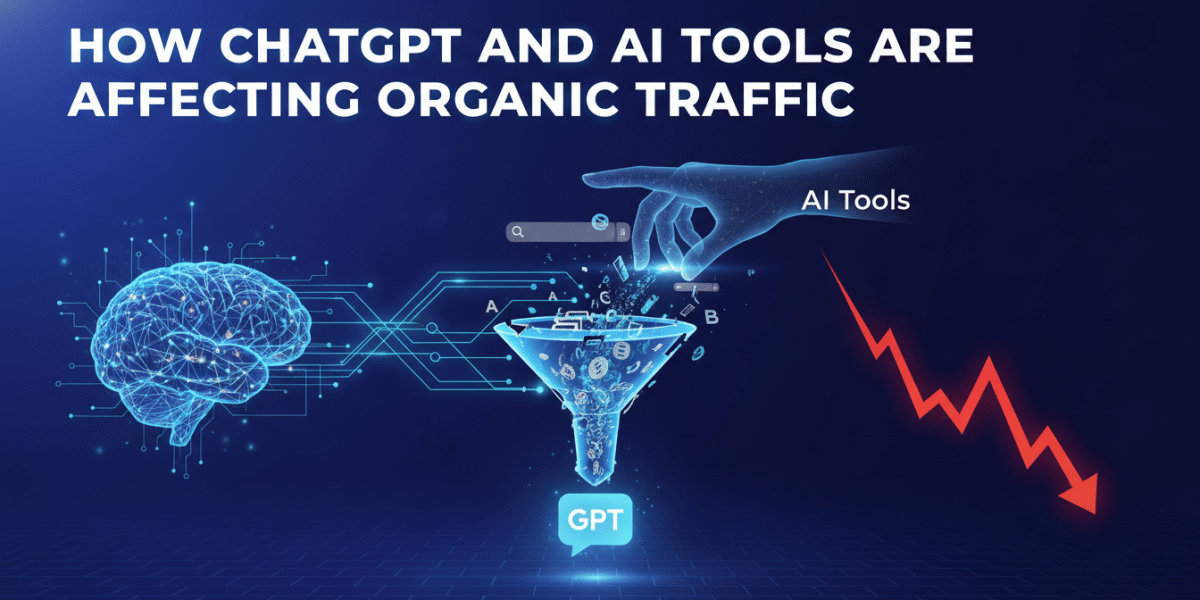
The AI Earthquake: How ChatGPT and AI Tools Are Affecting Organic Traffic
The digital landscape is in constant flux, but few shifts have felt as seismic as the rapid ascent of AI tools like ChatGPT. From generating intricate code to drafting compelling marketing copy, these artificial intelligences are reshaping how we interact with information online. For anyone relying on search engines to drive visitors, the burning question isn’t if AI is changing things, but how ChatGPT and AI tools are affecting organic traffic.
It’s a complex picture, far from a simple doom-and-gloom scenario or an immediate golden age. AI presents both unprecedented challenges and remarkable opportunities for content creators, SEO specialists, and businesses worldwide. Understanding this impact is crucial for adapting your strategy and ensuring your website continues to thrive in an increasingly AI-driven world. This article will delve into the various ways AI is reshaping the organic search landscape, offering insights and practical advice to navigate this new frontier.
The Direct Impact of AI on Search Behavior
Perhaps the most immediate and visible effect of AI on organic traffic stems from changes at the search engine level itself. Google, Bing, and others are integrating generative AI directly into their search results, profoundly altering user behavior.
The Rise of Search Generative Experience (SGE) and AI Overviews
Google’s Search Generative Experience (SGE), now often referred to as AI Overviews, is a game-changer. Instead of just presenting a list of blue links, Google’s AI can now synthesize information from multiple sources to provide a direct, comprehensive answer at the top of the search results page. This “AI snapshot” aims to answer user queries immediately, often negating the need for a click to an external website.
- Impact on Click-Through Rates (CTR): For many informational queries, users might get their answer directly from the AI Overview without ever visiting a website. This can lead to a significant reduction in organic click-through rates, especially for content that provides straightforward answers.
- The “Zero-Click Search” Phenomenon: SGE amplifies the existing trend of “zero-click searches,” where users find what they need directly on the SERP (Search Engine Results Page). While good for user convenience, it poses a direct threat to the organic traffic of publishers.
- New Visibility Opportunities: On the flip side, if your content is authoritative and well-structured, it might be cited by the AI Overview. Being a source for an AI summary could lend immense credibility, even if it doesn’t always guarantee a click. The challenge then becomes optimising for this citation, not just a top-ranking link.
Shifting User Expectations
Beyond SGE, the very existence of tools like ChatGPT has raised user expectations. People are now accustomed to asking complex questions and receiving concise, coherent answers almost instantly. This means that when they do click through to a website, they expect high-quality, clearly presented, and value-rich content that goes beyond what AI can easily summarize. Sites that provide generic, surface-level information will struggle to retain attention.
Content Creation in the AI Era: A Double-Edged Sword
AI tools, particularly large language models (LLMs) like ChatGPT, have revolutionized content creation workflows. This has profound implications for the volume, quality, and originality of content online, directly impacting how ChatGPT and AI tools are affecting organic traffic.
The Advantages of AI-Assisted Content Creation
- Efficiency and Scale: AI can rapidly generate outlines, draft initial paragraphs, brainstorm ideas, and even write entire articles or social media posts. This allows content teams to produce more content faster, cover more topics, and potentially test different content formats.
- Idea Generation and Research: AI can act as a powerful brainstorming partner, suggesting angles, keywords, and related topics that might have been overlooked. It can also summarize research papers or complex concepts, saving countless hours.
- SEO Optimization: AI tools can assist with keyword research, competitor analysis, and even suggest ways to improve readability or structure content for better search engine performance.
- Overcoming Writer’s Block: For many, the blank page is the biggest hurdle. AI can provide a starting point, breaking down barriers to creation.
The Pitfalls and Perils of Over-Reliance on AI
While efficient, relying too heavily on AI for content creation carries significant risks that can negatively impact organic traffic.
- Lack of Originality and Depth: AI is excellent at synthesizing existing information, but it struggles to produce truly novel insights, original research, or deeply personal experiences. Content that lacks a unique perspective, real-world examples, or primary data will struggle to stand out in a crowded, AI-assisted content landscape.
- Generic and Bland Content: If not carefully edited and infused with human input, AI-generated content can often sound generic, repetitive, and lack a distinct voice or personality. Google’s “helpful content” updates emphasize originality and human-centric value.
- Factual Inaccuracies and Hallucinations: AI models can sometimes “hallucinate” information, presenting false facts or making up sources. Publishing unverified AI-generated content can damage your site’s credibility and E-E-A-T (Experience, Expertise, Authoritativeness, Trustworthiness).
- Google’s Stance on AI Content: Google has clarified that content created by AI is not inherently bad, but it must still be “helpful, high-quality, original, and people-first.” Content clearly created solely for search engine manipulation, regardless of generation method, will likely be penalized. The method of creation is less important than the quality and intent behind the content.
Adapting Your SEO Strategy for the AI Era
Given these shifts, traditional SEO tactics need to evolve. The focus must shift from simply ranking for keywords to providing unparalleled value. Here’s how to adjust your strategy to thrive when considering how ChatGPT and AI tools are affecting organic traffic.
Prioritize E-E-A-T (Experience, Expertise, Authoritativeness, Trustworthiness)
Google’s emphasis on E-E-A-T is more critical than ever. In a world awash with AI-generated content, genuine human experience, deep expertise, and verifiable authority are what set content apart.
- Show, Don’t Just Tell: Demonstrate your experience through case studies, personal anecdotes, original research, and real-world examples.
- Highlight Your Credentials: Ensure authors have clear bios, link to their professional profiles, and establish their expertise in the field.
- Build Authority Through Citations: Get mentioned by reputable sources, earn backlinks from high-authority sites, and ensure your content is fact-checked and accurate.
- First-Hand Information: Be the source of original data, interviews, or unique perspectives that AI cannot easily replicate.
Optimize for Semantic Understanding and Topic Authority
AI excels at understanding context and intent. Rather than optimising for single keywords, focus on comprehensive topic coverage and semantic relationships.
- Answer Related Questions: Anticipate follow-up questions users might have and address them within your content.
- Build Content Hubs: Create clusters of interlinked content around a broad topic, demonstrating deep authority to both users and search engines.
- Use AI for Research, Not Just Writing: Leverage ChatGPT to identify related concepts, common questions, and semantic entities around your core topic.
Structure Content for AI Overviews (SGE) and Featured Snippets
Even if AI Overviews reduce clicks, there’s still value in being cited. Structure your content in a way that makes it easy for AI to understand and summarize.
- Clear Headings and Subheadings: Use H2s and H3s effectively to break down complex topics.
- Concise Summaries and Definitions: Provide direct answers to questions at the beginning of sections or in dedicated summary boxes.
- Use Lists and Tables: These formats are easily digestible by both humans and AI models for quick summarization.
- Answer Specific Questions: Directly address common “how-to,” “what is,” and “why” questions within your content.
Diversify Your Traffic Sources
Relying solely on Google for organic traffic is becoming increasingly risky. AI’s impact necessitates a broader approach to audience acquisition.
- Build an Email List: Direct communication with your audience bypasses search engine algorithms.
- Engage on Social Media: Drive traffic from platforms where your audience spends time.
- Foster Community: Create forums, groups, or interactive spaces where your audience can connect directly with you and each other.
- Explore Other Search Engines/Platforms: Don’t forget YouTube, Pinterest, Reddit, and industry-specific search engines.
Enhance User Experience and Technical SEO
While content is king, a poor user experience will still deter both users and search engine crawlers. Technical SEO fundamentals remain vital.
- Page Speed and Core Web Vitals: Ensure your site loads quickly and provides a smooth user experience.
- Mobile-Friendliness: With most searches happening on mobile, a responsive design is non-negotiable.
- Clear Navigation: Help users (and AI) find information easily on your site.
The Enduring Power of the Human Element
Despite the capabilities of AI, the human element remains irreplaceable. This is where your true competitive advantage lies.
Authenticity and Trust
AI can’t replicate genuine human empathy, passion, or personal struggle. Content infused with these elements builds trust and fosters a deeper connection with readers. People are more likely to engage with and remember content that feels authentic.
Creativity and Innovation
While AI can recombine existing ideas, true creativity – the ability to connect disparate concepts in novel ways, invent new solutions, or tell a truly original story – is a uniquely human trait. Focus on ideas and perspectives that AI cannot yet generate.
Audience Connection and Community Building
AI can simulate conversation, but it can’t build a community. Engaging with comments, responding to feedback, and fostering a sense of belonging are crucial for long-term audience loyalty, which can lead to direct traffic and strong brand signals.
Practical Tips for Navigating the AI Landscape
To truly understand how ChatGPT and AI tools are affecting organic traffic in a positive way for your business, you need to adapt proactively.
- Use AI as an Assistant, Not a Replacement: Leverage AI for mundane tasks like grammar checks, content outlines, keyword brainstorming, or summarizing lengthy research. Always apply critical human oversight, fact-checking, and infuse your unique voice.
- Become a Primary Source: Conduct original research, surveys, interviews, or case studies. Share your unique data and insights. Be the source that AI tools cite, rather than just another regurgitator of information.
- Focus on Niche Expertise: Instead of trying to be a generalist, carve out a specific niche where you can demonstrate unparalleled expertise and experience. Deep dives into narrow topics are harder for AI to replicate meaningfully.
- Embrace Multimodal Content: Don’t limit yourself to text. Create videos, podcasts, infographics, and interactive tools. These are harder for AI to replicate effectively and cater to different learning styles, potentially attracting traffic from diverse platforms.
- Monitor and Adapt: The AI landscape is evolving at lightning speed. Stay informed about the latest developments in search and AI. Be prepared to test new strategies and iterate quickly.
- Build Your Brand Beyond Search: Cultivate a strong brand identity, develop a unique voice, and build direct relationships with your audience through email, social media, and community engagement. This brand equity makes you less reliant on fleeting search algorithm changes.
Conclusion
The question of how ChatGPT and AI tools are affecting organic traffic is not about whether to embrace AI, but how intelligently and strategically to do so. The digital world is irrevocably changed, presenting both formidable challenges and exciting opportunities. Generic, uninspired content will struggle to gain visibility, while unique, helpful, and expertly crafted human content will become more valuable than ever.
By prioritizing E-E-A-T, diversifying traffic sources, and leveraging AI as a powerful assistant rather than a primary creator, content creators and businesses can not only survive but thrive. The future of organic traffic belongs to those who blend human ingenuity and authenticity with the efficiency and analytical power of artificial intelligence, delivering unparalleled value to real people. Adapt, innovate, and always put your audience first – that’s the ultimate path to success in the AI era.
Related Posts
 How does AI Search (SGE) impact organic traffic for Irish publishers?
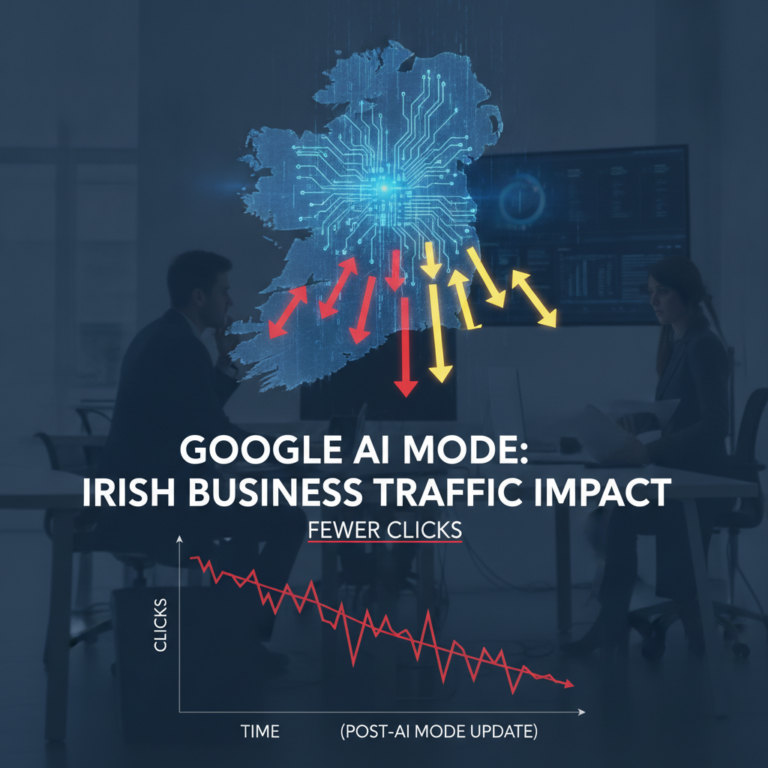 Google AI Mode Sends Fewer Clicks: Irish Business Traffic Impact Analysis
 How to Create a Content Calendar That Drives Organic Traffic
 SEO
Search
SEO
Search SEO testing 8 experiments to improve organic traffic
 Optimise blog content
 How to get more traffic to your blog in 2025
 How does SEO impact blog traffic and engagement