

Understanding the Role of Time and Distance in LLMs
Decoding LLMs (Large Language Models) involves understanding how they navigate context, semantics, and pragmatics over time and distance. LLMs, such as GPT-3, effectively model relationships between words and concepts based on an extensive dataset, allowing them to provide relevant outputs based on temporal and spatial cues.
The Temporal Dynamics of Language Models
Language models operate in a continuous flow of time, interpreting text based on the order in which words appear. This is crucial for generating coherent responses in real-world applications.
Contextual Awareness Over Time
An exemplary application of temporal dynamics is understanding context. For instance, in Irish vernacular, consider phrases that change meaning with context: “I’ll be there in a jiffy.” Here, “jiffy” is understood as a short amount of time. LLMs use vast training data to understand these nuances, yielding responses that align with expected timeframes.
Adaptive Learning and Real-Time Processing
LLMs can adapt and learn from ongoing interactions, enabling them to refine their responses based on past conversations. This capability is essential for businesses seeking to enhance customer experience. For example, a Dublin-based company can utilise LLMs to automate customer queries, provide instant feedback, and tailor responses according to user engagement trends over time.
Spatial Dynamics and Contextualisation
Distance in LLMs is often represented as conceptual spacing rather than physical distance. Words with similar meanings occupy closer ‘spaces’ in the model’s learned representation, while those with distinct meanings are far apart.
Understanding Contextual Distances
Consider a use case where an LLM interprets queries related to local businesses. For a digital marketing agency like Globe Boss, accurately understanding spatial context is vital. For instance, when a user queries “best SEO firm in Dublin,” the model should not only recognise “Dublin” as a location but also relate it to the SEO niche specifically relevant to the city’s competitive landscape.
Distance and Cultural Nuances
Language models must also navigate cultural semantics that vary by geographical distance. For instance, the term “crisps” in Ireland refers to what many might call “chips” elsewhere. Incorporating these cultural nuances allows LLMs to provide more accurate and relatable content to local audiences. This relevance can enhance engagement metrics, leading to improved performance of SEO strategies as outlined in The Traffic Playbook.
Practical Steps for Businesses Using LLMs
To leverage LLMs effectively, businesses should consider the following practical strategies:
- Identify the Purpose: Outline what you intend to achieve with LLMs. Whether it’s customer service automation or content generation, clarity helps in implementation.
- Train on Relevant Data: Ensure the model is trained on data that closely represents your target audience. For instance, if targeting Irish customers, use local datasets to help the model understand vernacular, culture, and context.
- Monitor Interactions: Actively track how users interact with the AI. Monitor frequency, sentiment, and time spent engaging with the content it produces. This feedback loop is crucial for adaptability.
- Integrate with Existing Tools: Use APIs to seamlessly integrate LLMs into your existing systems. This integration can heighten efficiency and enhance user interaction.
- Regularly Update & Refine: Given that the digital landscape is ever-evolving, consistently update your LLM training with new data, particularly if there are local events, trends, or changes in consumer behaviour.
Frequently Asked Questions
1. What are LLMs, and how do they work?
LLMs are advanced AI models designed to understand and generate human language. They learn from large datasets to identify patterns and relationships between words and concepts.
2. How can businesses use LLMs effectively?
Businesses can implement LLMs for various purposes, including customer service chatbots, content generation, and sentiment analysis. Proper training on relevant datasets enhances their accuracy and effectiveness.
3. What is the timeline for seeing results from LLM integration?
The timeline can vary; initial integration can often be done in a few weeks, while optimising and analysing user interactions may take a few months to yield meaningful insights.
4. Are there specific considerations for Irish businesses?
Yes, businesses should ensure that LLMs are acclimated to local dialects and cultural nuances that affect customer engagement and content relevance.
5. Can LLMs assist with SEO strategies?
Absolutely! LLMs can help generate optimised content that aligns with specific keywords, improving visibility on search engines when combined with proper SEO practices.
Conclusion
Decoding LLMs through the lenses of time and distance can result in significant business advantages. By understanding contextualisation and applying practical strategies, companies can effectively leverage these models for improved engagement and customer satisfaction.
For a free evaluation of your online presence, consider conducting a free SEO audit to identify areas where LLMs can be implemented for better performance.
For any queries or further information, feel free to email moc.ssobebolg@ofni or call +353 1 868 2345.
Related Posts
 Understanding Googleʼs Block Flattening For AI-Driven SEO
 Revolution of E-commerce Through AI Search Evolution
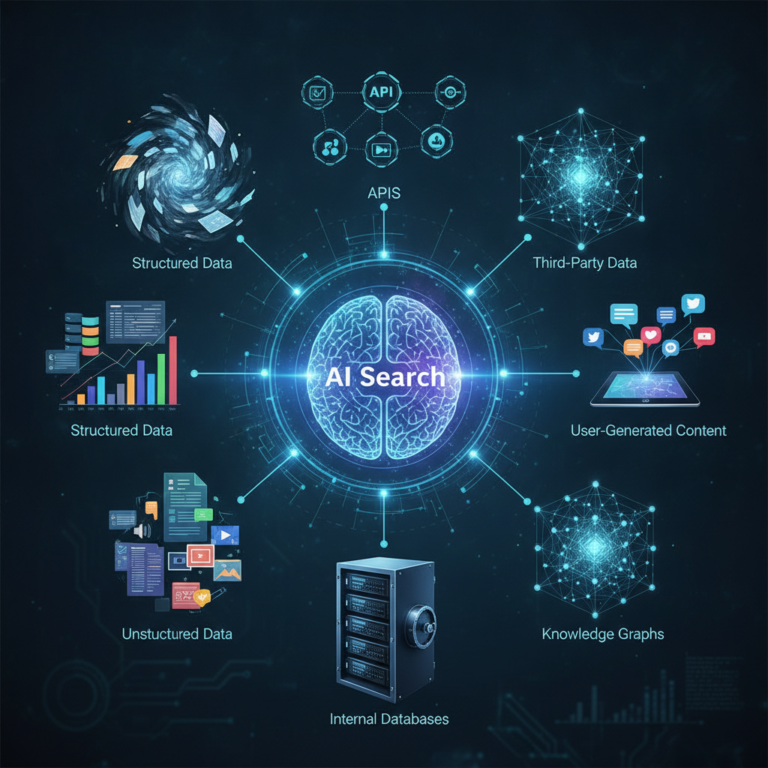 Crucial Data Sources For AI Search Explained
 AI Search Data Sources Explained: What Irish Businesses Actually Need to Know
 Find Sources Shaping AI Answers: Guide For Irish Digital Marketers
 Top AI Search Performers Among Fintech Brands in Ireland
 AI Search vs Traditional SEO: Whatʼs Changed in 2026
 Navigating SEO Algorithm Changes