
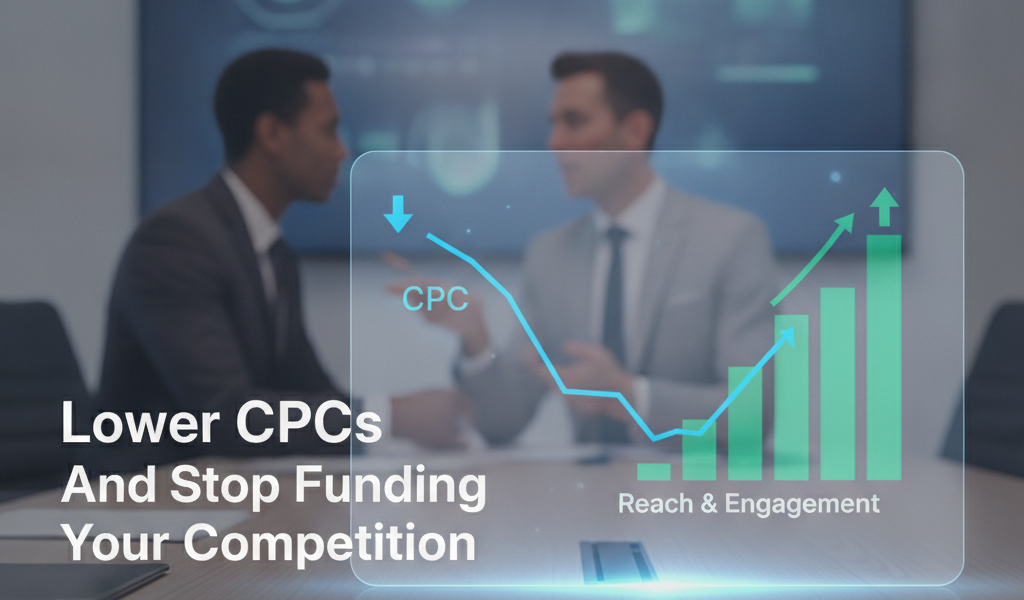
Understanding Lower CPCs
Lowering your cost-per-click (CPC) means you can spend less on advertising while achieving greater reach and engagement. The key to stopping funding your competition is to optimise your campaigns effectively. This can be accomplished through targeted strategies that enhance relevancy and improve click-through rates (CTR), ultimately reducing your CPC.
Why Are You Funding Your Competition?
When you set up your Google Ads or other paid advertising campaigns, you may inadvertently be funding your competitors. This happens if you are bidding on generic keywords that are highly competitive and not specific to your offerings. Your ads may show alongside competitors’ ads, leading to a situation where you could potentially be paying for clicks that could have gone to your site but instead result in conversions for others.
Identifying Your Competitors
The first step in reducing your CPC and stopping the funding of your competition is to identify who your competitors are within the digital landscape. Use tools such as Google Ads Auction Insights and SEMrush to understand which companies are bidding on the same keywords as you.
Utilising Long-Tail Keywords
One effective method to lower CPCs is switching focus from generic keywords to long-tail keywords. Long-tail keywords are longer and more specific keyword phrases that may attract less traffic but often have lower competition and higher conversion rates. For example, instead of bidding on “SEO services,” consider “affordable SEO services in Dublin.” This switch can greatly enhance your chances of landing ideal customers at a lower cost.
Refining Your Targeting
Refining your targeting is crucial for lowering CPCs. Google Ads allows you to narrow your audience based on demographics, interests, and geographical locations. If your business is focused in Dublin, make sure your ads are tailored to display primarily to the Irish audience. This not only increases relevancy but also helps decrease costs.
Creating Compelling Ad Copy
Another fundamental aspect to consider is the quality of your ad copy. High-quality ad copy leads to better CTRs, which can directly reduce your CPC. Consider these points when crafting your ads:
- Use Strong Calls to Action: Encourage users to click with actionable phrases such as “Get a Free SEO Audit” or “Start Your Digital Marketing Today.”
- Incorporate Keywords: Use your chosen long-tail keywords strategically within your ad to improve relevance.
- Highlight Unique Selling Points: What makes your services stand out from the competition? Mention those compelling features in your ads.
Optimising Landing Pages
Your ad may get clicks, but if your landing page isn’t optimised, you risk losing potential customers. A well-optimised landing page can significantly enhance conversion rates:
- Ensure Mobile Friendliness: With increased mobile usage, your landing page must be responsive.
- Improve Loading Speed: A slow-loading page can lead to high bounce rates. Aim for a load time under 3 seconds to keep users engaged.
- Clear and Concise Messaging: Your landing page should clearly convey information related to the ad and guide users toward a desired action.
Continuous Monitoring and Adjustments
Continuous monitoring and adjustments are paramount. Keep an eye on your campaigns’ performance and analyze CPC trends. Google Ads provides useful data to help you make informed decisions about future bids and keyword selections. Maintain regular reviews and be ready to pivot your strategy based on performance data.
At Globe Boss, we often recommend setting specific timelines for reviewing your ad campaigns, ideally every 1-2 weeks unless you’re running a larger budget campaign requiring less frequent adjustment.
The Role of A/B Testing
A/B testing, or split testing, allows you to compare different versions of your ads to identify what works best. You can test elements such as:
- Different headlines
- Call-to-action phrases
- Ad descriptions
By determining which ad performs the best, you can replace underperforming ads, thus continuously improving your click efficiency.
Utilising Negative Keywords
Implementing negative keywords is an often-overlooked tactic that can effectively reduce wasted spend on irrelevant searches. Recognise and exclude terms that are not relevant to your service offerings. For instance, adding “free” as a negative keyword might prevent clicks from users expecting free services rather than paid ones.
Localising Your Campaigns
When based in Dublin, it’s beneficial to localise your campaigns. By focusing on localised keywords, such as “digital marketing agency Dublin,” and including your city or region in your ad text, you can attract a local audience more effectively. This localized targeting generally leads to lower CPCs as you’re competing within a smaller pool rather than a broader, more competitive market.
Understanding Your Metrics
To effectively lower your CPCs and not fund your competition, you must understand the metrics such as quality score, impression share, and CTR. Improving your quality score can directly impact your CPC. A higher quality score often results in lower costs per click.
Addressing Frequently Asked Questions
How long does it typically take to see lower CPCs?
Results can vary, but typically, you might start seeing changes in CPC after a month of applying new strategies and monitoring their performance.
Can I use automation to help lower my CPCs?
Yes! Google Ads offers various automated bidding strategies that can help optimise your bids for conversion without inflating your CPC.
Should I increase my budget to lower CPCs?
Not necessarily. Lowering CPCs relies more on improving relevancy and targeting rather than merely increasing spend. Focus on optimising your campaigns first.
What role does ad quality play in CPC?
The quality of your ads significantly influences your CPC. Higher quality ads tend to achieve a better position and lower costs.
How can I know if my CPC is competitive?
Comparison with industry benchmarks is essential, and tools like SEMrush or the Google Ads Keyword Planner can help gauge if your CPC is competitive.
Conclusion
Lowering CPCs and stopping the funding of your competition is an achievable goal. By identifying your competitors, refining your targeting strategies, and constantly monitoring and optimising your campaigns, you can make significant strides. Regular adjustments and focused efforts can lead to improved efficiency and decreased investment in competition. For tailored insights, consider starting with our free SEO audit to identify how to optimise your digital presence. Additionally, our Traffic Playbook provides structured guidance on leveraging traffic effectively.
If you have further questions or require assistance, please email moc.ssobebolg@ofni or call +353 1 868 2345.
Related Posts
 How to Reduce Your Cost Per Click on Google Ads
 Google ads bug inflating some cost per click cpcs for non us campaigns
 Ad Targeting Optimization
 E-Commerce Conversion Strategies
 Stop Losing Clients In First 90 Days: Strategies For Agencies
 Enhance Quality with AI: A Comprehensive Guide
 Designing High-Converting Landing Pages: Tips for Irish SMEs
 Globe Boss: SEO and PPC Services Dublin