
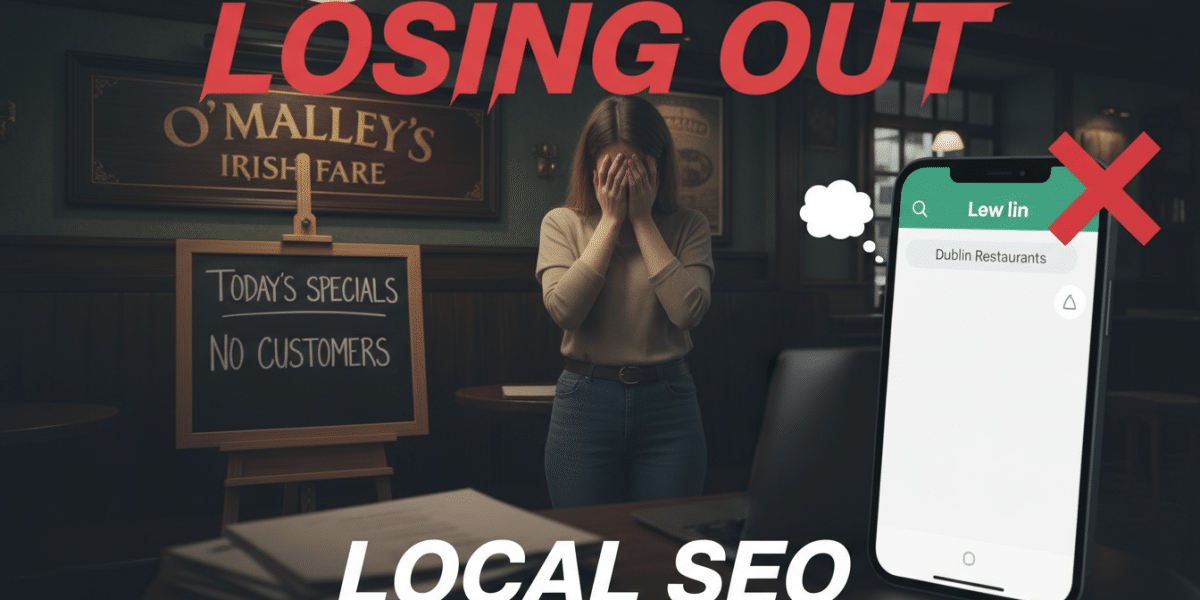
Why Dublin Restaurants Are Losing Customers Without Local SEO: The Hidden Cost of Digital Blindness
Dublin, a city steeped in history and buzzing with contemporary flair, is also a global culinary hotspot. From Michelin-starred marvels to cosy traditional pubs serving up hearty fare, and innovative eateries pushing gastronomic boundaries, the dining scene here is as diverse as it is delicious. Yet, beneath the surface of this vibrant industry, many fantastic Dublin restaurants are fighting a silent battle: tables that aren’t as full as they could be, a struggle to attract new diners, and a gnawing feeling of being overlooked. The culprit, often unseen and misunderstood, is a lack of effective local SEO.
Imagine running a superb restaurant in the heart of Ranelagh or a charming seafood spot near Howth harbour. You pour your heart into sourcing the freshest ingredients, crafting impeccable menus, and training your staff to provide an unforgettable experience. You know your food is exceptional, your atmosphere inviting. So why aren’t more people walking through your doors, especially when thousands of potential customers, both locals and tourists, are actively searching for places just like yours every single day? The answer lies in the digital chasm between your exquisite offering and the online visibility required to connect with hungry patrons. Without a robust local SEO strategy, even the best Dublin restaurants are effectively invisible in the very moments people are looking to dine.
The Digital Shift: Where Dublin Diners Are Searching (and What They’re Finding)
The way people discover and choose restaurants has undergone a seismic shift. Gone are the days when a newspaper ad or a glowing word-of-mouth recommendation was the primary driver. While these still hold value, the initial discovery phase has overwhelmingly moved online.
From Word-of-Mouth to Finger-Tips: The Modern Customer Journey
Think about how you find a new place to eat. You likely pull out your smartphone, open Google Maps, or type a query into a search engine. “Best vegan restaurants Dublin,” “pizza near me Temple Bar,” “restaurants open late Dalkey” – these are just a few examples of the millions of local searches performed daily. Tourists arriving at Dublin Airport might immediately search for “traditional Irish pub food Dublin city centre.” Locals exploring a new neighbourhood will search for “cafes Grand Canal Dock.”
This isn’t just about finding a name; it’s about making an instant decision. Users expect to find opening hours, menus, photos, price ranges, and crucially, reviews, all within seconds. If your Dublin restaurant isn’t providing this information clearly and prominently in search results, you’re missing out on a massive segment of the market. Your potential customers aren’t just browsing; they’re often ready to make a reservation or walk straight to your door.
The Dominance of Google My Business and Map Packs
At the heart of local search visibility for any Dublin restaurant is your Google My Business (GMB) profile. When you search for “restaurants near me,” the first thing you typically see is a “Map Pack” – a block of three businesses prominently displayed with their location on a map, phone numbers, and star ratings. This prime digital real estate is invaluable.
If your restaurant doesn’t have a verified, optimised, and actively managed GMB profile, you’re simply not going to appear in this critical section. Even if someone searches specifically for your restaurant by name, an incomplete or inaccurate GMB profile can deter them, suggesting you’re either not current or perhaps even out of business. This platform is Google’s primary tool for understanding and presenting local businesses, and neglecting it is akin to putting a “closed” sign on your restaurant during peak hours.
The Invisible Problem: What “Without Local SEO” Really Means
Having fantastic food and a wonderful atmosphere means nothing if no one knows you exist, or if the information they find about you is wrong. This is the core challenge many Dublin restaurants face when they overlook local SEO.
You’re Not Showing Up: The Prime Search Real Estate
Let’s say a family from abroad is staying near St. Stephen’s Green and wants an authentic Irish dinner. They type “best Irish food near St Stephen’s Green” into Google. If your charming, traditional Irish restaurant, just a five-minute walk away, hasn’t optimised its GMB profile, doesn’t have local keywords on its website, and hasn’t collected reviews, Google simply won’t know to show it to them. Instead, they’ll see your competitors who have invested in their online presence, even if your food is objectively better. You’re effectively invisible in the moments that matter most – the moments of immediate intent.
Inaccurate Information & Negative First Impressions
Nothing frustrates a potential customer more than misinformation. Imagine a couple planning a romantic dinner, finding your restaurant online, seeing “open until 11 PM,” arriving at 10 PM, only to find you closed. Or they call the number listed, and it’s disconnected or rings to a completely different business. These aren’t just minor inconveniences; they’re deal-breakers that create a negative impression and send customers straight to a competitor.
Old menus, outdated pricing, or a lack of appealing photos also contribute to this. In today’s visual world, a restaurant without inviting imagery on its Google profile or website is at a severe disadvantage. People eat with their eyes first, and if your online presence isn’t appetizing, they’ll move on.
Being Outranked by Competitors (Even Inferior Ones)
This is perhaps the most painful aspect for many passionate restaurateurs. You know your food is superior, your service impeccable, your ingredients fresher. Yet, the restaurant down the street, perhaps with a less inspiring menu or a less inviting ambiance, consistently has a fuller house. Why? Because they’ve understood the game.
Their website is optimised for local keywords like “Italian restaurant Phibsborough” or “brunch spot Blackrock.” Their Google My Business profile is pristine, filled with glowing reviews, and regularly updated. They appear higher in search results, capture more clicks, and consequently, more customers. While quality will always shine through in the long run, getting customers through the door in the first place is the battle local SEO helps you win.
Beyond Visibility: How Local SEO Builds Trust and Drives Decisions
Local SEO isn’t just about appearing in search results; it’s about building credibility and encouraging customers to choose your restaurant over others.
The Power of Reviews: Social Proof in Action
In a city with countless dining options, reviews are gold. They act as social proof, validating your quality and helping hesitant diners make a decision. A Dublin restaurant with hundreds of positive reviews on Google, TripAdvisor, or Yelp sends a strong signal of reliability and satisfaction. Local SEO strategies actively encourage and showcase these reviews.
Furthermore, how you manage reviews is crucial. Responding to both positive and negative feedback demonstrates engagement, professionalism, and a commitment to customer satisfaction. A restaurant that acknowledges a complaint gracefully often earns more respect than one that ignores it.
Rich Snippets and Local Schema: Telling Google Your Story
Ever noticed how some search results for restaurants show direct information like “price range,” “cuisine type,” or even “menu” right in the Google listing? This is often due to schema markup, a special type of code on your website that helps search engines understand your content more deeply. For a restaurant, implementing local schema can tell Google precisely what your business is, your average rating, your opening hours, and where you’re located, making your search listing far more informative and appealing (known as rich snippets). This level of detail makes it easier for potential customers to get the information they need at a glance, increasing the likelihood of a click-through.
Mobile-First World: The On-the-Go Diner
Most local searches happen on mobile devices. People are often out and about, spontaneously deciding where to eat, or checking information quickly. This means your website needs to be mobile-friendly, loading quickly and displaying correctly on smaller screens. Furthermore, having accurate location data linked to Google Maps is paramount. A user should be able to click on your address in a search result and immediately get directions without any hassle. A clunky, slow, or non-responsive mobile site will lose customers faster than you can say “reservations.”
Practical Steps for Dublin Restaurants to Reclaim Their Customers
The good news is that local SEO is highly actionable, and even small steps can yield significant results for Dublin’s culinary establishments.
Claim and Optimize Your Google My Business Profile (The Cornerstone)
This is your absolute first priority.
- Claim and Verify: If you haven’t already, claim your Google My Business profile. Google will typically send a postcard with a verification code to your physical address.
- Complete Everything: Fill out every single section: your exact business name, address, phone number (NAP), website, accurate opening hours (including holidays), detailed description, categories (e.g., “Irish restaurant,” “seafood restaurant,” “cocktail bar”), and accessibility attributes.
- High-Quality Photos: Upload numerous high-resolution photos of your interior, exterior, signature dishes, and happy customers. This is crucial for attracting attention.
- Post Updates: Use the GMB “Posts” feature to share daily specials, events, new menu items, or holiday hours. This keeps your profile active and engaging.
Encourage and Manage Online Reviews
Don’t be shy about asking for reviews!
- Directly Ask: Train staff to politely ask satisfied customers to leave a review on Google or TripAdvisor. A small card with a QR code linking directly to your review page can be very effective.
- Respond to All Reviews: Thank customers for positive reviews. For negative reviews, respond promptly, professionally, and empathetically, offering to resolve the issue offline. This shows you care.
Consistent NAP (Name, Address, Phone) Across All Platforms
Google rewards consistency. Your restaurant’s Name, Address, and Phone number (NAP) must be identical across your website, Google My Business, Yelp, TripAdvisor, local directories, social media profiles, and any other online listings. Inconsistencies confuse search engines and harm your local ranking.
Localized Website Content and Keywords
Your website should speak Google’s language about your location.
- Location-Specific Pages: If you have multiple locations, create a dedicated page for each.
- Keyword Integration: Naturally weave local keywords into your website content. Instead of just “our menu,” consider “Our Authentic Irish Menu in Temple Bar” or “Best Brunch in Dublin 6.”
- Local Blog: Consider adding a blog that discusses local events, features local suppliers, or highlights Dublin’s food scene. This provides fresh, relevant content.
Mobile-Friendly Website and Fast Loading Speeds
Ensure your website is responsive and fast. Use Google’s Mobile-Friendly Test and PageSpeed Insights tools to check your site’s performance. Optimizing images and using efficient hosting can significantly improve loading times.
Leverage Local Social Media
Integrate your local SEO efforts with social media.
- Geo-tagging: Encourage customers to geo-tag your location on Instagram and Facebook.
- Local Groups: Engage with local community groups on Facebook, sharing specials or events.
- Influencers: Collaborate with local food bloggers or Instagrammers to generate buzz.
The ROI of Local SEO: Why It’s an Investment, Not an Expense
Thinking of local SEO as an optional extra is a critical mistake. For a Dublin restaurant, it’s a fundamental part of your marketing strategy, offering a significant return on investment that often far outweighs traditional advertising methods. Increased foot traffic, more reservations, enhanced brand recognition, a stronger competitive edge, and ultimately, greater profitability are the direct benefits. Unlike a fleeting ad campaign, local SEO builds a sustainable online presence that continues to work for you 24/7. It’s about ensuring that when a hungry potential customer in Dublin reaches for their phone, your restaurant is not just an option, but the obvious choice.
Conclusion
Dublin’s culinary landscape is rich, diverse, and fiercely competitive. In this vibrant ecosystem, having an outstanding menu and a charming ambiance is no longer enough to guarantee success. The digital world has reshaped how diners discover and choose their next meal. For many fantastic Dublin restaurants, the untapped potential of local SEO represents a crucial missing link – a bridge between their exceptional food and the hungry customers actively searching for it.
By embracing and optimising for local search, from meticulous Google My Business profiles to responsive websites and active review management, Dublin’s restaurants can transform from being digitally invisible to becoming the top-of-mind choice for locals and tourists alike. It’s time to stop losing customers to digital blindness and start leveraging the power of local SEO to fill those tables, grow your business, and let your culinary excellence shine for all of Dublin – and the world – to discover. Don’t let your passion for food be overshadowed by an outdated online presence; start optimising today and watch your customer base flourish.
Related Posts
 Improve Restaurant Search Rankings Dublin
 Local SEO Dublin: Crucial for businesses targeting local customers
 Improve
rankings with this off-page SEO checklist for restaurants
Improve
rankings with this off-page SEO checklist for restaurants Sandyford SEO: B2B Local Search in Dublin 18
 Building Local Pages AI Systems Trust: Dublin Business Practical Guide
 Stillorgan SEO: Local Search for South County Dublin
 Local SEO in Blanchardstown: Win Dublin 15 Searches
 Rathfarnham Local SEO: A Dublin 14 Business Guide