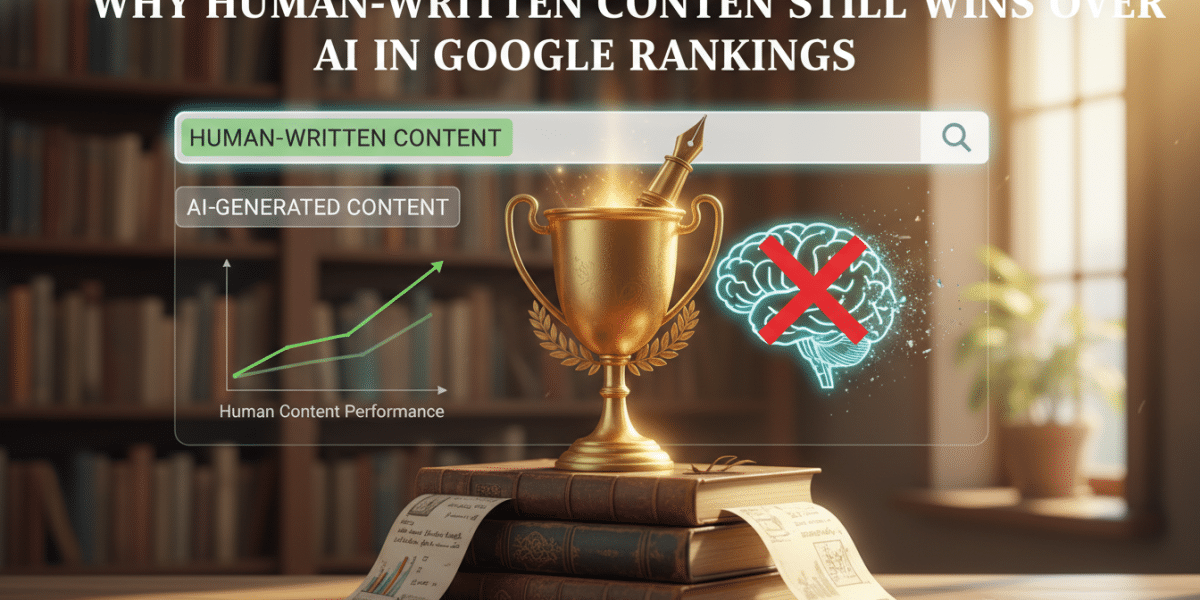
In the rapidly evolving digital landscape, the advent of artificial intelligence content generators has sparked a revolution. Tools capable of churning out articles, blog posts, and marketing copy in mere seconds have ignited a fervent debate: is this the end of human content creators? Will AI-generated text soon dominate search engine results? While AI has undeniably become a powerful ally for efficiency and scale, the truth remains clear for now: human-written content still wins over AI in Google rankings, and for very fundamental reasons that touch the core of what makes information valuable to people.
Google’s mission has always been to organise the world’s information and make it universally accessible and useful. “Useful” is the operative word here, and it’s a concept deeply tied to human understanding, empathy, and the nuanced delivery of information. While AI can simulate writing, it often lacks the soul, originality, and profound understanding that truly connects with a human audience. This article will delve into the critical aspects where human creativity and intellect continue to hold an irreplaceable edge, explaining why your unique voice remains your strongest asset in the quest for top search rankings.
The Core of Google’s Mission: Serving Human Needs
At its heart, Google is designed to serve people. Its algorithms are constantly refined to understand human intent, provide the most relevant answers, and deliver experiences that are genuinely helpful and trustworthy. This fundamental principle is where the chasm between human and AI-generated content often widens.
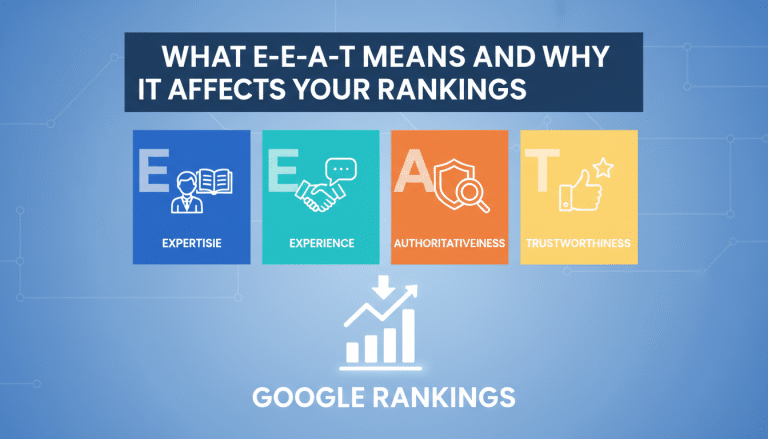
E-E-A-T: Experience, Expertise, Authoritativeness, Trustworthiness
Google’s Search Quality Rater Guidelines heavily emphasize the concept of E-E-A-T (Experience, Expertise, Authoritativeness, Trustworthiness). These aren’t just buzzwords; they are the pillars upon which high-quality content is built and evaluated.
- Experience: Can the content creator demonstrate first-hand experience with the topic? Did they actually do what they’re writing about? A human can recount a personal journey, share lessons learned from a failed project, or describe the sensory details of using a product. AI can compile information about experiences, but it cannot have them.
- Expertise: Does the content reflect a deep, nuanced understanding of the subject matter, going beyond surface-level facts? A human expert can interpret complex data, draw insightful conclusions, and explain difficult concepts in an accessible way, often anticipating reader questions. AI might pull facts, but connecting them with true insight and explanatory power is a human forte.
- Authoritativeness: Is the content widely recognized as a leading voice or definitive source on the topic? This comes from a track record of consistent, high-quality output and often the reputation of the author or publication. While AI can generate text that sounds authoritative, it cannot build a reputation or be recognized as an authority itself.
- Trustworthiness: Is the content accurate, transparent, and unbiased? Does it come from a reliable source? Humans understand the importance of citations, fact-checking, and disclosing potential conflicts of interest. Building trust is an inherently human endeavor, cultivated through consistent honesty and genuine helpfulness.
Humans inherently excel at demonstrating E-E-A-T. We can infuse our writing with personal stories, unique perspectives, and the subtle cues that signal genuine understanding and reliability. AI, for all its power, still struggles to mimic these nuanced human traits authentically.
Understanding Search Intent Beyond Keywords
AI is incredibly adept at pattern recognition and keyword analysis. It can identify the terms people are searching for and generate content that includes those keywords. However, human search intent often goes far beyond a simple string of words.
Consider someone searching for “best running shoes.” An AI might generate a list of top-rated shoes with specifications. A human writer, understanding the implied intent, might anticipate questions like: “Are they good for flat feet?” “What’s the difference between trail and road shoes?” “How do I choose the right size?” “What if I’m prone to shin splints?” A human writer can weave in practical advice, personal recommendations, and solutions to anticipated pain points, creating a far more comprehensive and satisfying answer to the user’s actual unspoken needs. This deep level of predictive understanding is a hallmark of truly valuable human-written content.
The Unmatchable Power of Human Nuance and Empathy
Search engines are increasingly sophisticated at evaluating content quality based on user engagement. If users click on an article but quickly bounce back to the search results, it signals dissatisfaction. Human-written content is far more likely to retain readers because it connects on a deeper, more empathetic level.
Crafting Compelling Narratives and Emotional Connection
Humans are storytellers by nature. We learn, remember, and connect through narratives. A human writer can craft a compelling introduction that hooks the reader, weave a personal anecdote that illustrates a point, or use evocative language to paint a vivid picture. This narrative flair creates an emotional connection, making the content more memorable, relatable, and enjoyable to consume.
AI can certainly produce factual summaries, but it struggles to evoke genuine emotion or craft a story arc that resonates deeply. The difference is often palpable – AI-generated content can feel sterile, generic, and devoid of the spark that makes reading a pleasure rather than a chore. If you’re writing about a sensitive topic, say, coping with grief, a human can approach it with a delicacy and understanding that AI simply cannot replicate.
Infusing Personality and Voice
Every human writer has a unique voice – a distinct style, tone, and perspective that shines through their words. This personality is what makes content engaging, memorable, and differentiates one brand from another. A quirky, humorous tone for a travel blog, a serious and authoritative voice for a financial advisory, or a warm and supportive style for a parenting website – these are all intentional choices made by a human writer to connect with their specific audience.
AI, by its nature, aims for statistical averages. Its output often lacks this distinct voice, resulting in text that can feel bland, interchangeable, and lacking in genuine character. While AI can be prompted to write in a certain style, it’s an imitation, not an inherent expression. Google values unique voices and perspectives because they contribute to a diverse and rich informational ecosystem.
Tackling Complex Topics with True Understanding
Explaining a complex topic isn’t just about listing facts; it’s about breaking down intricate concepts, identifying potential misunderstandings, and guiding the reader through the information logically and patiently. A human writer can anticipate where a reader might get confused, use analogies to simplify abstract ideas, and offer a nuanced perspective that acknowledges different viewpoints.
AI, while capable of synthesizing vast amounts of information, often struggles with the true understanding required for deep analysis. It can present information, but it may miss the subtle implications, the underlying tensions, or the critical context that a human expert would instinctively highlight. For instance, analysing the ethical implications of a new technology requires critical thinking and moral reasoning that is currently beyond AI’s capabilities.
Originality and Insight: The Human Advantage
For content to truly stand out and rank well, it needs to offer something new, something insightful, or something presented in a novel way. This is another area where human ingenuity reigns supreme.
Generating Truly New Ideas and Perspectives
While AI can recombine existing information in countless ways, its output is fundamentally based on the data it was trained on. It can’t truly invent a new concept, formulate a groundbreaking theory, or offer a perspective that has never been considered before.
Human writers, conversely, are capable of genuine innovation. We can connect disparate ideas, draw conclusions from incomplete information, and offer fresh angles on old topics. We can conduct original research, interview experts, or apply personal experiences to generate insights that simply don’t exist anywhere else online. This kind of truly original thought is what Google actively seeks to reward, as it enriches the web’s knowledge base.
The Value of First-Hand Experience and Data
Content that draws on proprietary data, original case studies, or personal, verifiable experience carries immense weight. If you’re writing a guide on how to start a specific type of business, and you’ve personally built and scaled such a business, your advice carries a level of authenticity and practicality that an AI cannot replicate. You can share challenges encountered, specific tools used, and the emotional rollercoaster of the journey.
This firsthand “experience” element of E-E-A-T is incredibly difficult for AI to fake convincingly. While AI can write about case studies, it cannot conduct them or draw genuine insights from the process itself. This unique, verifiable content is a powerful signal of quality and trustworthiness to Google.
Adapting to Change and User Feedback
The digital world is dynamic. Trends emerge, information evolves, and user needs shift constantly. Humans are uniquely equipped to navigate this fluidity.
Responding to Real-World Trends and Current Events
A human writer can quickly grasp the significance of a breaking news story, understand its implications for their audience, and craft content that is timely, relevant, and contextualized. They can inject a sense of urgency or reflection that resonates with the current zeitgeist.
AI can process news feeds, but it struggles with the nuanced interpretation and the ability to connect events to broader human concerns or cultural shifts. Its output might be factually correct, but it may lack the human touch that makes it truly resonant and valuable in the moment.
Iterating Based on User Engagement and Analytics
A skilled human content creator doesn’t just publish and forget. They analyse how their content performs – what headlines get clicks, which sections are read thoroughly, where readers drop off. More importantly, they understand why. They can interpret comments, forums, and social media feedback to discern genuine user needs and frustrations, then refine their content strategy accordingly.
While AI can help process analytics, it lacks the intuitive leap, the “aha!” moment, that comes from a human understanding of psychology and communication. A human content creator can pivot, experiment, and refine their approach based on genuine empathy for their audience, leading to continuously improving content that Google’s algorithms will undoubtedly favor over time.
Practical Tips for Crafting Human-Winning Content
So, how do you ensure your human-written content continues to shine in Google rankings?
- Embrace E-E-A-T: Don’t just write; demonstrate your experience, expertise, authoritativeness, and trustworthiness. Share personal anecdotes, cite your sources, and be transparent about your knowledge limitations if any.
- Tell Stories: Weave narratives into your content. Start with a hook, introduce a problem, offer a solution, and conclude with a takeaway. People remember stories, not just facts.
- Add Your Unique Voice: Don’t be afraid to let your personality shine through. Develop a consistent tone and style that makes your content distinct and memorable.
- Go Deeper Than the Surface: Move beyond simple factual regurgitation. Explore the “why” and the “how.” Offer insights, analysis, and nuanced perspectives that AI can’t generate.
- Use Real-World Examples: Illustrate your points with concrete examples, case studies, or scenarios that resonate with your readers’ experiences.
- Engage with Your Audience: Ask questions, invite comments, and respond thoughtfully. This fosters community and signals to Google that your content is valuable and interactive.
- Prioritize Quality Over Quantity: One incredibly well-researched, insightful, and engaging article will almost always outperform ten mediocre, AI-generated pieces. Focus on creating evergreen content that truly helps your audience.
Conclusion
While AI content generation tools are powerful and useful for certain tasks, they are best viewed as assistants, not replacements. The fundamental reasons why human-written content still wins over AI in Google rankings boil down to our unique capacity for experience, empathy, originality, and genuine connection. Google’s algorithms are constantly evolving to better understand and reward content that truly serves human users – content that demonstrates deep understanding, offers unique insights, and speaks with an authentic voice.
In a world increasingly saturated with generic, machine-generated text, the human touch becomes not just an advantage, but a necessity. By focusing on quality, authenticity, and a true understanding of your audience, you ensure that your content not only ranks well but also truly resonates, builds trust, and stands the test of time. Your human ingenuity remains your most valuable asset in the content landscape.
Dublin's ROI-Driven Digital Marketing Agency Home
Related Posts
 Google answers if adding content daily increases rankings
 The Ultimate SEO FAQ Guide: Expert Answers for Higher Google Rankings
 Human First Dublin Content Globe Boss Agency
 What E-E-A-T Means and Why It Affects Your Rankings
 Professional Google Rankings Strategy for Dublin Firms
 The day Google recognized the brilliance of a Dublin firm
 How to Rank Your Deli on the First Page of Google
 Recover Your Google Rankings with Dublin SEO Specialists