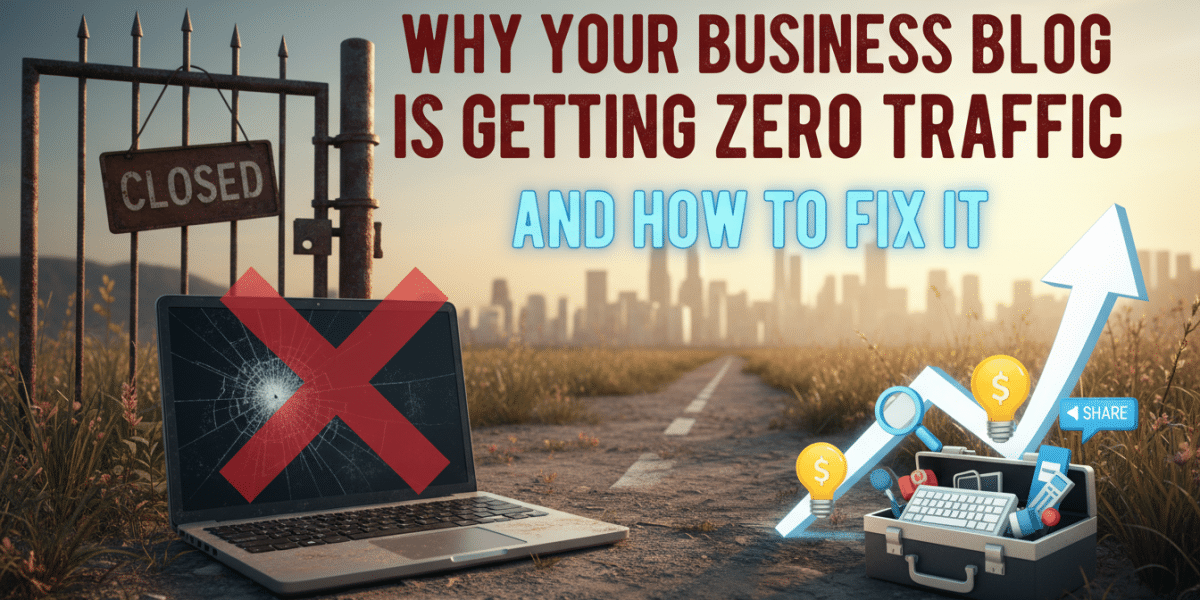
Why Your Business Blog Is Getting Zero Traffic and How to Fix It
You’ve heard the mantra: “Content is king.” You’ve invested time, effort, and maybe even a little money into creating a business blog. You’ve dutifully penned posts, hit “publish,” and then… crickets.
Silence. Zero shares. Zero comments. And worst of all, zero traffic.
It’s a frustrating scenario many businesses face. You started your blog with high hopes, picturing a steady stream of engaged readers turning into loyal customers. Instead, your blog feels like a digital ghost town, a beautiful monument to unread content.
If you’re wondering, “Why is my business blog getting zero traffic?” you’re not alone. The good news is, for nearly every blog that’s struggling, there are clear, actionable reasons why, and even clearer, more actionable solutions. This isn’t a mystery; it’s usually a series of correctable missteps.
Let’s pull back the curtain on why your blog might be struggling to attract an audience and, more importantly, how you can turn that ghost town into a bustling hub of valuable information and engagement.
The Hard Truth: Why Your Business Blog is Struggling
Before we dive into the fixes, it’s crucial to understand the common pitfalls that lead to a business blog getting zero traffic. Facing these truths head-on is the first step toward recovery.
You’re Writing for Yourself, Not Your Audience
This is perhaps the most common and damaging mistake. Many businesses launch a blog and fill it with posts about their latest product features, company news, or internal musings. While these topics have their place occasionally, they often fail to address the core questions, challenges, and interests of your potential customers.
The Problem: Your blog isn’t solving a problem for your readers. It’s an internal monologue rather than an outward-facing conversation designed to help. If your readers don’t see immediate value or relevance to their own lives or businesses, they won’t stick around.
You’re Skipping the SEO Basics
Search Engine Optimization (SEO) isn’t just for big corporations; it’s the GPS that helps people find your content in the vast digital landscape. If you’re not optimising your posts for search engines, you’re essentially publishing them in a dark room without a flashlight.
The Problem: No keyword research, no optimised titles or meta descriptions, and ignoring the technical aspects of SEO mean Google and other search engines have no idea what your content is about, making it impossible for them to show it to the right people.
Inconsistent Publishing and Quality Drops
Imagine a TV show that airs sporadically, with some episodes being brilliant and others feeling rushed and half-baked. Would you remain a loyal viewer? Probably not. The same applies to your blog. Inconsistent publishing schedules combined with fluctuating content quality can quickly alienate potential readers.
The Problem: Sporadic updates make your blog feel neglected, signaling to both readers and search engines that it might not be a reliable source of information. Rushed, low-quality content, full of errors or lacking depth, erodes trust and discourages repeat visits.
No Promotion, No Party
Build it and they will come” is a dangerous myth in the world of content marketing. You can write the most brilliant, insightful blog post ever, but if you don’t actively promote it, it will likely gather digital dust.
The Problem: Publishing a blog post is just the first step. If you’re not sharing it on social media, including it in your email newsletters, or engaging in other promotional activities, your target audience might never even know it exists.
Your Content Lacks Depth or Uniqueness
In today’s saturated content landscape, simply rehashing common knowledge won’t cut it. There are millions of blog posts out there. If yours doesn’t offer a fresh perspective, deeper insights, or original research, it will struggle to stand out.
The Problem: Surface-level advice, generic listicles, or content that merely repeats what everyone else is saying provides little incentive for readers to choose your blog over a competitor’s. They’re looking for unique value.
Poor Readability and User Experience
Even if someone does land on your blog, a poor user experience can send them fleeing in seconds. A wall of text, tiny fonts, slow loading times, or a non-mobile-responsive design are all immediate turn-offs.
The Problem: Content that’s hard to read, visually unappealing, or slow to load creates friction. Readers are impatient; if your blog isn’t easy on the eyes and quick to navigate, they’ll bounce.
The Fix Is In: How to Revitalize Your Business Blog and Drive Traffic
Now that we’ve identified the common culprits, let’s talk solutions. Getting your business blog off zero traffic and into the realm of engaged readership is entirely achievable with a strategic and consistent approach.
Master Your Audience & Their Pain Points
This is foundational. Before you write another word, figure out who you’re writing for and what keeps them up at night.
- Create Detailed Buyer Personas: Go beyond demographics. What are their goals? Their challenges? Their common questions related to your industry? What information are they actively searching for online?
- Listen Actively: Monitor social media conversations, read industry forums, check your customer service inquiries, and simply ask your existing customers what kind of content they’d find helpful.
- Focus on Solutions: Every blog post should aim to solve a specific problem or answer a burning question your target audience has. For example, instead of “Our New CRM Features,” write “How Our CRM Helps Sales Teams Close More Deals Faster.”
Embrace Smart SEO – It’s Not as Scary as You Think
SEO is your visibility engine. You don’t need to be an expert, but you do need to cover the basics.
- Keyword Research: Use tools like Google Keyword Planner (free), Ubersuggest (free tier), or AnswerThePublic to find out what terms your audience is actually searching for. Focus on long-tail keywords (e.g., “best eco-friendly cleaning products for homes with pets” instead of just “cleaning products”).
- On-Page Optimization:
- Titles: Make them compelling and include your primary keyword naturally.
- Meta Descriptions: Write concise, enticing summaries that encourage clicks from search results.
- Headings (H1, H2, H3): Structure your content logically with keywords in mind.
- Image Alt Text: Describe your images using relevant keywords.
- Internal & External Links: Link to other relevant posts on your blog and to reputable external sources.
- Technical Basics: Ensure your site is mobile-friendly, loads quickly, and has an SSL certificate (HTTPS). These are non-negotiables for Google.
Create a Consistent Content Calendar
Consistency builds expectation and trust.
- Plan Ahead: Develop an editorial calendar for at least a month in advance. Map out topics, assign writers (if applicable), set deadlines, and schedule publishing dates.
- Quality Over Quantity: It’s better to publish one exceptionally well-researched, high-value post per week or even every two weeks than three mediocre posts in a mad rush.
- Stick to It: Once you commit to a schedule, do your best to adhere to it. Your readers (and search engines) will learn to expect new content from you.
Become a Content Promotion Powerhouse
Publishing is only 20% of the battle; promotion is the other 80%.
- Social Media Amplification: Share every new post across all relevant social media channels. Don’t just post once; schedule multiple shares over several days or weeks with different captions.
- Email Marketing: Your email list is gold. Announce new blog posts in your newsletter.
- Repurpose Content: Turn blog posts into infographics, short videos, social media carousels, or even sections of an e-book.
- Community Engagement: Share your posts in relevant online communities, forums, or LinkedIn groups where your target audience hangs out (but always follow community guidelines to avoid spamming).
- Guest Blogging & Outreach: Write guest posts for other reputable blogs in your niche and link back to your own relevant content. Reach out to influencers or complementary businesses to share your content.
Go Deep or Go Home: Deliver Value That Stands Out
To truly capture attention, your content needs to be exceptional.
- Original Research & Insights: Conduct surveys, analyse data, or share unique case studies from your business.
- Expert Interviews: Interview thought leaders or experts in your field to provide fresh perspectives.
- Comprehensive Guides: Instead of just “5 Tips for X,” create “The Ultimate Guide to X: Everything You Need to Know.”
- Personal Stories & Experiences: Authenticity resonates. Share your journey, lessons learned, or unique perspectives.
- Visual Appeal: Use high-quality images, custom graphics, videos, and infographics to break up text and make complex information more digestible.
Optimize for Readability and User Experience
Make your content a joy to consume.
- Short Paragraphs: Break up text into digestible chunks (2-4 sentences is a good rule of thumb).
- Subheadings (H2, H3): Use them liberally to guide readers through your content and make it scannable.
- Bullet Points & Numbered Lists: Excellent for presenting information clearly and concisely.
- Ample White Space: Don’t cram text together. Give your readers’ eyes room to breathe.
- Clear Fonts & Sizes: Choose legible fonts and ensure the text size is comfortable to read on all devices.
- Mobile Responsiveness: Crucial! Most people browse on their phones. Your blog must look good and function perfectly on mobile.
- Fast Loading Speed: Optimize images, use caching, and choose a reliable hosting provider. Every second counts.
Don’t Forget the Call to Action (CTA)
Every blog post should have a purpose beyond just informing. Guide your readers to the next step.
- Encourage Comments: Ask a question at the end of your post to spark discussion.
- Lead Magnets: Offer a relevant downloadable resource (e.g., an e-book, checklist, template) in exchange for an email address.
- Related Content: Link to other relevant blog posts to keep readers on your site longer.
- Service Pages: If appropriate, link directly to a product or service page mentioned in the post.
The Long Game: Patience and Persistence
It’s vital to remember that building blog traffic isn’t an overnight phenomenon. It’s a marathon, not a sprint. You might not see dramatic results in the first few weeks, or even months. SEO takes time to kick in, and building a loyal audience requires consistent effort.
Track your analytics (Google Analytics is a must-have). See which posts perform best, where your traffic is coming from, and what your audience engages with. Use this data to refine your strategy, adapt your content, and double down on what works.
Conclusion
If your business blog is currently getting zero traffic, don’t despair. It’s a common problem with identifiable root causes and practical solutions. By shifting your focus from internal company announcements to genuinely solving your audience’s problems, embracing fundamental SEO practices, committing to consistent, high-quality content, and actively promoting your work, you can absolutely revitalize your blog.
Stop writing into the void and start creating a valuable resource that attracts, engages, and converts. It takes strategic effort, a commitment to quality, and a good dose of patience, but the rewards – increased brand visibility, authority, and ultimately, more business – are well worth it. Begin implementing these strategies today, and watch your blog transform from a digital ghost town into a thriving hub of activity.
Dublin's ROI-Driven Digital Marketing Agency Home
Related Posts
 Why Most Dublin Blog Posts Never Rank (And How to Fix Yours)
 Ultimate Blog Writing Strategies to Skyrocket Your Dublin Business
 Why is my new campaign ad group getting no traffic
 Optimise blog content
 How to get more traffic to your blog in 2025
 Google and the rise of zero click searches what does it mean for your business podcast
 How does SEO impact blog traffic and engagement
 Rathfarnham Local SEO: A Dublin 14 Business Guide