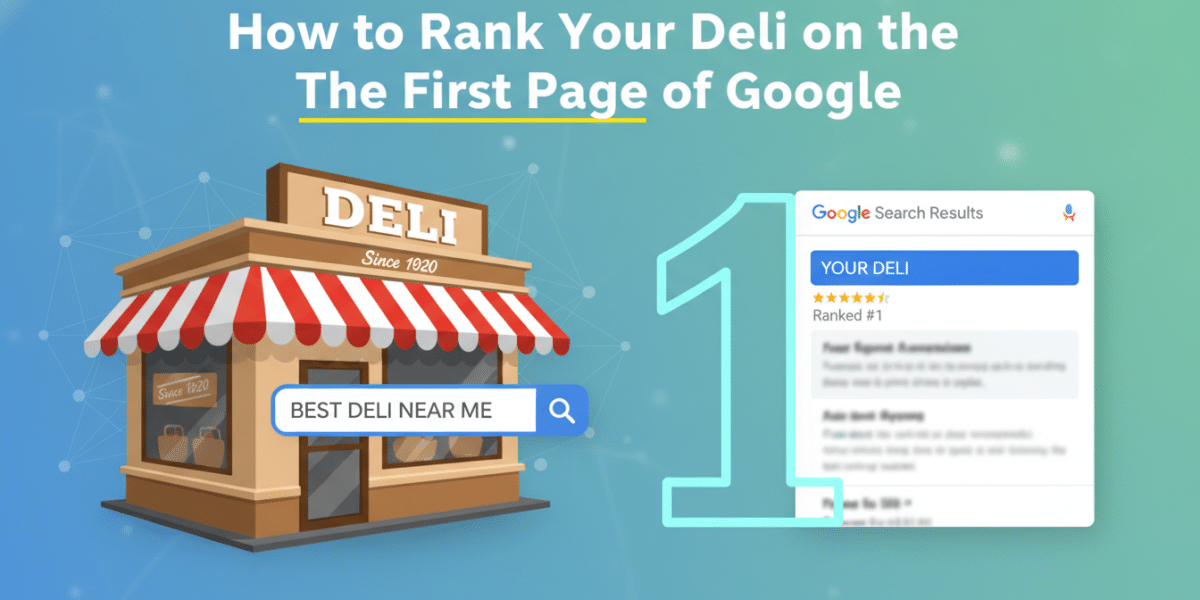
How to Rank Your Deli on the First Page of Google: A Comprehensive Guide
In today’s competitive food service industry, a strong online presence is no longer optional – it’s a necessity. For a deli owner, that means striving to rank on the first page of Google search results. Why? Because that’s where potential customers are actively looking for their next sandwich, catering order, or quick lunch spot. Ranking high on Google translates directly to increased visibility, website traffic, and, ultimately, more customers walking through your deli doors.
This article provides a comprehensive, step-by-step guide on how to achieve first-page Google rankings for your deli, focusing on both on-page and off-page SEO strategies tailored specifically to the unique challenges and opportunities of the deli business.
I. Laying the Foundation: Understanding SEO Basics for Delis
Before diving into specific tactics, it’s crucial to grasp the fundamental principles of Search Engine Optimization (SEO). SEO is the process of optimising your website and online presence to rank higher in search engine results pages (SERPs) for relevant keywords. Google, the dominant search engine, uses a complex algorithm to determine which websites appear at the top. Understanding the key ranking factors is the first step to success.
-
Relevance: Google prioritizes websites that offer the most relevant and helpful information to the user’s search query. This means your website content needs to clearly and accurately reflect the products and services you offer, your location, and the unique aspects of your deli.
-
Authority: Authority refers to the trustworthiness and credibility of your website. Google considers factors like the number and quality of backlinks (links from other websites to yours), your website’s age, and your online reputation when determining authority.
- User Experience (UX): Google prioritizes websites that offer a positive user experience. This includes factors like website speed, mobile-friendliness, ease of navigation, and the overall quality of the content. If visitors quickly leave your site (bounce rate), Google interprets this as a sign that your site isn’t meeting their needs and will lower your ranking.
II. On-Page Optimization: Making Your Website Deli-licious to Google
On-page optimisation involves making changes directly to your website to improve its visibility and relevance to Google. Think of it as preparing your deli’s storefront – you want it to be attractive, informative, and easy for customers to navigate.
A. Keyword Research: Identifying the Right Ingredients
Keyword research is the cornerstone of any successful SEO strategy. It involves identifying the words and phrases that people are using to search for delis like yours online.
-
Brainstorming: Start by brainstorming a list of keywords related to your deli. Think about:
- Your Products: Sandwiches, soups, salads, bagels, deli meats, cheeses, catering, breakfast, lunch, dinner, specific sandwich names (e.g., Reuben, Italian Combo, Turkey Club).
- Your Location: Your city, neighborhood, and nearby landmarks. (e.g., "Deli in [City Name]", "Best Sandwiches near [Landmark]", "[Neighborhood] Deli").
- Your Unique Selling Propositions (USPs): What makes your deli stand out? (e.g., "Homemade Soup", "Freshly Baked Bread", "Catering for Corporate Events", "Family-Owned Deli", "Vegan Options").
- Related Terms: Delivery, takeout, online ordering, happy hour, specials, catering menus.
-
Using Keyword Research Tools: Utilize keyword research tools like Google Keyword Planner, Ahrefs, SEMrush, or Moz Keyword Explorer to:
- Discover New Keywords: Uncover related keywords that you may not have thought of.
- Analyze Search Volume: Identify keywords with a significant number of monthly searches.
- Assess Keyword Difficulty: Evaluate the competitiveness of different keywords. Choose a mix of high-volume, moderate-difficulty, and long-tail keywords (longer, more specific phrases).
- Long-Tail Keywords: Don’t underestimate the power of long-tail keywords. While they may have lower search volume individually, they often have higher conversion rates because they target a specific user intent. For example, "best vegan sandwiches near downtown [City Name]" is a long-tail keyword that targets users looking for vegan options in a specific location.
B. Optimizing Your Website Content:
Once you have a list of target keywords, it’s time to strategically incorporate them into your website content.
-
Homepage Optimization: Your homepage is your digital storefront. It should clearly communicate what your deli offers and where you are located.
- Headline: Use a compelling headline that includes your primary keyword (e.g., "[Your Deli Name] – Your Go-To Deli in [City Name] for Delicious Sandwiches and Catering").
- Introduction: Write a brief introduction that highlights your deli’s unique selling propositions and includes relevant keywords.
- Call to Action (CTA): Include clear calls to action, such as "Order Online," "View Menu," "Get Directions," or "Contact Us for Catering."
- Images: Use high-quality images of your food and your deli. Optimize the alt text of your images with relevant keywords.
-
Menu Page Optimization: Your menu page is crucial for attracting customers.
- Clear and Detailed Descriptions: Provide detailed descriptions of each menu item, including ingredients and preparation methods.
- Keyword Integration: Naturally incorporate keywords related to each item (e.g., "Our Classic Reuben features thinly sliced corned beef, Swiss cheese, sauerkraut, and Russian dressing on grilled rye bread").
- Categorization: Organize your menu into logical categories (e.g., Sandwiches, Salads, Soups, Sides, Desserts).
-
About Us Page Optimization: Tell your deli’s story and build trust with potential customers.
- History and Mission: Share the history of your deli, your mission statement, and your values.
- Team Members: Introduce your team members and highlight their expertise.
- Community Involvement: Mention any community involvement or charitable activities.
- Location and Contact Information: Ensure your address, phone number, and email address are prominently displayed.
- Blog Content (Optional, but Highly Recommended): Creating blog content is a great way to attract new customers and improve your SEO.
- Recipe Ideas: Share recipes for popular deli items or related dishes.
- Behind-the-Scenes Stories: Give customers a glimpse into the inner workings of your deli.
- Local Events and News: Write about local events and news related to food and the community.
- Food and Drink Pairings: Suggest pairings for your menu items.
C. Technical SEO: Ensuring Your Website is Search Engine Friendly
Technical SEO focuses on the technical aspects of your website that can impact its ranking.
-
Website Speed: Website speed is a critical ranking factor. Use tools like Google PageSpeed Insights to identify and fix any performance issues.
- Optimize Images: Compress images to reduce file size without sacrificing quality.
- Enable Browser Caching: Enable browser caching to store static files on users’ computers, reducing loading times on subsequent visits.
- Minify Code: Minify HTML, CSS, and JavaScript code to reduce file size.
-
Mobile-Friendliness: Ensure your website is mobile-friendly and responsive. Google uses mobile-first indexing, meaning it primarily crawls and indexes the mobile version of your website.
- Responsive Design: Use a responsive design that adapts to different screen sizes.
- Touch-Friendly Navigation: Ensure your navigation is easy to use on touchscreens.
-
Website Architecture: Create a clear and logical website architecture that makes it easy for users and search engines to navigate.
- Sitemap: Create an XML sitemap and submit it to Google Search Console.
- Internal Linking: Use internal links to connect different pages on your website and improve navigation.
-
Schema Markup: Implement schema markup to provide search engines with more information about your website and content. Use schema markup to identify your business as a local business, list your menu items, and provide information about your hours of operation.
- HTTPS: Ensure your website is secured with HTTPS. HTTPS provides a secure connection between your website and users’ browsers.
III. Off-Page Optimization: Building Your Deli’s Online Authority
Off-page optimisation involves activities that you do outside of your website to improve its ranking. Think of it as building your deli’s reputation within the community.
A. Local SEO: Focusing on Your Immediate Vicinity
Local SEO is crucial for delis, as most customers are searching for businesses in their local area.
-
Google My Business (GMB) Profile: Claim and optimise your Google My Business profile.
- Accurate Information: Ensure your business name, address, phone number, and website are accurate and consistent across all online platforms.
- Business Description: Write a compelling business description that includes relevant keywords.
- Categories: Choose the appropriate categories for your business (e.g., Deli, Sandwich Shop, Caterer).
- Photos: Upload high-quality photos of your deli, your food, and your team.
- Hours of Operation: Keep your hours of operation up-to-date.
- Reviews: Encourage customers to leave reviews on your GMB profile. Respond to reviews, both positive and negative.
-
Online Citations: List your business in relevant online directories and citation sites, such as Yelp, TripAdvisor, Foursquare, and industry-specific directories. Ensure your NAP (Name, Address, Phone Number) information is consistent across all citations.
- Local Link Building: Obtain backlinks from other local businesses, organisations, and websites.
- Sponsor Local Events: Sponsor local events and ask for a link on the event website.
- Partner with Local Businesses: Partner with other local businesses and exchange links.
- Join the Local Chamber of Commerce: Join the local Chamber of Commerce and list your business on their website.
B. Building High-Quality Backlinks:
Backlinks are links from other websites to yours. They are a signal to Google that your website is valuable and trustworthy.
- Guest Blogging: Write guest blog posts for other websites in your niche. Include a link back to your website in your author bio or within the content.
- Resource Pages: Identify resource pages in your niche and contact the website owner to request a link to your website.
- Broken Link Building: Find broken links on other websites and offer to replace them with a link to your website.
- Create Shareable Content: Create high-quality, informative, and engaging content that people will want to share and link to.
Social media can indirectly impact your SEO by increasing brand awareness, driving traffic to your website, and generating engagement.
- Choose the Right Platforms: Focus on the social media platforms that are most popular with your target audience.
- Share Engaging Content: Share engaging content that is relevant to your audience, such as photos of your food, promotions, and behind-the-scenes stories.
- Engage with Your Followers: Respond to comments and messages, and participate in relevant conversations.
- Use Hashtags: Use relevant hashtags to increase the visibility of your posts.
IV. Monitoring and Measurement: Tracking Your Progress
SEO is an ongoing process. It’s crucial to monitor your progress and make adjustments to your strategy as needed.
- Google Analytics: Use Google Analytics to track website traffic, bounce rate, time on page, and other key metrics.
- Google Search Console: Use Google Search Console to monitor your website’s performance in search results, identify crawl errors, and submit your sitemap.
- Keyword Ranking Tracking: Track your keyword rankings using a keyword ranking tool.
- Regular Audits: Conduct regular SEO audits to identify areas for improvement.
By implementing these strategies and consistently monitoring your results, you can significantly improve your deli’s online visibility and attract more customers through Google search. Remember that SEO is a marathon, not a sprint. Be patient, persistent, and adaptable, and you’ll be well on your way to achieving first-page Google rankings.
Related Posts
 How to Rank Your Online Store on Google’s First Page
 Google Adds Local Businesses To EEA Search Units: Major Win For Irish Local SEO
 SEO FAQs for Small Businesses: How to Rank Higher on Google in Dublin
 Why a Slow Website Is Killing Your Search Rankings
 How to Rank Your Shopify Product Pages on Google
 Google My Business Optimization for Dublin Local Search
 Local Search Optimization Tips for Deli Owners
 How do I rank my business on Google Maps for ʼDublin 2ʼ or ʼDublin 4ʼ?