
When someone lands on your service page, you have roughly eight seconds to convince them to stay. That’s not a rough estimate — research from Microsoft found that average human attention spans online hover around eight seconds, and bounce rates for poorly structured pages confirm it. Service page copywriting structure is the difference between a visitor who reads, engages, and converts, and one who quietly disappears back to a search results page. Get the structure right, and your content works harder than any ad budget could.
Why Structure Matters More Than You Think
Most business owners focus obsessively on what their service page says. Far fewer stop to think about how it’s organised. But structure isn’t just a formatting preference — it’s a psychological framework that guides your reader from curiosity to confidence to action.
Think about the last time you visited a cluttered, wall-of-text service page. Even if the information was technically accurate, did you trust the business? Probably not. A well-structured page signals professionalism, clarity, and respect for the reader’s time.
Structure also affects SEO in ways that go beyond headers and keyword placement. Google’s algorithms increasingly reward pages that demonstrate clear topical organisation, logical flow, and content that matches searcher intent. A strong structure helps both real readers and search engines understand what you do, who you do it for, and why it matters.
The Core Elements of a High-Performing Service Page
Start With a Headline That Earns Attention
Your H1 is the first thing a visitor reads. It needs to communicate your core value proposition in plain, specific language — not your company motto or a clever tagline.
Compare these two headlines:
- "Empowering Growth Through Strategic Solutions"
- "Commercial Electrical Installations for Dublin Businesses — Fully Certified and Insured"
The second one does three things immediately: it names the service, identifies the audience, and provides a trust signal. That’s your target. Every word in your headline needs to earn its place.
The Opening Paragraph: One Job Only
The opening paragraph has one job — to confirm to the reader that they’re in the right place. This is not the moment for company history or a list of your values. It’s the moment to speak directly to the problem your reader came to solve.
Keep it tight. Two to four sentences that name the problem, hint at your solution, and establish relevance. If someone has landed on a page about your accounting services after searching "small business bookkeeping help Dublin," your opener should reflect that exact intent back at them.
Building the Middle Section: Where Most Pages Lose People
Explaining What You Actually Do
This sounds obvious, but many service pages fail here. They describe outcomes vaguely rather than explaining the actual process or scope of the service. Specificity builds trust in a way that generalities simply cannot.
If you offer SEO services, don’t just say "we improve your search rankings." Explain what that involves: technical audits, on-page optimisation, link building strategies, monthly reporting. Readers who understand what they’re paying for are far more likely to convert — and far less likely to request refunds or raise disputes later.
A practical approach is to break this section into three parts:
- What’s included — a clear scope of the service
- How it works — a brief process overview (three to five steps works well)
- Who it’s for — a specific description of the ideal client
The Process Section: Transparency as a Selling Tool
A numbered process section is one of the most underused tools in service page copywriting structure. People are anxious about buying services they can’t fully see or touch. Showing them what happens after they enquire removes a significant psychological barrier.
Even a simple four-step process — enquiry, assessment, delivery, review — can dramatically improve conversion rates. It communicates competence, reduces uncertainty, and signals that you’ve done this before.
Social Proof: Where You Let Others Do the Talking
Testimonials That Actually Work
Not all testimonials are created equal. A quote that says "Great service, would recommend!" adds almost nothing. A quote that says "We hired [Company] to redesign our entire customer onboarding system. Within six weeks, our drop-off rate fell by 34% and support tickets dropped by half" — that’s a testimonial that converts.
The best testimonials include a specific result, a timeframe, and ideally the name and company of the reviewer. If you can include a photo, even better. Real names attached to real outcomes are far more persuasive than anonymous praise.
Case Studies vs. Testimonials
For complex or high-value services, a short case study embedded in the page is worth considering. It doesn’t need to be long — three to four sentences describing the client’s problem, your approach, and the measurable result is enough to demonstrate credibility without derailing the page’s flow.
Service Page Copywriting Structure: Handling Objections Before They Arise
Most visitors to your service page won’t contact you immediately. They’ll hesitate. They’ll wonder if you’re too expensive, too specialised, too far away, or whether they really need the service at all.
Your job is to anticipate those hesitations and address them within the page copy itself — not wait for a sales call to do it.
Common objections include:
- Cost — Address pricing honestly. You don’t need to list exact figures, but phrases like "transparent, fixed-fee pricing" or "packages starting from €X" give readers the context they need without frightening them off.
- Fit — Use specific language about who the service is designed for. "Ideal for SMEs with between 10 and 50 employees" is more reassuring than "suitable for all businesses."
- Trust — Mention relevant certifications, industry memberships, years in operation, or regulatory compliance. For example, a financial services firm in Ireland would benefit from mentioning authorisation by the Central Bank of Ireland — a detail that immediately filters serious buyers from those just browsing.
The Call to Action: Structure, Placement, and Phrasing
Don’t Wait Until the End
This is one of the most common structural mistakes in service page copywriting. The CTA appears once, buried at the bottom, after the reader has already decided whether or not to trust you. Instead, place your CTA in at least three locations:
- Above the fold — a soft CTA near the top, before the main content
- Mid-page — after you’ve explained the service and process
- End of page — a direct, confident invitation to take the next step
What to Actually Say
Avoid generic CTAs like "Contact Us" or "Get Started." These are vague and create unnecessary friction. Instead, connect the CTA to the action and its outcome:
- "Book a free 20-minute consultation"
- "Request your no-obligation quote today"
- "Talk to our team about your project"
These phrases tell the reader exactly what happens next and remove the ambiguity that causes hesitation.
Frequently Asked Questions
What should the first section of a service page include?
Your service page should open with a clear H1 headline that names the service and speaks to your target audience. Follow it with a brief introductory paragraph that confirms the reader is in the right place and hints at the problem you solve. Avoid generic brand statements here — focus entirely on the reader’s needs.
How long should a service page be?
There’s no universal answer, but most high-performing service pages fall between 600 and 1,500 words. Complex or high-value services often warrant longer pages because there’s more to explain and more trust to build. Simpler transactional services can be effective with less. The key is that every word should earn its place — length for its own sake doesn’t help.
Is it worth including pricing on a service page?
In most cases, yes — at least in broad terms. Visitors who can see a price range are better qualified leads than those who can’t. Hiding pricing entirely can increase bounce rates, as many readers assume the worst when no figures are available. Even a "starting from" figure helps manage expectations and filters in the right clients.
How do I make my service page stand out from competitors?
Specificity is your biggest differentiator. Most service pages are vague, generic, and interchangeable. Pages that name specific outcomes, describe real processes, feature genuine client results, and speak to a defined audience consistently outperform those that try to appeal to everyone. Knowing your audience well enough to write for them precisely is what separates good service page copywriting from average content.
How often should I update my service page?
Review your service pages at least once every six months. Services evolve, pricing changes, case studies become outdated, and search intent shifts. A page that performed well twelve months ago may no longer reflect what your ideal clients are searching for. Regular audits also give you the opportunity to test different headlines, CTAs, and structures to see what performs best.
Conclusion
Service page copywriting structure isn’t about following a template — it’s about understanding how real people make decisions and organising your content to support that process. A strong structure earns attention with a precise headline, builds trust through transparency and social proof, removes objections before they derail the conversation, and closes with a clear, low-friction invitation to act.
The pages that convert consistently aren’t necessarily the ones with the best-written sentences. They’re the ones where every element — from the H1 to the final CTA — has been deliberately placed to guide the reader forward. Get the structure right first. The words will follow.
Ready to Talk About Your Service Pages?
If you’d like help reviewing your current service pages or building a structure that genuinely converts, our team is happy to discuss your requirements. Reach out at a time that suits you — email us at moc.ssobebolg@ofni or call us on +353 1 868 2345 and we’ll take it from there.
Related Posts
 Why Site Architecture Matters More Than Keywords for E-Commerce
 Homepage design linking strategy for publishers SEO case study
 Effective SE0 internal linking strategies for improved website structure
 Effective
SEO internal linking strategies for improved website structure
 Capture the Whole Webpage, Not Just the First Screen
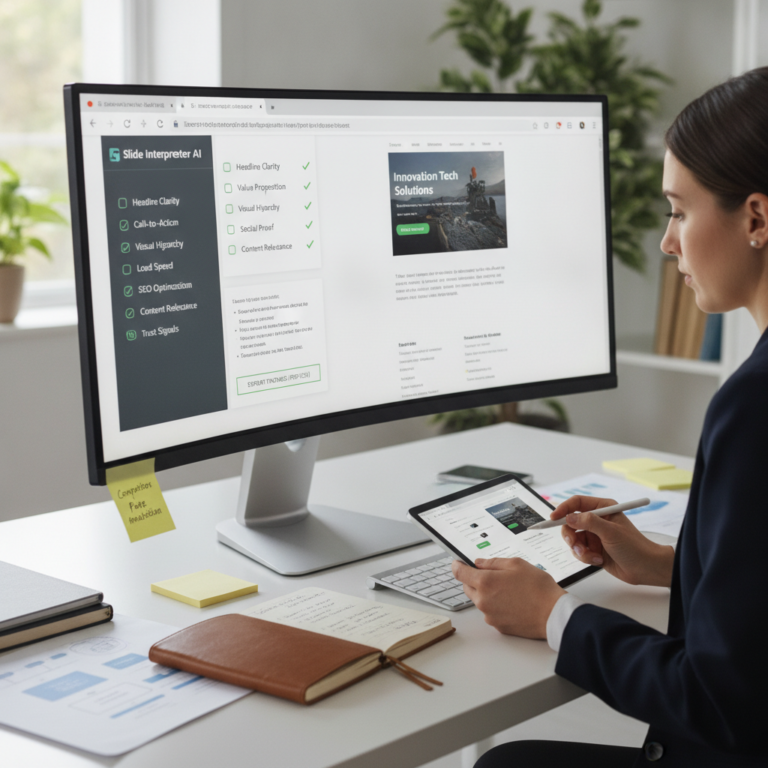 Review a Competitor Landing Page with a Structured Audit
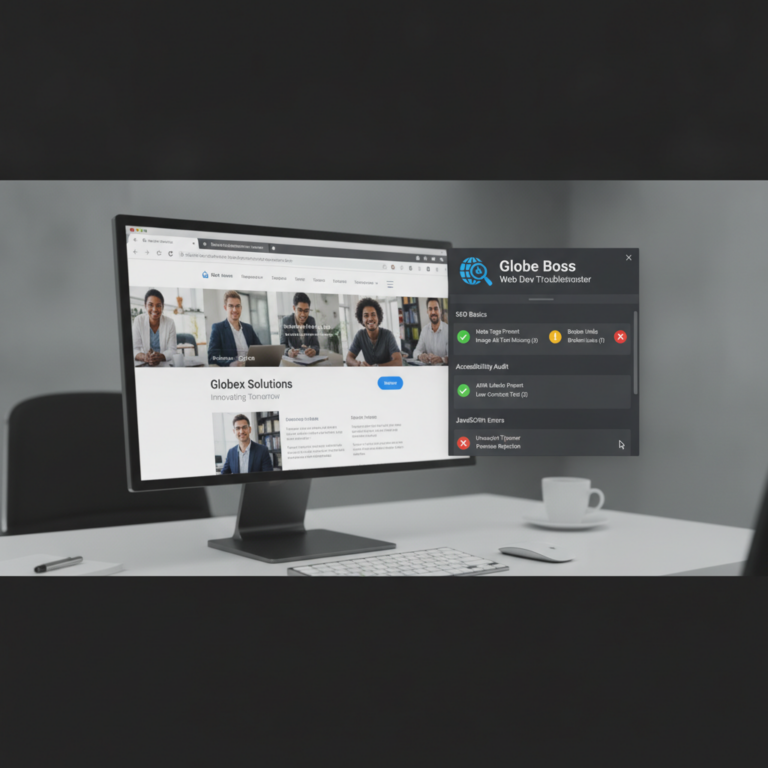 A Practical SEO and Accessibility Check for Any Live Page
 Keyword Mapping: Assign the Right Term to the Right Page