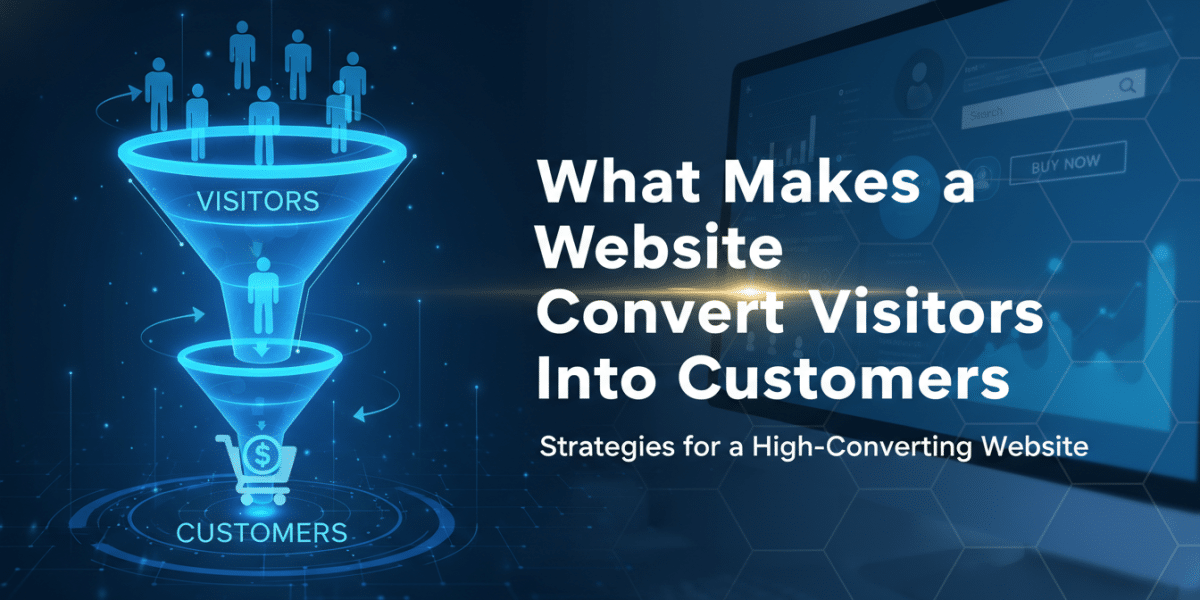
Every website owner dreams of a bustling digital storefront, a place where visitors don’t just browse but confidently click “add to cart,” “sign up,” or “contact us.” Traffic is fantastic, but if those visitors aren’t taking the desired actions, it’s like hosting a party where no one dances. The burning question on every entrepreneur’s mind, then, becomes: What makes a website convert visitors into customers?
It’s not a single magic bullet, but rather a symphony of carefully orchestrated elements, all playing in harmony to guide your audience from casual browser to loyal patron. It’s about more than just aesthetics; it’s about understanding human psychology, anticipating needs, and creating an experience so seamless and compelling that saying “yes” feels like the most natural thing in the world.
Let’s pull back the curtain and explore the foundational principles that empower a website to effectively transform its audience into paying customers.
Building the Bedrock: Trust and Credibility
Before anyone commits to a purchase or shares their information, they need to trust you. In the digital realm, where scams and fleeting businesses abound, establishing immediate credibility is paramount.
A Professional First Impression
Your website is your digital handshake. A clean, modern, and professional design immediately signals reliability. This includes consistent branding (logos, colors, fonts), high-quality images and graphics, and a layout that doesn’t feel cluttered or outdated. If your site looks like it was built in 1998, visitors will likely assume your business practices are equally antiquated.
- Practical Tip: Invest in professional photography for your products, services, and even your team. People connect with faces. Ensure your branding is consistent across all platforms – your website, social media, and any physical materials.
Transparency and Security
People want to know who they’re dealing with. Clearly display your contact information (phone number, email, physical address if applicable), link to your privacy policy and terms of service, and showcase security badges (like an SSL certificate symbol) if you handle sensitive data or payments. Clear pricing, return policies, and shipping information also contribute significantly to building trust.
- Example: An e-commerce site prominently featuring a padlock icon in the browser bar, a “Secure Checkout” message, and direct links to customer service on every page inspires confidence. Contrast this with a site that forces you to dig for contact details or has vague terms.
The Art of Clarity: Your Value Proposition
Once trust is established, the visitor needs to quickly understand what you offer and why it matters to them. Ambiguity is the enemy of conversion.
Instant Understanding
When a visitor lands on your homepage, they should instantly grasp: What do you do? Who is it for? And why should they choose you over competitors? Your unique selling proposition (USP) needs to be front and center, communicated in clear, concise language. Avoid jargon or corporate speak.
- Example: Instead of “Leveraging synergistic paradigms for optimal client solutions,” think “We help small businesses grow their online sales by 25% in 90 days, guaranteed.” One speaks to an expert, the other speaks to a problem.
Solving a Problem, Fulfilling a Need
People buy solutions, not just products or services. Focus on the benefits your offering provides, not just a list of features. How does it make their life easier, better, or more enjoyable? What pain points does it alleviate? Connecting your offering directly to a customer’s needs is a critical component of what makes a website convert visitors into customers.
- Practical Tip: Frame your headings and initial paragraphs around common customer problems. For instance, a project management software might lead with, “Tired of missed deadlines and chaotic team communication?”
Seamless Journeys: User Experience (UX) and Design
A beautiful website that’s frustrating to use won’t convert. Excellent UX and intuitive design are about making the visitor’s journey effortless and enjoyable.
Intuitive Navigation
Visitors should never feel lost. Your website’s navigation needs to be logical, consistent, and easy to understand. Clear menus, a prominent search bar, and breadcrumbs (e.g., Home > Products > Category > Item) help users orient themselves and find what they need quickly. Reduce the number of clicks required to reach key information or complete a desired action.
- Example: A well-structured navigation bar might group related items under clear categories like “Services,” “Products,” “About Us,” and “Contact,” rather than a confusing list of obscure page titles.
Responsive Design for Every Device
With a significant portion of internet traffic coming from mobile devices, your website must be fully responsive. This means it adapts seamlessly to screens of all sizes – desktops, tablets, and smartphones – without compromising functionality or aesthetics. A clunky, unreadable mobile experience is a surefire way to drive potential customers away.
- Practical Tip: Test your website on various devices. Use Google’s Mobile-Friendly Test to identify any glaring issues. Prioritize mobile optimisation in your design process.
Aesthetics and Readability
Beyond basic functionality, a visually appealing design that’s easy on the eyes matters. Use appropriate font sizes and styles, ample white space to prevent visual clutter, and a color palette that reflects your brand and enhances readability. High-quality images and videos break up text and keep users engaged.
Engaging Content That Guides Action
Content isn’t just about filling space; it’s about informing, persuading, and guiding your visitor towards conversion.
Storytelling and Empathy
Connect with your audience on an emotional level. Use stories, relatable scenarios, and language that shows you understand their challenges and aspirations. This builds rapport and makes your brand feel more human and approachable.
- Example: Instead of just listing features of a financial planning service, tell a story about a client who achieved their dream of early retirement thanks to your guidance.
Clear, Concise, and Skimmable Copy
Internet users rarely read every word. They scan. Use short paragraphs, bullet points, numbered lists, and bolded text to highlight key information. Get straight to the point and avoid excessive fluff. Every word should earn its place.
- Practical Tip: Break up long blocks of text. Use H2 and H3 headings frequently to give readers a roadmap of your content.
Visuals That Speak Volumes
Images, infographics, and videos can convey complex information or emotions much faster than text alone. High-resolution product photos from multiple angles, explainer videos for services, or illustrative graphics can significantly enhance understanding and engagement.
- Example: A clothing website with zoomable, high-quality images of garments worn by models, alongside a short video showcasing the fabric’s movement, provides a far richer experience than just a text description.
The Direct Invitation: Powerful Calls-to-Action (CTAs)
You’ve built trust, clarified your value, and provided a great experience. Now, you need to tell your visitors exactly what you want them to do next. This is where your Calls-to-Action (CTAs) come in.
Visibility and Prominence
Your CTAs need to stand out. Use contrasting colors, larger fonts, and strategic placement (often “above the fold” or at logical points within your content) to draw attention. Don’t make users hunt for the “Buy Now” button.
Compelling Language
Move beyond generic “Click Here.” Use action-oriented, benefit-driven language that creates a sense of urgency or desire. “Get Your Free Quote,” “Start Your 30-Day Trial,” “Unlock Exclusive Savings,” or “Join Our Community” are far more effective.
- Practical Tip: A/B test different CTA texts, colors, and placements to see which performs best with your audience. Small tweaks can lead to significant conversion rate improvements.
Clear Next Steps
Avoid ambiguity. If a visitor clicks a CTA, they should know exactly what happens next. Will it take them to a checkout page, a signup form, or a contact page? Manage expectations.
The Unseen Force: Technical Performance
Even the most beautiful and well-crafted website can fail to convert if it’s held back by technical issues.
Speed is King
In today’s fast-paced digital world, users expect websites to load almost instantly. A slow-loading site (anything over 2-3 seconds) leads to high bounce rates and frustrated visitors who won’t stick around to convert. Optimize images, leverage caching, and ensure your hosting is robust.
- Explanation: Imagine standing in a physical store where the doors jam or the aisles are perpetually blocked. You’d leave. Online, slow loading times are the digital equivalent.
Error-Free Experience
Broken links, missing images, or server errors are immediate conversion killers. Regularly check your website for these issues. A smooth, uninterrupted user flow builds confidence.
- Practical Tip: Use tools like Google Search Console to identify crawl errors and broken links. Conduct regular audits of your website’s functionality.
Leveraging Human Psychology: Social Proof and Urgency
People are influenced by others and by a sense of missing out. Tapping into these psychological triggers can significantly boost conversions.
Reviews, Testimonials, and Case Studies
Showcase positive feedback from satisfied customers. Reviews build trust, testimonials offer personal stories, and case studies provide detailed examples of your success. The more specific and authentic, the better.
- Example: Displaying “4.9-star rating based on 3,500 reviews” or video testimonials from happy clients dramatically increases credibility.
Trust Badges and Endorsements
If your business has been featured in major media, won awards, or partners with reputable organisations, display these logos prominently. These act as third-party endorsements, instantly boosting your authority.
Gentle Urgency and Scarcity (Ethically Applied)
Limited-time offers, “only X left in stock,” or countdown timers for sales can motivate fence-sitters to make a decision. However, use these tactics sparingly and ethically to maintain trust. False scarcity will damage your reputation.
- Practical Tip: If you’re running a genuine sale, clearly state the end date. For physical products, showing real-time stock levels is an honest way to use scarcity.
Beyond the First Click: Personalization and Follow-Up
Conversion isn’t always an immediate event. Sometimes, it’s a process, and smart personalization and follow-up strategies can seal the deal.
Tailored Experiences
Use data to personalize the user experience. This could involve recommending products based on past browsing history, displaying content relevant to their location, or remembering items in their cart. A personalized experience makes the visitor feel seen and understood.
Retargeting and Email Marketing
Many visitors won’t convert on their first visit. Implement retargeting campaigns to show ads to users who visited your site but didn’t convert. Build an email list and use targeted email sequences to nurture leads, offer exclusive deals, and remind them of what they almost bought.
- Explanation: A comprehensive conversion strategy understands that the customer journey often extends beyond a single website visit. Smart follow-up is key to re-engaging and converting interested parties.
Conclusion
So, what makes a website convert visitors into customers? It’s a holistic approach that places the customer at the center of every decision. It’s about meticulously crafting an online experience that is trustworthy, clear, intuitively designed, technically flawless, and psychologically compelling. From the moment a visitor lands on your page to the final click, every element must work in concert to build confidence, communicate value, and gently guide them towards the desired action.
It’s an ongoing process of optimisation, testing, and continuous improvement. By consistently focusing on building trust, articulating your value, perfecting the user experience, crafting persuasive content, leveraging powerful CTAs, ensuring technical robustness, employing smart psychological nudges, and nurturing leads beyond the initial visit, your website will transform from a passive online presence into a dynamic, customer-generating machine. Embrace empathy for your audience, relentlessly optimise, and watch your conversion rates soar.
Dublin's ROI-Driven Digital Marketing Agency Home
Related Posts
 How to Use Heatmaps to Improve Your Website Conversion Rate
 How to Convert Images to WebP in WordPress (Step-by-Step)
 What Irish Customers Actually Search for on Google
 Globe Boss Conversion Rate Optimization Dublin
 Conversion Rate Optimization for Dublin E-commerce Sites
 Are You Giving Customers Info in The Wrong Sequence
 Conversion Rate Optimization Top 10 Strategies for Success
 How To Make a Website Your Customers and Google Will Like