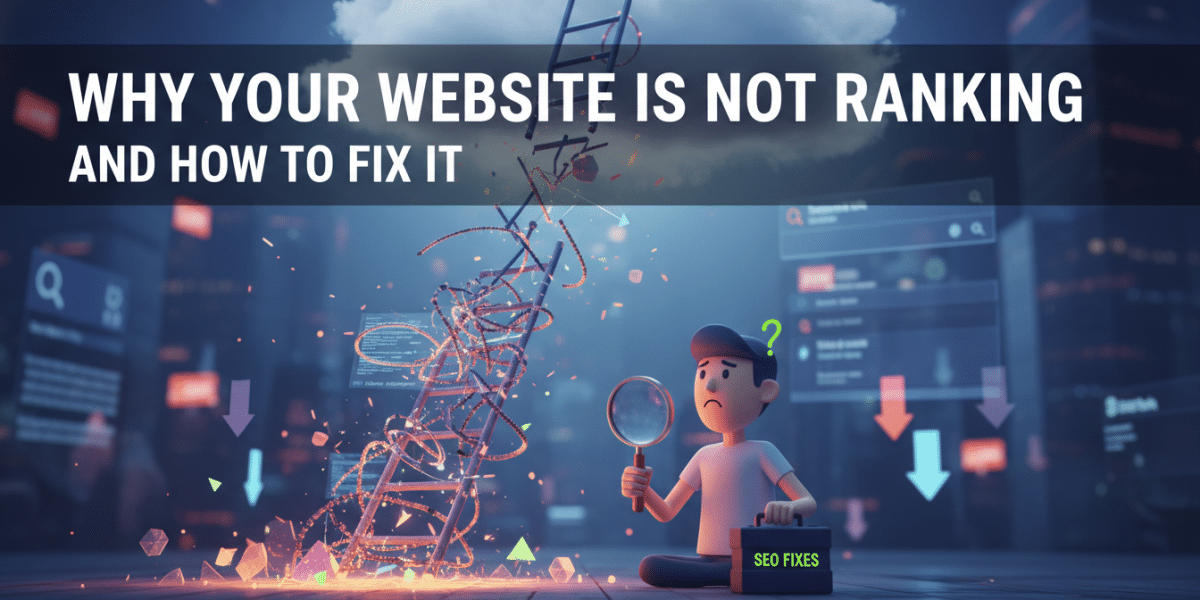
Why Your Website Is Not Ranking (And How to Fix It)
You’ve poured your heart and soul into building a website. It looks great, it describes your business perfectly, and you’re confident it’s exactly what your customers need. But then, you do a quick Google search for your products or services, and… crickets. Your beautiful site is nowhere to be found on the first page, or even the second, third, or fourth. The frustration is palpable. “Why is my website not ranking?” you ask, staring blankly at your screen.
It’s a common scenario, and you’re not alone. In the vast digital landscape, simply existing isn’t enough. Search engines like Google are sophisticated gatekeepers, constantly sifting through billions of pages to deliver the most relevant and high-quality results to users. If your website isn’t showing up, it’s not because Google doesn’t like you; it’s because there are specific, addressable reasons why it’s not meeting their criteria.
This article will pull back the curtain on the most common reasons why your website is not ranking as it should and, more importantly, equip you with practical, actionable steps to turn things around. We’ll break down complex SEO concepts into easy-to-understand language, helping you build a roadmap to better search visibility.
Understanding Why Your Website Isn’t Ranking: The Core Problems
Before we can fix anything, we need to diagnose the problem. There isn’t usually one single reason your site isn’t ranking; it’s often a combination of factors. Let’s explore the most common culprits.
You Haven’t Defined Your Audience & Keywords Properly
One of the biggest mistakes businesses make is assuming Google “just knows” what their website is about. Search engines rely heavily on keywords – the words and phrases people type into the search bar – to understand the topic and relevance of your content.
- Lack of Keyword Research: Are you using the terms your customers actually search for? If you’re selling “bespoke artisan widgets” but everyone is searching for “handmade gadgets,” you’ve got a disconnect.
- Generic Keywords: Targeting overly broad keywords like “shoes” is nearly impossible for a new or small site. You need to focus on specific, long-tail keywords (e.g., “comfortable vegan running shoes for women”).
- No Keyword Strategy: Even if you’ve done some research, are your chosen keywords strategically placed throughout your content, headings, and meta descriptions? Or are they absent entirely?
Your Content Isn’t Up to Snuff (or Missing Entirely)
Content is king, queen, and the entire royal court in the SEO world. If your content is lacking, your website will struggle to rank.
- Thin Content: Pages with very little text, generic information, or just a few bullet points don’t offer much value to users or search engines.
- Lack of Depth and Authority: Does your content thoroughly answer user questions? Does it demonstrate expertise, authoritativeness, and trustworthiness (E-A-T, a crucial Google ranking factor)?
- Duplicate Content: Copying content from other sites (or even other pages on your own site without proper canonical tags) can confuse search engines and dilute your ranking potential.
- Stale Content: Old, outdated information won’t rank as well as fresh, relevant content.
Technical Glitches Are Holding You Back
Even the most beautiful websites can be crippled by technical issues that prevent search engines from properly crawling, indexing, and understanding them.
- Crawl Errors: Googlebot (Google’s crawler) might be encountering problems accessing certain pages, meaning they can’t be indexed.
- Broken Links: Both internal and external broken links create a poor user experience and can signal a poorly maintained site to search engines.
- Missing XML Sitemap: A sitemap acts as a roadmap for search engines, helping them discover all the important pages on your site.
- Robots.txt Issues: Incorrectly configured
robots.txtfiles can inadvertently block search engines from accessing your entire site or crucial sections. - No SSL Certificate (HTTP vs. HTTPS): Websites without an SSL certificate (HTTP) are less secure, and Google actively favors secure (HTTPS) sites.
Your Website Isn’t Mobile-Friendly
We live in a mobile-first world. A significant portion of web traffic comes from smartphones and tablets. If your site isn’t optimised for these devices, you’re in trouble.
- Google’s Mobile-First Indexing: Google primarily uses the mobile version of your content for indexing and ranking. If your mobile site is broken or difficult to use, your rankings will suffer.
- Poor Responsiveness: Content that doesn’t adapt to different screen sizes, tiny text, or unclickable buttons on mobile devices will lead to a frustrating experience and high bounce rates.
Slow Load Times Are a Dealbreaker
Patience is a virtue, but not one most internet users possess. If your website takes ages to load, people will leave before they even see your content.
- High Bounce Rate: Users leaving quickly signals to Google that your site isn’t providing a good experience, hurting your rankings.
- Negative Impact on Crawling: Slow sites can also hinder search engine crawlers, meaning fewer pages might get indexed.
- Causes: Large image files, unoptimised code, too many plugins, poor hosting, and excessive external scripts are common culprits.
No One’s Linking to You (Lack of Authority)
Backlinks – links from other reputable websites to yours – are like votes of confidence. The more high-quality, relevant backlinks you have, the more authority Google perceives your site to possess.
- New Websites: Newer sites naturally have fewer backlinks, making it harder to compete with established competitors.
- Lack of Outreach: If you’re not actively creating shareable content or reaching out to other sites, you won’t naturally accumulate these “votes.”
- Poor Quality Backlinks: Even worse than no backlinks are spammy or low-quality backlinks, which can actually harm your rankings.
Poor User Experience (UX)
Beyond technical speed and mobile-friendliness, the overall experience a user has on your site significantly impacts its ranking potential.
- Confusing Navigation: If users can’t easily find what they’re looking for, they’ll leave.
- Cluttered Layout: A messy or overly busy design can overwhelm users and make content difficult to consume.
- Lack of Clear Calls to Action: Are users clear on what you want them to do next?
- Intrusive Pop-ups: While sometimes effective for conversions, aggressive pop-ups that hinder content viewing can annoy users and hurt rankings.
You’re Not Promoting Your Content
Building a great website with fantastic content is only half the battle. If nobody knows it exists, it won’t get the traffic or backlinks it needs to rank.
- No Social Media Presence: Sharing your content on relevant social media platforms can drive traffic and increase visibility.
- Lack of Outreach: Are you telling relevant communities, influencers, or potential partners about your valuable content?
- Ignoring Email Marketing: Your existing audience is a powerful tool for distributing new content and driving initial engagement.
How to Fix It: Actionable Steps to Boost Your Rankings
Now that you understand why your website is not ranking, let’s dive into practical solutions. Each step contributes to building a stronger, more visible online presence.
Deep Dive into Keyword Research
This is foundational. You need to understand the language your audience uses.
- Tools: Utilize tools like Google Keyword Planner, Ahrefs, SEMrush, or even Google’s “People also ask” and “Related searches” features.
- Intent: Focus on user intent. Are they looking to buy, learn, or compare? Tailor your content to match.
- Long-Tail Keywords: Target specific, multi-word phrases (e.g., “best espresso machine for small kitchens”) that have less competition but high intent.
- Competitor Analysis: See what keywords your successful competitors are ranking for and find opportunities to outrank them.
Become a Content Powerhouse
Quality content is the single most effective long-term SEO strategy.
- Create Valuable, In-Depth Content: Aim for comprehensive guides, tutorials, blog posts, videos, or infographics that genuinely help your audience. Think 10x content – content that is 10 times better than anything else out there on the same topic.
- Focus on E-A-T: Demonstrate Expertise, Authoritativeness, and Trustworthiness. Back up claims with data, cite sources, and showcase your credentials.
- Regularly Update and Refresh: Audit old content. Can it be updated with new information, stats, or examples? Refreshing content can give it a significant ranking boost.
- Vary Content Formats: Don’t just write blog posts. Consider videos, podcasts, infographics, quizzes, and interactive tools to engage a wider audience.
Technical SEO Audit & Cleanup
Ensure Google can properly access and understand your site.
- Google Search Console: This is your best friend. Monitor crawl errors, indexing issues, and submit your XML sitemap regularly.
- Fix Broken Links: Use tools like Screaming Frog or online broken link checkers to identify and fix internal and external broken links.
- Implement SSL: If you’re still on HTTP, migrate to HTTPS immediately. Most hosting providers offer free SSL certificates.
- Optimize
robots.txt: Ensure it’s not blocking important pages from being indexed. - Structured Data (Schema Markup): Use schema markup to help search engines understand the context of your content (e.g., reviews, recipes, events).
Embrace Mobile-First Design
Your website must be fully responsive and user-friendly on mobile devices.
- Responsive Design: Use a responsive theme or design that automatically adjusts to different screen sizes.
- Google’s Mobile-Friendly Test: Use this tool to identify any specific mobile usability issues.
- Prioritize Mobile UX: Ensure buttons are tappable, text is readable without zooming, and navigation is intuitive on smaller screens.
Optimize for Blazing Fast Speeds
Every second counts.
- Image Optimization: Compress images without sacrificing quality. Use modern formats like WebP.
- Browser Caching: Implement browser caching to store parts of your site locally for returning visitors, speeding up subsequent visits.
- Minify Code: Remove unnecessary characters from HTML, CSS, and JavaScript files.
- Leverage a CDN (Content Delivery Network): A CDN stores copies of your website’s static content on servers worldwide, delivering it faster to users based on their location.
- Choose Quality Hosting: Invest in reliable, fast hosting. Shared hosting is often cheaper but can be slower.
Build Authority with Quality Backlinks
Earn those “votes of confidence” from other reputable sites.
- Create Link-Worthy Content: Produce truly exceptional content that others will naturally want to reference and link to.
- Guest Blogging: Write for other relevant websites in your industry, including a link back to your site in your author bio or within the content.
- Broken Link Building: Find broken links on other websites and suggest your relevant content as a replacement.
- Outreach: Reach out to influencers, journalists, and industry leaders with your valuable content.
- Local Citations: For local businesses, ensure your Name, Address, and Phone (NAP) are consistent across local directories.
Prioritize User Experience (UX)
Make your site a joy to visit.
- Clear Navigation: Implement intuitive menus and a logical site structure.
- Readability: Use clear fonts, sufficient line spacing, and break up large blocks of text with headings, subheadings, and bullet points.
- Compelling CTAs: Guide users with clear calls to action (e.g., “Shop Now,” “Learn More,” “Contact Us”).
- Internal Linking: Link relevant pages within your own site. This helps users discover more content and distributes “link juice” internally.
Promote, Promote, Promote!
Don’t just publish and pray.
- Social Media: Share your content regularly on platforms where your target audience hangs out.
- Email Marketing: Send out newsletters to your subscribers, highlighting your latest content and offers.
- Online Communities: Share your expertise (and relevant content) in forums, Reddit threads, and other online communities (without spamming!).
- PR Outreach: If you have newsworthy content or a unique story, reach out to relevant media outlets.
Conquer Local Search (If Applicable)
If your business serves a local area, this is critical.
- Google My Business (GMB): Claim and fully optimise your GMB profile. Fill out all sections, add photos, and encourage reviews.
- Local Keyword Targeting: Incorporate city and region names into your content and meta descriptions (e.g., “best pizza in [Your City]”).
- Local Citations: Ensure consistent NAP information across all online directories (Yelp, Yellow Pages, etc.).
Monitor, Adapt, and Stay Patient
SEO is not a one-time fix; it’s an ongoing process.
- Analytics: Regularly check Google Analytics and Google Search Console to monitor traffic, keyword rankings, bounce rates, and user behavior.
- Competitor Watch: Keep an eye on what your competitors are doing well.
- Algorithm Updates: Stay informed about major search engine algorithm updates, as these can affect rankings.
- Patience: SEO takes time. It can take weeks or even months to see significant results from your efforts. Consistency is key.
Conclusion
Understanding why your website is not ranking is the first, crucial step toward reclaiming your spot in search results. While the world of SEO can seem daunting, breaking it down into manageable tasks makes it far less intimidating. From meticulous keyword research and creating truly valuable content to addressing technical issues and actively promoting your site, every action you take contributes to a stronger online presence.
Remember, search engines are constantly striving to provide the best possible experience for their users. By focusing on providing real value, ensuring a seamless user experience, and following the technical guidelines, you’re not just optimising for algorithms – you’re building a better website for real people. So roll up your sleeves, start implementing these fixes, and watch your website climb those search engine ranks. Your audience is waiting.
Dublin's ROI-Driven Digital Marketing Agency Home
Related Posts
 Why Your Dublin Plumber Website Isnʼt Ranking (And How to Fix It)
 Why Most Dublin Blog Posts Never Rank (And How to Fix Yours)
 How to Optimise Your Website for AI Search Results in 2026
 Why a Slow Website Is Killing Your Search Rankings
 Why Your Site Isnʼt Indexing and How to Fix It Quickly
 How to Fix Trust Issues Boosting Your Websiteʼs Technical Reliability
 Top SEO Services to Boost Your Website Rankings in 2024
 How Technical SEO Audits Can Fix Your Rankings