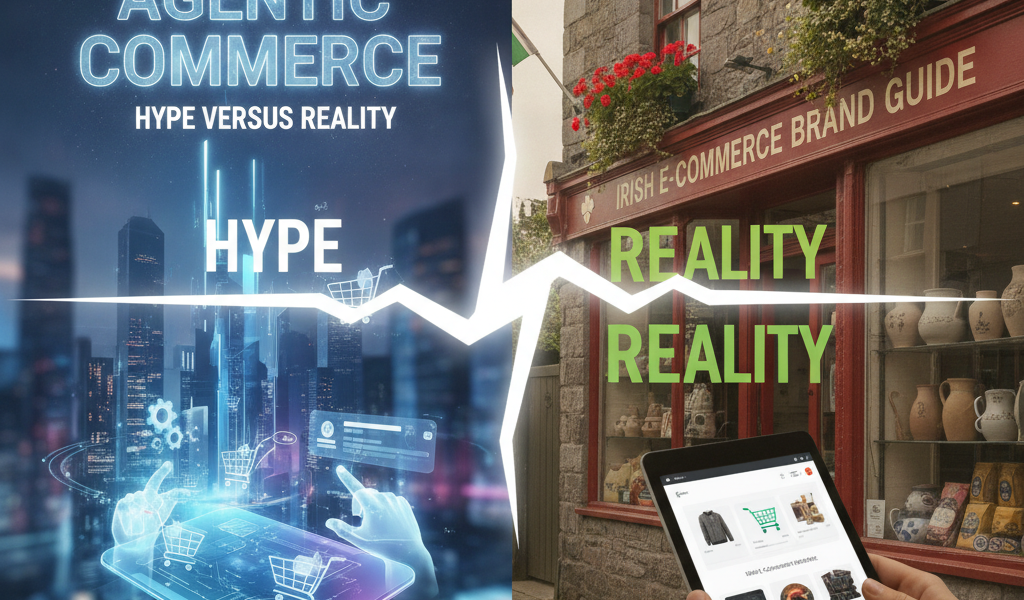
Agentic Commerce: Hype Versus Reality
Agentic commerce—a term that has been circulating in the e-commerce space—promises a level of autonomy and user empowerment that many brands are eager to tap into. However, in the Irish context, it’s essential to distinguish between the hype and the reality. Agentic commerce suggests that customers can take charge of their purchasing journeys, using technology to shape their experiences. While there is merit to this claim, real implementation poses several challenges and opportunities for Irish e-commerce brands.
Understanding Agentic Commerce
At its core, agentic commerce embodies the idea that consumers should have control over their shopping experiences. This can manifest through various technologies such as AI-driven recommendations, personalised marketing, and streamlined payment systems. In an ideal world, customers would navigate their shopping journeys seamlessly, making choices that feel intrinsic to their desires.
However, the reality is more complicated. The technology that supports agentic commerce is still developing, and many Irish brands struggle to strike the right balance between autonomy and guidance. For instance, a poorly designed user interface can make a seemingly empowering experience feel overwhelming.
The Current Landscape of E-Commerce in Ireland
Irish e-commerce is growing rapidly. In 2022, it was reported that online sales increased by approximately 10%, with a spending average of €2,900 per person annually. As more brands move online, understanding the nuances of consumer behaviour is vital for leveraging agentic commerce effectively.
Brands that can harness the principles of agentic commerce will find that their consumers are more engaged. However, implementation requires an investment in technology, user experience (UX) design, and a robust digital marketing strategy.
Challenges of Agentic Commerce for Irish Brands
While agentic commerce holds promise, many Irish e-commerce brands face significant hurdles. Here’s a breakdown of the most pressing challenges:
- Data Collection and Privacy: The shift towards more autonomous consumer experiences requires extensive data collection, raising concerns about privacy and data protection under GDPR.
- Technology Investment: Implementing AI and machine learning solutions can be costly and time-consuming, often requiring specialised staff and ongoing maintenance.
- User Experience Design: Creating a seamless and empowering shopping experience necessitates sophisticated UX design—a skill not all brands possess.
- Consumer Education: Customers may need guidance on how to leverage these new technologies, which contradicts the very essence of agentic commerce.
Creating a Practical Strategy
Despite the challenges, Irish e-commerce brands can still strategically embrace agentic commerce. Here are practical steps:
- Invest in User Research: Understand your consumer demographic through surveys and focus groups. What do they value? What frustrates them? This knowledge will be crucial in designing an empowering experience.
- Implement a Personalisation Engine: Consider using machine learning solutions to provide personalised recommendations. Using tools that analyse past behaviours can drastically enhance customer engagement.
- Enhance Data Security: With increased data collection comes increased responsibility. Implement robust cyber-security measures to protect consumer data and comply with legal regulations.
- Focus on UX: Invest in UX design to create a cohesive and intuitive shopping experience. This includes simplifying the purchase process and using engaging visuals.
Success Stories in Agentic Commerce
While many brands are still grappling with the concept, some Irish businesses have successfully integrated elements of agentic commerce. For instance, companies like Funky Fontana successfully employ AI-driven recommendations to improve user experience, resulting in increased conversion rates. Though these stories are currently anecdotal, they empower the narrative around agentic commerce.
The Role of SEO and Digital Marketing
In the age of agentic commerce, SEO is more important than ever. Brands must ensure that they are not only ranking highly but also providing an engaging user journey from the moment a consumer lands on their page. A digital marketing agency like Globe Boss can conduct a free SEO audit to help businesses identify gaps in their online strategies.
Moreover, The Traffic Playbook offers actionable insights into traffic acquisition strategies, focusing on how to optimise for user engagement and conversion, which is essential for brands embracing agentic commerce.
FAQ
What is agentic commerce?
Agentic commerce refers to a shopping experience where consumers exert greater control over their purchasing journeys, primarily through personalised experiences driven by technology.
How can Irish brands implement agentic commerce?
Brands can implement agentic commerce by investing in UX design, data security, personalised marketing strategies, and ensuring compliance with data protection regulations.
What role does SEO play in e-commerce success?
SEO improves visibility in search engines, helping brands attract more visitors. A solid SEO strategy, combined with a robust digital experience, enhances user engagement and increases conversion rates.
Is implementing agentic commerce worthwhile?
Yes, although it requires an upfront investment in technology and UX design, the potential for enhanced customer loyalty and increased sales can make it worthwhile in the long run.
Conclusion
The journey towards embracing agentic commerce in the Irish e-commerce sector is complex but rewarding. Brands that can navigate the challenges and leverage the potential of a more empowered consumer will set themselves apart in a competitive landscape. To explore this opportunity further, brands can reach out for expert guidance on SEO and digital marketing strategies. Don’t hesitate to contact us at info@globeboss.com or call +353 1 868 2345.