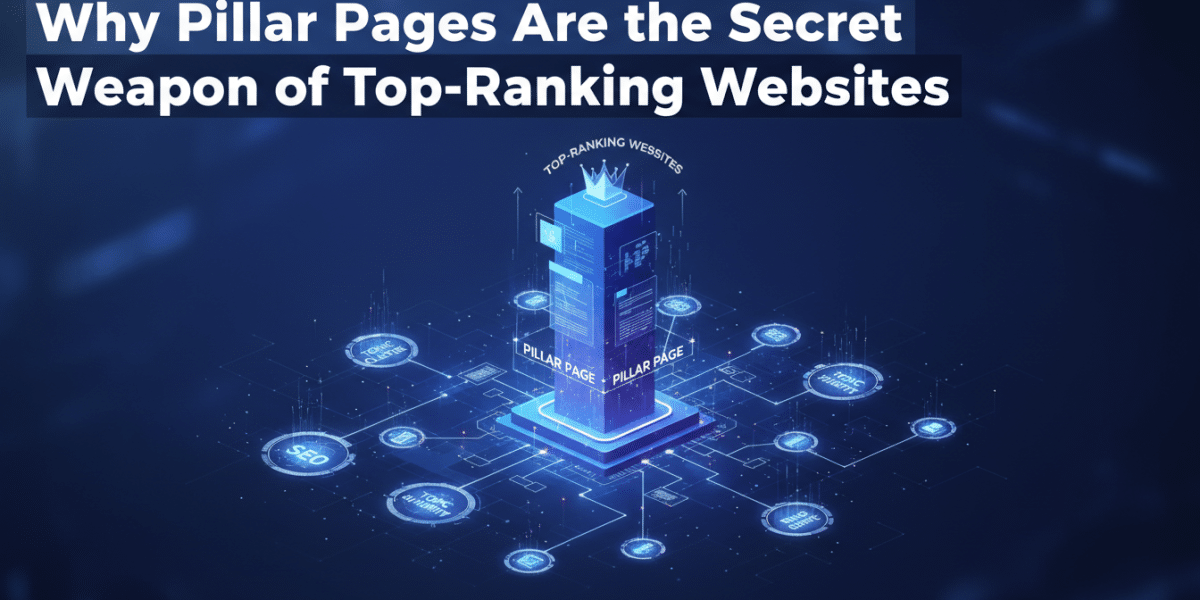
Why Pillar Pages Are the Secret Weapon of Top-Ranking Websites
In the relentless battle for online visibility, every business, blogger, and brand is searching for that elusive edge. We’ve all spent countless hours optimising, keyword researching, and crafting content, only to feel like we’re constantly chasing an ever-moving target. But what if there was a strategy, a powerful content architecture, that wasn’t just a fleeting trend but a fundamental shift in how search engines understand and reward expertise? This, my friends, is why pillar pages are the secret weapon of top-ranking websites.
Forget one-off blog posts hoping to hit the jackpot. Top-ranking websites aren’t just publishing content; they’re building interconnected knowledge hubs that tell search engines, unequivocally, “We are the authority on this topic.” If you’re serious about dominating your niche, attracting highly engaged organic traffic, and establishing genuine thought leadership, understanding and implementing pillar pages isn’t optional – it’s absolutely essential.
What Exactly Is a Pillar Page, Anyway?
Before we dive into the “why” they’re so effective, let’s make sure we’re on the same page about the “what.” A pillar page isn’t just a really long blog post. It’s a foundational piece of content designed to be the most comprehensive, high-level resource on a broad subject related to your business.
Think of it this way: if you wanted to learn everything about “digital marketing,” a pillar page wouldn’t dive deep into “the nuances of Facebook ad targeting for B2B SaaS in Q4.” Instead, it would cover the essential components of digital marketing: SEO, content marketing, social media, email marketing, paid advertising, analytics, and so on. It touches on all the key areas without getting bogged down in extreme detail.
More Than Just a Long Blog Post
The key differentiator for a pillar page is its breadth, not necessarily its depth on any single sub-topic. It serves as a single, go-to resource that answers all the fundamental questions a beginner (or even an intermediate) might have about a broad subject. It should be easily digestible, well-organised, and incredibly useful.
Imagine a sturdy, central table in a library. That’s your pillar page. It’s robust, well-defined, and serves as a central point of reference.
The Hub-and-Spoke Model: Content Clusters
What makes the pillar page truly powerful is how it integrates with what are called “content clusters” or “cluster content.” These are individual, more in-depth articles or blog posts that explore specific sub-topics mentioned on your pillar page.
Following our library analogy, the pillar table (the main topic) has many chairs around it. Each chair represents a specific, detailed book (your cluster content) that dives deep into one aspect of the main topic.
The magic happens with internal linking. Your pillar page links out to all the relevant cluster content, and crucially, each piece of cluster content links back to the pillar page. This creates a powerful, interconnected web of information that’s easy for both users and search engines to navigate and understand.
Why Pillar Pages Are the Secret Weapon of Top-Ranking Websites: The SEO Angle
Now we get to the core of their power. The strategic design of pillar pages and their content clusters directly addresses how modern search engines, particularly Google, evaluate and rank websites. This is where the “secret weapon” truly reveals itself.
Building Unrivaled Topical Authority
Google’s primary goal is to provide users with the most relevant, accurate, and authoritative information. For years, SEO focused on individual keywords. Today, it’s about topics. Google wants to know if you’re just mentioning a keyword or if you genuinely understand and cover a topic comprehensively.
Pillar pages, supported by their detailed clusters, allow you to demonstrate a profound, holistic understanding of a subject. By linking related pieces of content, you’re signaling to search engines: “We don’t just have one article on ‘content marketing’; we cover every aspect of content marketing, from strategy to execution to measurement.” This builds immense topical authority, making your site a go-to resource in the eyes of Google.
Supercharging Your Internal Linking Strategy
Internal links are vital for SEO, but often overlooked. They help distribute “link equity” (or PageRank) throughout your site, signaling to search engines which pages are most important. A well-executed pillar page strategy creates a natural, logical internal linking structure.
- The pillar page passes authority to the deeper, more specific cluster pages.
- The cluster pages, by linking back, reinforce the authority of the pillar page.
This creates a dense, relevant network of links that strengthens the entire content ecosystem. It also improves crawlability, helping search engine bots discover and index more of your valuable content. The clearer the path, the faster and more efficiently bots can map out your expertise.
Targeting Broader Keywords (and Long-Tail Too!)
A common challenge is ranking for highly competitive, broad keywords. A single blog post rarely stands a chance against established authorities. However, a pillar page, due to its comprehensive nature and supporting content, has a much stronger probability.
- Pillar Page: Targets the broad, high-volume “head term” (e.g., “digital marketing,” “content strategy,” “healthy eating”).
- Cluster Pages: Target the more specific, often lower-volume but high-intent “long-tail keywords” (e.g., “how to create a content calendar,” “best healthy breakfast recipes for weight loss,” “advanced SEO techniques for small businesses”).
This strategy allows you to cast a wider net. Your cluster content captures specific search queries, and because it links back to the pillar, it funnels authority and relevance to that overarching topic. Over time, this cumulative effect makes your pillar page a formidable contender for those highly coveted broad keywords.
Enhancing User Experience (UX)
While we often talk about SEO in terms of algorithms, it’s critical to remember that Google’s algorithm is increasingly designed to reward user experience. Pillar pages excel here:
- Single Source of Truth: Users can find everything they need about a topic in one place or easily navigate to deeper dives. This reduces frustration and the need to jump between multiple websites.
- Clear Navigation: The structured nature of a pillar and its clusters makes your site easy to explore.
- Increased Time on Page: Engaged users spend more time consuming your valuable content, a positive signal to search engines.
- Reduced Bounce Rate: Users are less likely to leave quickly if they find comprehensive and easy-to-navigate information.
All these positive UX signals contribute to better rankings. Google observes user behavior and rewards sites that provide a superior experience.
Beyond SEO: The Business Benefits
While SEO advantages are a major draw, why pillar pages are the secret weapon of top-ranking websites extends far beyond search engine algorithms. They offer profound benefits for your overall business strategy.
Establishing Thought Leadership
In a crowded digital landscape, standing out as an expert is paramount. Pillar pages are tailor-made for this. By creating the ultimate guide on a topic, you position your brand as the go-to authority. This isn’t just about search rankings; it’s about building genuine trust and credibility with your audience. When people view you as an expert, they’re more likely to engage, subscribe, and ultimately, buy from you.
Streamlining Content Creation
Feeling stuck for content ideas? A pillar page and its associated clusters provide an incredibly clear roadmap. Once you’ve chosen your core topic, the sub-topics for your cluster content virtually write themselves. This structure not only ensures you’re covering relevant ground but also prevents redundant content and helps you identify gaps in your existing material.
It transforms content creation from a sporadic, idea-driven process into a strategic, cohesive project. You can even repurpose segments of your pillar page into social media posts, email snippets, or even parts of webinars.
Driving Conversions and Leads
Visitors who land on a pillar page or navigate through its clusters are highly engaged. They’re actively seeking comprehensive information, indicating a strong level of interest in your area of expertise. This makes them ideal candidates for conversion.
You can strategically place relevant calls to action (CTAs) within your pillar page and cluster content:
- Offer a related lead magnet (e-book, checklist, template) at the end of the pillar.
- Suggest a consultation or demo on specific cluster pages.
- Encourage newsletter sign-ups throughout.
Because the content has already done much of the work in educating and building trust, these visitors are often “warmer” leads, more prepared to take the next step.
How to Create Your Own Secret Weapon: Practical Steps
Ready to unleash the power of pillar pages? Here’s a practical guide to getting started.
1. Choose Your Core Topic Wisely
This is perhaps the most critical step. Your pillar page topic needs to be:
- Broad enough: It should encompass many related sub-topics.
- Relevant to your business: It should directly align with your products, services, or core mission.
- Interesting to your audience: Do people actually search for this topic?
- Have sufficient search volume: Use keyword research tools to validate interest.
Example: If you sell organic gardening supplies, a pillar page on “Sustainable Home Gardening” would be perfect, covering everything from soil health to pest control.
2. Map Out Your Content Clusters
Once you have your core topic, brainstorm all the essential sub-topics someone would want to know about. These will become your cluster content.
- List out 10-20 potential sub-topics.
- Identify any existing content on your site that already covers these sub-topics.
- Perform a “gap analysis” to see what new articles you need to create.
Example (for “Sustainable Home Gardening”): “Composting 101,” “Natural Pest Control Methods,” “Choosing the Right Raised Beds,” “Organic Fertilizer Guide.”
3. Craft the Pillar Page Masterpiece
Now, write the pillar page itself. Remember, it needs to be comprehensive but not overly detailed.
- Structure is key: Use H2 and H3 headings to break up the content.
- Engaging introduction: Hook the reader and explain what they’ll learn.
- Clear, concise language: Avoid jargon where possible.
- Visuals: Use images, infographics, and videos to enhance readability and engagement.
- Internal links: As you write, strategically link out to your existing or planned cluster content where appropriate. Don’t go too deep; let the clusters do the heavy lifting on specific details.
4. Interlink Like a Pro
This is where the hub-and-spoke model truly comes alive.
- Pillar to Clusters: Embed contextual links within your pillar page that point to the relevant, more detailed cluster articles. Use descriptive anchor text (e.g., “learn more about natural pest control methods” instead of “click here”).
- Clusters to Pillar: Ensure every cluster page links back to the main pillar page. This reinforces the central theme and funnels authority back to your pillar. Again, use relevant, keyword-rich anchor text.
5. Optimize and Promote
Once your pillar and clusters are built and linked, don’t forget the final touches.
- On-page SEO: Optimize your pillar page’s title tag, meta description, and URL with your target broad keyword.
- Promotion: Share your pillar page widely on social media, in your email newsletter, and consider outreach to relevant industry sites or influencers.
- Regular Updates: Keep your pillar page (and its clusters) fresh and up-to-date. This signals ongoing relevance and authority to search engines.
Conclusion
In the ever-evolving landscape of search engine optimisation, one thing remains constant: quality, comprehensive content always wins. Pillar pages are the secret weapon of top-ranking websites because they perfectly align with what modern search engines reward: genuine topical authority, an exceptional user experience, and a logical, interconnected web of valuable information.
They are more than just a fleeting SEO tactic; they are a foundational content strategy that allows you to build a powerful, sustainable presence online. By shifting your approach from isolated articles to interconnected knowledge hubs, you’re not just aiming for higher rankings; you’re building a trusted resource that educates, engages, and converts. It’s time to stop chasing individual keywords and start building your empire, one well-structured pillar at a time.
Related Posts
 What is a pillar page how they can help your SEO
 Keyword Mapping: Assign the Right Term to the Right Page
 Delivery, Returns and Size Guide Pages: Hidden SEO Value
 Out-of-Stock Product Pages: Delete, Redirect or Keep?
 How to Rank on Page One in Dublin Without Paying for Ads
 The Beginnerʼs Guide to On-Page SEO for Irish Websites
 The Anatomy of a Blog Post That Ranks on Page One
 Why a Slow Website Is Killing Your Search Rankings