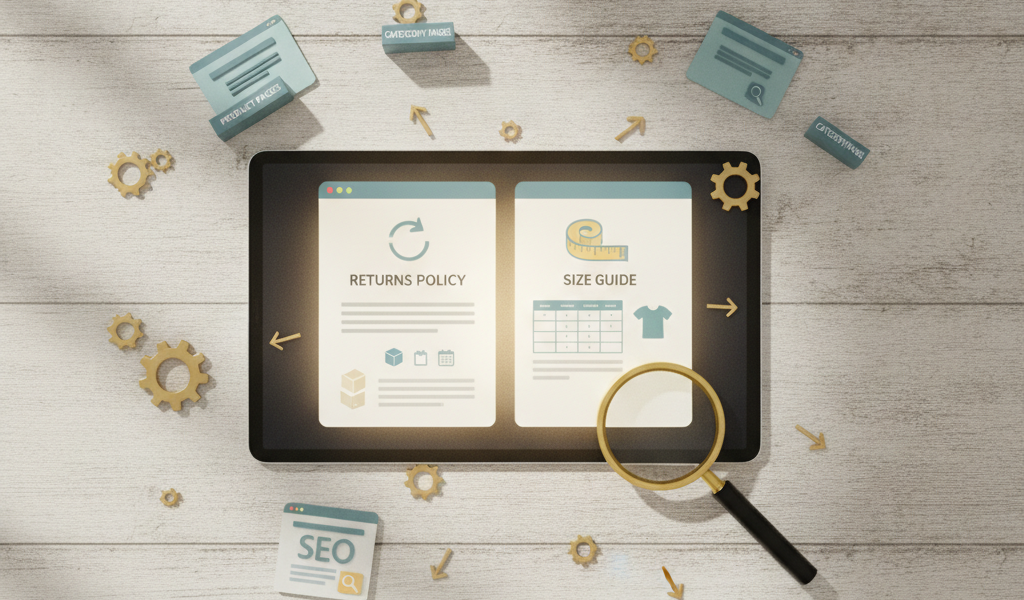
If you run an ecommerce store, you’ve probably spent considerable time optimising your product pages, homepage, and category listings. But there are two pages quietly sitting in your footer — your returns policy and size guide — that most stores treat as legal formalities rather than genuine SEO assets. That’s a mistake. Returns and size guide pages carry hidden SEO value that, when properly developed, can drive organic traffic, build trust, and even reduce cart abandonment.
This article breaks down exactly why these pages matter for search visibility, how to optimise them properly, and what practical steps you can take to turn overlooked utility pages into meaningful contributors to your site’s performance.
Why Returns and Size Guide Pages Are SEO Goldmines
People Search for This Information — A Lot
Think about the last time you bought something online from a brand you hadn’t used before. There’s a good chance you searched something like "does [brand name] have free returns" or "what is [retailer] size 12 equivalent to in US sizing." These are real, high-intent search queries, and if your pages are properly structured, they can rank for them.
Google Search Console data frequently reveals that returns-related queries generate consistent, year-round search volume. Terms like "free returns policy UK," "how to return an online order," and "clothing size conversion guide" each attract thousands of monthly searches globally. Even localised versions — such as "Irish clothing size guide" or "returns policy Ireland" — can be valuable traffic sources for regional retailers.
Google Treats Them as Trust Signals
Google’s Quality Rater Guidelines place heavy emphasis on what they call E-E-A-T: Experience, Expertise, Authoritativeness, and Trustworthiness. A detailed, clear returns policy signals to both users and search engines that you’re a legitimate, accountable business. Thin or missing policy pages, on the other hand, can actively work against you — particularly in YMYL (Your Money or Your Life) categories where trust is paramount.
A well-written size guide demonstrates product knowledge and expertise, which reinforces your site’s topical authority in a given niche.
What Most Stores Get Wrong With These Pages
Treating Them as Static, Forgotten Documents
The most common mistake is creating a returns page or size guide once and never revisiting it. These pages often end up as dense blocks of legal text with no structure, no visuals, and no thought given to the reader’s actual journey.
From an SEO perspective, thin content on these pages is a missed opportunity. Google tends to reward pages that genuinely answer questions in depth. A returns page that’s a single paragraph of boilerplate text won’t rank for much.
Ignoring Internal Linking Opportunities
Size guides and returns pages are actually ideal internal linking hubs. A size guide for women’s dresses, for example, can naturally link out to relevant product categories, specific product pages, and even blog content about styling or fit. Yet most stores leave these pages as dead ends with no outbound links and no incoming links beyond a footer reference.
Internal links distribute page authority across your site. Neglecting them on your most-visited utility pages means leaving link equity on the table.
Not Using Structured Data
Size charts and FAQs are perfect candidates for structured data markup (Schema.org). Adding FAQ schema to a returns page, for instance, can earn rich results in Google — those expanded snippets that show question-and-answer content directly in search results. This increases click-through rates meaningfully, often by 20–30% according to various case studies from digital marketing agencies.
How to Optimise Your Returns Page for SEO
Start With a Clear, Keyword-Informed Heading Structure
Your returns page should have an H1 that reflects how people actually search. Something like "Our Returns Policy: Free Returns Within 30 Days" is far more effective than just "Returns." Then use H2s and H3s to break down specific topics: how to initiate a return, timeframes, eligible items, refund methods, and exceptions.
This structure does two things at once. It makes the page genuinely easy to navigate for real users, and it gives search engines a clear semantic map of the page’s content.
Write for Anxiety, Not Just Compliance
Returns pages exist because shoppers are anxious. They want reassurance before they buy, not a legal document to sign. Write conversationally. Use phrases like "Don’t worry — here’s exactly how it works" or "We make returns simple."
This matters for SEO because engagement signals — time on page, bounce rate, scroll depth — feed back into how Google assesses content quality. A page that people actually read rather than immediately bounce from performs better in search over time.
Add an FAQ Section
Adding a small FAQ section to your returns page is one of the quickest wins available. Questions like:
- "Can I return sale items?"
- "What happens if my item arrives damaged?"
- "How long does a refund take to process?"
These answer real queries people type into Google. Mark them up with FAQ schema, and you may earn expanded search results that take up significantly more real estate on the results page.
Turning Your Size Guide Into an SEO Asset
Go Deeper Than a Basic Chart
A basic size chart — Small = 8-10, Medium = 12-14 — is useful but not enough to rank well. Genuinely helpful size guides explain how to measure yourself, what to do if you’re between sizes, how the brand’s fit compares to industry standard sizing, and how different fabrics or cuts affect the fit.
ASOS, for example, built out extensive size guides that include measurement instructions, model stats for reference, and fit notes by garment type. This kind of depth is exactly what earns rankings for informational search queries.
Target Long-Tail Keywords Naturally
Size guides are natural homes for long-tail keyword phrases. Consider how people actually search:
- "Women’s EU to UK size conversion chart"
- "How to measure chest size for a suit"
- "Petite clothing size guide UK"
- "Kids shoe size chart by age"
You don’t need to force these into the text unnaturally. If you’re writing a comprehensive, genuinely helpful guide, these phrases will appear organically because they reflect the questions your content is answering.
Add Visuals and Explain Them
Images of measuring tape diagrams, body measurement illustrations, and comparison tables all improve the user experience on a size guide page. But don’t leave them as image-only elements. Write descriptive alt text and add explanatory captions or surrounding copy.
Alt text is still one of the most underutilised SEO tools on ecommerce sites. A well-described image — "diagram showing how to measure waist for women’s trousers sizing" — contributes to keyword relevance signals and improves accessibility, which Google increasingly rewards.
The Local SEO Angle
Regional Sizing and Returns Considerations
If your store serves a specific country or region, your size guide and returns page have real local SEO potential. Sizing standards differ between regions — UK, US, EU, and Australian sizing are all different — and shoppers often search specifically for these conversions in a localised context.
An Irish retailer, for example, might target queries like "clothing size guide Ireland" or "online shopping returns Ireland" to capture local traffic that larger international retailers may not be addressing with the same specificity.
Similarly, referencing consumer rights legislation relevant to your market strengthens trust signals. In Ireland and across the EU, the Consumer Rights Directive entitles shoppers to a 14-day cooling-off period on most online purchases. Mentioning this regulation on your returns page — with a brief plain-English explanation — demonstrates legal transparency and builds confidence with cautious buyers.
Quick Technical Checklist
Before you publish or update either page, run through these essentials:
- Unique meta title and description for each page (not auto-generated)
- H1 tag that reflects real search intent
- Mobile-optimised layout — most users will access these pages on a phone
- Fast load time — compress any images used in size charts
- Internal links pointing to relevant product categories
- FAQ schema markup implemented correctly
- Canonical tag to avoid duplicate content if the page is syndicated
Frequently Asked Questions
Do returns and size guide pages really rank in Google?
Yes, they can and do — particularly for informational and navigational queries. When built out with sufficient depth, proper heading structure, and schema markup, these pages can appear in organic results and featured snippets. The key is treating them as proper content pages rather than afterthoughts.
How long should a returns policy page be for SEO purposes?
There’s no magic word count, but a returns page that covers all common scenarios, includes a FAQ section, and is well-structured will naturally run to 500–1,000 words. Quality and clarity matter more than raw length. Focus on answering every question a hesitant shopper might have.
Is it worth adding schema markup to these pages?
Absolutely. FAQ schema on returns pages and HowTo or Table schema on size guides are relatively straightforward to implement and can earn rich results in search. Even if you’re not a developer, plugins like Yoast SEO or Rank Math for WordPress simplify the process significantly.
What’s the relationship between these pages and conversion rate?
Strong returns and size guide pages reduce purchase anxiety, which directly improves conversion rates. Research from the Baymard Institute consistently shows that unclear return policies and poor sizing information are among the top reasons shoppers abandon carts. Better pages serve both SEO and sales simultaneously.
How often should I update my size guide?
Review it whenever you introduce new product lines, change suppliers (which can affect sizing consistency), or receive repeated customer queries about fit. An outdated or inaccurate size guide causes returns and damages trust — neither of which helps your rankings or your revenue.
Conclusion
Returns and size guide pages are two of the most underestimated pages in ecommerce SEO. While your competitors are fighting for the same product and category page rankings, these utility pages represent a quieter, less contested opportunity to attract real search traffic, build trust, and reduce friction in the purchase journey.
The investment required isn’t enormous. A few hours of thoughtful content work, proper heading structure, schema markup, and a handful of well-placed internal links can transform these pages from administrative obligations into genuine contributors to your organic performance. Start with whichever page is weaker, apply the principles outlined above, and monitor your Search Console data over the following weeks — the results often speak for themselves.
Ready to make more of your site’s hidden SEO potential? Whether you want to audit your existing pages, build a stronger content strategy, or simply have a conversation about what’s possible, our team is here to help. Reach out at moc.ssobebolg@ofni or give us a call on +353 1 868 2345 — we’re always happy to talk through your options with no obligation.
Related Posts
 Building Local Pages AI Systems Trust: Dublin Business Practical Guide
 Agentic Commerce Hype Versus Reality: Irish E-Commerce Brand Guide
 Out-of-Stock Product Pages: Delete, Redirect or Keep?
 The Beginnerʼs Guide to On-Page SEO for Irish Websites
 Why Pillar Pages Are the Secret Weapon of Top-Ranking Websites
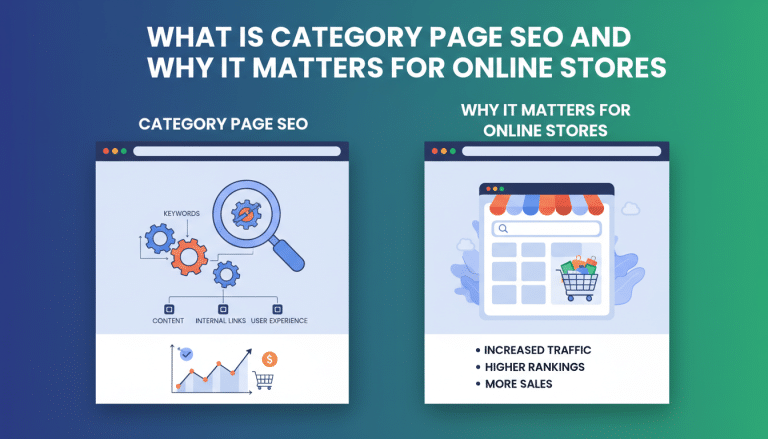 What Is Category Page SEO and Why It Matters for Online Stores
 How to Rank Your Shopify Product Pages on Google
 How to optimise landing pages for conversions in PPC?